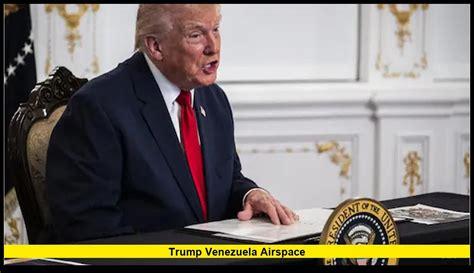
The U.S. military intervention in Venezuela on January 3, 2026, culminating in the dramatic capture of Nicolas Maduro and his wife, has sent shockwaves across not only geopolitical spheres but also the aviation and travel industry in the Americas. With the Trump administration declaring that the United States will now “run” Venezuela and oversee its oil resources, the implications stretch far beyond diplomacy—especially into the corridors of airports, flight schedules, and regional connectivity.
Immediate Disruption to Caribbean and South American Airspace
Within hours of the operation, strict flight restrictions were imposed across the Caribbean, creating unprecedented chaos in regional airspace. Airlines scrambled to reroute, cancel, or delay flights due to security concerns and logistical barriers.
This blanket disruption impacted major carriers operating routes across Central and South America, and even led to reroutings of transatlantic flights from Europe to South America. Though these restrictions were lifted after a day, the reverberations are ongoing, with carriers attempting to reestablish normal schedules and realign aircraft positioning.
Such turbulence underscores a larger risk: if the U.S. expands its military footprint in Venezuela, temporary closures or limitations could become more frequent. This would place strain not only on airlines but also on cargo supply chains, tourism operators, and passengers throughout the hemisphere.
Will U.S. Control Mean a New Era of Travel to Venezuela?
One of the most intriguing uncertainties surrounds whether the U.S. presence could reopen Venezuela to American travelers. For over a decade, travel between the U.S. and Venezuela had been nearly nonexistent due to diplomatic tensions, safety risks, and economic collapse. But with Washington now at the helm, the future could take a radically different shape.
While it’s unlikely we’ll see an immediate boom in U.S. tourism to Venezuela, especially with the security situation still in flux, there is speculation that the U.S. government might encourage limited reentry—particularly for journalists, aid workers, and diplomats. This could lay the groundwork for the restoration of commercial flights, which ceased in 2019.
Should commercial routes resume, they would likely involve U.S. legacy carriers such as American Airlines or United, potentially connecting cities like Miami and Houston with Caracas. However, such developments hinge on the perceived stability and security of the U.S. presence in Venezuela.
Security Concerns Could Stifle Rapid Expansion
Despite the removal of Maduro, a question looms large: How stable is Venezuela now? The U.S. administration insists on a secure and prosperous transition, but history warns us that such promises often collide with local resistance, insurgencies, or power vacuums. Numerous Maduro loyalists remain embedded across the country’s military and political infrastructure.
This environment creates a potentially volatile security landscape, particularly for American travelers or personnel. Airlines will remain risk-averse in resuming operations, with corporate security advisors and insurance underwriters likely to wield heavy influence on route decisions.
Additionally, if anti-American sentiment festers or foreign powers such as Russia, Iran, or China choose to exert influence, Venezuela may become a geopolitical flashpoint. This would again put commercial aviation at risk, whether through airspace restrictions, airport vulnerabilities, or broader regional instability.
The Future of Conviasa: Isolation or Reintegration?
The fate of Conviasa, Venezuela’s state-owned airline, is deeply uncertain. Under Maduro, the airline operated in defiance of U.S. sanctions, maintaining routes to Russia, Iran, and Syria, using a fleet of long-haul Airbus A340s—a rarity in modern aviation.
Now, under American supervision, the airline may face one of two fates: it could either be dismantled entirely due to its association with the previous regime, or be restructured into a more internationally-aligned carrier. If the latter occurs, it could mark Conviasa’s return to global aviation networks, including codeshares and possible integration with IATA standards.
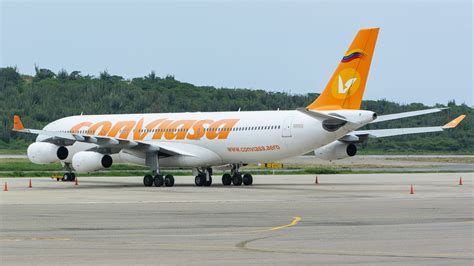
However, undoing years of sanctions, restoring operational integrity, and complying with international aviation safety norms will be a complex process. The U.S. may prefer to facilitate operations through private or U.S.-based airlines in the short term.
Repercussions for Global Airlines and Route Planning
Airlines with extensive Latin American operations—such as Copa Airlines, LATAM, and Avianca—may need to reassess route maps, especially if Venezuelan airspace becomes accessible under a pro-U.S. administration. Until now, many carriers opted to avoid Venezuela entirely, flying around the country’s FIR (Flight Information Region), often at the expense of time and fuel.
Opening Venezuelan airspace would offer shorter flight paths between North America and northern South America, improving efficiency and cutting emissions. Yet if control remains unstable or military activity increases, airlines might continue circumventing the area. The U.S. Department of Transportation (DOT) and Federal Aviation Administration (FAA) will likely issue updated guidelines soon.
Tourism Revival or Delayed Promise?
Venezuela is a land of extraordinary natural beauty: the Andes Mountains, Angel Falls, the Caribbean coastline, and vast Amazonian jungles. But for over a decade, these treasures have been largely inaccessible to international visitors. If the U.S. succeeds in stabilizing the country, a tourism revival could become one of the most tangible long-term benefits.
However, for this potential to be realized, extensive groundwork is required: visa policies, hotel infrastructure, safety protocols, and above all, public trust in the region’s security. At present, leisure travel to Venezuela remains a distant possibility, more theoretical than practical.

Conclusion: A Fragile New Chapter in Aviation
The U.S. “running” Venezuela introduces a new, unpredictable dynamic into the aviation and travel sectors. While the initial shockwaves of the military operation caused measurable turbulence, the long-term effects remain blurred by political uncertainty and strategic ambiguity.
In the short term, airlines are navigating a cautiously reopened sky, while closely monitoring the risk of renewed conflict or insurgency. In the medium to long term, possibilities include the resumption of direct U.S.-Venezuela flights, the transformation or dissolution of Conviasa, and even the birth of a new tourism corridor—if stability can be sustained.
For now, travelers and industry stakeholders alike should view the situation with measured anticipation, recognizing that while the door to Venezuela may be reopening, the path through it is paved with complexity.