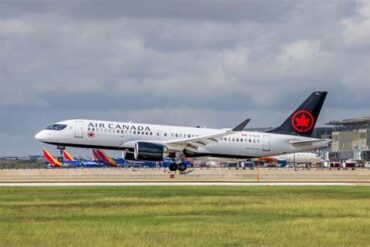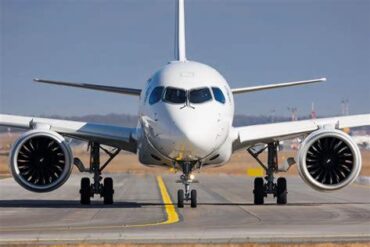
The Airbus A220 has become one of the aviation industry’s biggest success stories over the past decade. Originally conceived as the Bombardier CSeries, the aircraft has evolved into Airbus’ most modern small narrowbody jet, earning praise for its fuel efficiency, passenger comfort, operational flexibility, and advanced technology. Now, Airbus is preparing the next chapter in the aircraft’s evolution.
Rather than launching an all-new variant immediately, Airbus has chosen a more strategic approach. Beginning in 2027, the manufacturer will introduce a significantly enhanced A220-300 capable of accommodating up to 160 passengers, while simultaneously rolling out the company’s signature Airspace cabin across new deliveries. These improvements are designed to increase airline profitability, improve passenger perception, and strengthen the aircraft’s position against competing models without fundamentally redesigning the platform.
Instead of making dramatic engineering changes, Airbus is focusing on refining the aspects that airlines value most: cabin efficiency, passenger experience, turnaround times, operating economics, and fleet commonality. The result is an aircraft that looks familiar from the outside but becomes considerably more competitive where it matters most.
The upcoming changes also provide important clues about Airbus’ long-term strategy. Rather than rushing to launch the long-rumored A220-500, Airbus is ensuring the current family reaches stronger production volumes and greater profitability before expanding the lineup further.
The 2027 upgrades may appear modest at first glance, but collectively they represent one of the most meaningful improvements made to the A220 since Airbus acquired the program.
How the Airbus A220 Became One of Airbus’ Most Important Aircraft
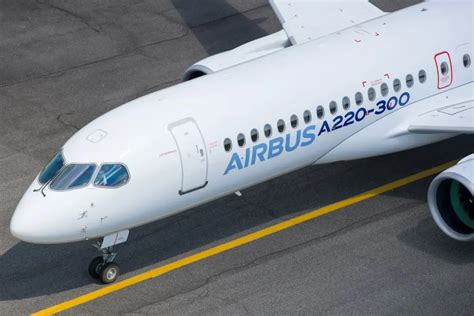
The Airbus A220 did not begin life wearing Airbus colors. Its origins trace back to Bombardier’s ambitious CSeries program, launched in 2008 to bridge the gap between regional jets and larger single-aisle aircraft. At a time when airlines wanted better fuel efficiency without sacrificing passenger comfort, Bombardier designed a completely clean-sheet aircraft rather than updating an older platform.
The smaller CS100 completed its maiden flight in 2013 before entering airline service with SWISS in 2016. Shortly afterward, the longer CS300 joined the market with airBaltic as its launch operator. Both aircraft immediately attracted attention because they offered lower operating costs while delivering a noticeably quieter and roomier cabin than many competing aircraft.
Everything changed in 2018 when Airbus acquired a controlling stake in the program. The aircraft was rebranded as the Airbus A220, giving it access to Airbus’ enormous global sales network, supplier relationships, engineering resources, and worldwide customer support system.
Airbus quickly expanded production beyond the original assembly facility in Mirabel, Quebec. A second final assembly line opened in Mobile, Alabama, allowing Airbus to serve North American airlines more efficiently while avoiding import-related trade complications. As Bombardier gradually exited the program, Airbus assumed full control of development and manufacturing.
Today, the A220 stands as the only commercial Airbus aircraft family assembled entirely outside Europe, making it a unique product within the manufacturer’s portfolio.
Why Airlines Continue Choosing the Airbus A220
One reason the A220 has attracted more than 1,100 orders worldwide is that it solves several operational challenges simultaneously.
Unlike many older narrowbody aircraft, the A220 was designed around modern materials, advanced aerodynamics, and next-generation engines from the very beginning. It combines a lightweight aluminum-lithium fuselage with carbon-composite wings, allowing airlines to reduce fuel consumption while maintaining impressive range.
The Pratt & Whitney PW1500G geared turbofan engines contribute significantly to the aircraft’s operating efficiency. These engines reduce fuel burn, lower emissions, and produce noticeably less external noise, making the aircraft attractive for airports with strict environmental requirements.
Despite its relatively compact size, the aircraft offers exceptional performance. Depending on the variant, the A220 can fly between approximately 6,390 and 6,670 kilometers, enabling airlines to operate everything from short domestic sectors to transcontinental services and medium-haul international routes.
The family currently consists of two passenger variants:
- A220-100: typically seats 108–133 passengers
- A220-300: accommodates 130–160 passengers, depending on airline configuration
This flexibility allows airlines to right-size capacity without deploying larger aircraft that may leave too many seats unsold.
The Biggest Cabin Upgrade Yet: Introducing the Airspace Interior
Although the A220 already enjoys an excellent passenger reputation, Airbus recognized one area where the aircraft no longer matched the rest of its product family.
The cabins aboard the A350, A330neo, and A320neo all feature Airbus’ modern Airspace design language, creating a consistent premium experience across different aircraft types. The A220, inherited from Bombardier, still retained its earlier interior architecture.
That changes with new deliveries.
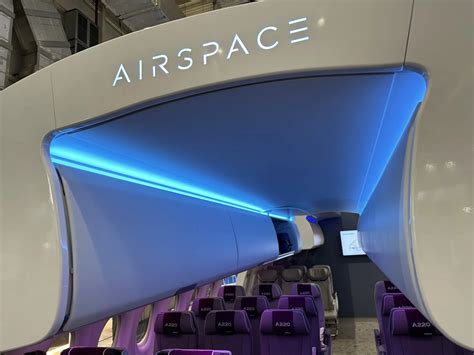
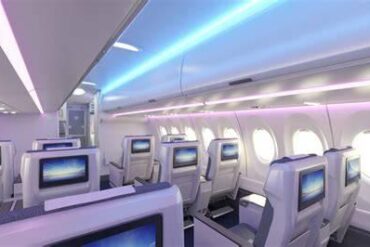
Beginning with aircraft delivered ahead of the 2027 rollout, every newly manufactured A220 will feature the Airspace cabin. This upgrade is much more comprehensive than simply adding mood lighting.
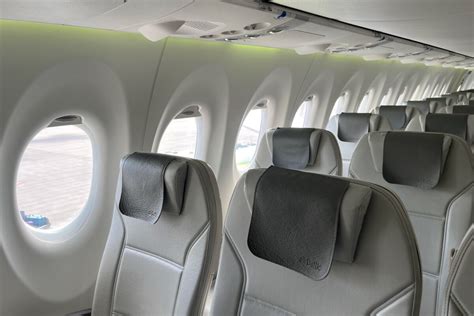
Passengers will immediately notice redesigned sidewalls, improved finishes, refined trim materials, modern touchpoints, and a cabin aesthetic that closely resembles larger Airbus aircraft.
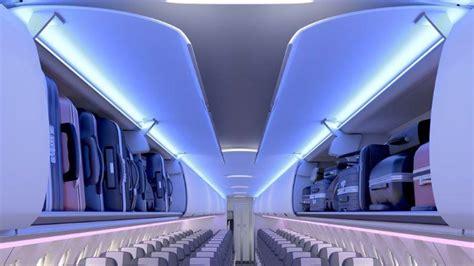
Perhaps the most practical improvement is the introduction of new overhead storage bins.
These redesigned bins are approximately 20% lighter while providing more than 15% additional baggage capacity. Airlines benefit from this enhancement in several ways. Larger bins reduce the likelihood of gate-checking carry-on luggage, speed up boarding, shorten deplaning, and improve aircraft turnaround times throughout the day.
Passengers also enjoy a more convenient boarding experience, with greater confidence that their cabin baggage can remain nearby rather than being stored several rows away.
Sixteen Million Colors Transform the Passenger Experience
Modern aircraft cabins increasingly rely on lighting as part of the overall passenger experience, and Airbus is bringing one of its most recognizable features to the A220.
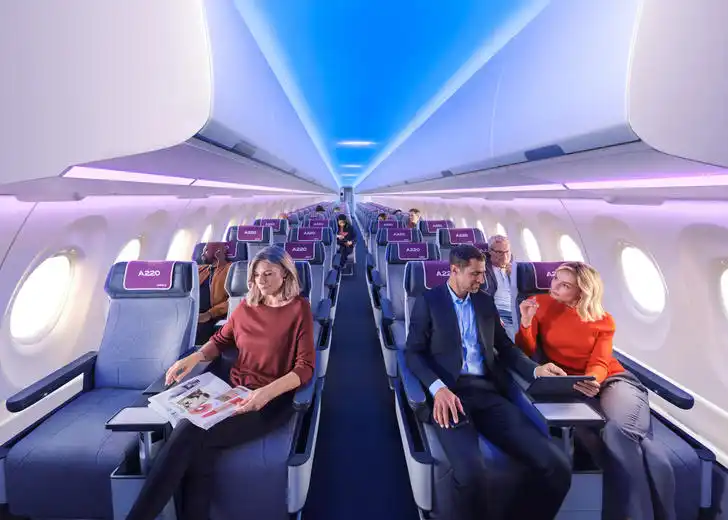
The upgraded cabin introduces 16-million-color LED mood lighting, enabling airlines to customize the atmosphere throughout every stage of the flight.
Rather than maintaining static white lighting from departure to arrival, airlines can program different lighting scenarios for boarding, meal services, cruising altitude, nighttime operations, and final descent.
The system also allows carriers to reinforce their brand identity by incorporating signature color themes into the cabin environment.
Although lighting alone does not dramatically change the flight itself, research consistently shows that carefully designed cabin illumination improves perceived comfort while creating a more premium atmosphere.
For airlines competing aggressively for business travelers and premium leisure passengers, those small details increasingly influence customer satisfaction scores.
The 160-Seat Airbus A220-300 Arrives in 2027
While the new interior receives considerable attention, perhaps the most commercially significant development is Airbus’ decision to offer a higher-density A220-300 beginning in 2027.
Rather than stretching the fuselage, Airbus has optimized the cabin layout to accommodate up to 160 passengers more efficiently.
This creates several financial advantages.
Every additional seat helps distribute operating expenses across a larger number of paying customers. Fuel consumption changes very little, while revenue potential increases.
For airlines operating from congested airports where additional flight slots are difficult or impossible to obtain, adding capacity without increasing flight frequency represents a valuable opportunity.
Instead of replacing an A220 with a larger A320neo—which may introduce excess capacity on certain routes—airlines can simply configure the upgraded A220 to carry more passengers while maintaining its existing route structure.
The result is improved cost per available seat mile (CASM) without fundamentally altering fleet planning.
Why Airbus Is Waiting Before Launching the A220-500
For years, industry analysts have speculated about an A220-500, a stretched version positioned between today’s A220-300 and the Airbus A320neo.
Despite continuous rumors, Airbus has shown little urgency.
There are several reasons for this cautious strategy.
First, Airbus continues increasing A220 production rates while working toward sustained program profitability. Launching an entirely new aircraft variant requires billions of dollars in engineering investment, certification expenses, manufacturing adjustments, supplier coordination, and customer support.
Before committing to that investment, Airbus wants to maximize returns from the existing family.
Second, introducing the Airspace cabin and the 160-seat layout allows Airbus to expand the aircraft’s addressable market using relatively low-risk improvements.
Many airlines that might previously have considered the A320neo for additional capacity may now find the upgraded A220 sufficient for their requirements.
Finally, Airbus is carefully avoiding unnecessary overlap within its own product portfolio. A poorly positioned A220-500 could compete directly against certain A320neo configurations, complicating fleet decisions for customers.
By refining the existing family first, Airbus gains valuable market data that can influence any future launch.
The Financial Logic Behind the 2027 Upgrades
From Airbus’ perspective, the 2027 improvements represent one of the most efficient investments available.
Rather than redesigning wings, engines, or major structural components, Airbus focuses on modifications that generate immediate operational benefits.
The larger overhead bins reduce delays caused by cabin baggage.
Improved interiors strengthen the aircraft’s premium image.
Higher seating density lowers unit costs.
Fleet-wide Airspace commonality simplifies airline branding across multiple Airbus fleets.
Perhaps equally important, Airbus plans to offer many of these interior enhancements as retrofit packages for existing operators.
This approach allows airlines to modernize aircraft already in service without purchasing entirely new fleets, extending the commercial life of earlier deliveries while maintaining consistency across mixed-age fleets.
For Airbus, retrofit sales create additional revenue beyond new aircraft production.
How Airlines Stand to Benefit
Several major airlines have already demonstrated strong confidence in the A220 platform.
Delta Air Lines remains the aircraft’s largest customer and continues replacing older Boeing 717 aircraft with newer A220s. Other operators have similarly embraced the aircraft for regional, domestic, and medium-haul international services.
The 2027 enhancements strengthen several existing advantages:
- Improved boarding efficiency through larger baggage bins
- Faster aircraft turnaround times
- Better cabin consistency across Airbus fleets
- Increased seating capacity without requiring larger aircraft
- Lower operating costs per passenger
- Enhanced passenger perception of premium quality
These improvements become particularly valuable as airlines seek higher profitability while facing increasing labor, fuel, and infrastructure costs.
What Passengers Will Actually Notice
Although airlines receive most of the economic benefits, passengers will still experience several meaningful improvements.
The cabin will feel brighter, more modern, and visually consistent with Airbus’ newest aircraft families.
Carry-on storage should become noticeably easier thanks to larger overhead compartments.
Lighting transitions during boarding, meal service, and overnight flights should create a calmer atmosphere while improving the overall sense of comfort.
Most travelers will probably not notice the higher seating density unless airlines choose tighter seat pitches. Passenger comfort will ultimately depend on individual airline configurations rather than Airbus itself.
Fortunately, the A220’s five-abreast seating arrangement already offers wider seats and larger windows than many competing narrowbody aircraft, preserving one of its strongest selling points.
The Future of the Airbus A220 Family Beyond 2027
The upcoming upgrades illustrate Airbus’ broader philosophy toward aircraft development. Instead of pursuing frequent clean-sheet redesigns, the company increasingly favors continuous refinement.
The Airspace cabin aligns the A220 with Airbus’ latest passenger experience standards.
The 160-seat configuration improves airline economics without introducing unnecessary complexity.
Retrofit availability keeps existing fleets competitive while generating additional value for operators.
Meanwhile, Airbus can continue increasing production efficiency, strengthening supplier relationships, and improving profitability before making larger strategic decisions.
If the upgraded aircraft performs as expected and customer demand continues growing, the long-discussed A220-500 may eventually become a logical next step. Until then, Airbus appears committed to extracting the maximum potential from the current platform.
The 2027 Airbus A220 is therefore much more than a cabin refresh. It represents a carefully calculated evolution that balances passenger comfort, airline profitability, manufacturing efficiency, and long-term product strategy. By improving the aircraft in targeted areas rather than pursuing costly redesigns, Airbus is reinforcing the A220’s position as one of the world’s most capable and commercially attractive small narrowbody aircraft, ensuring it remains highly competitive well into the next decade.