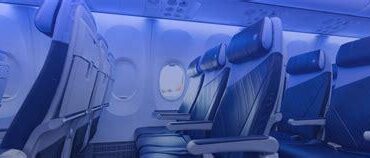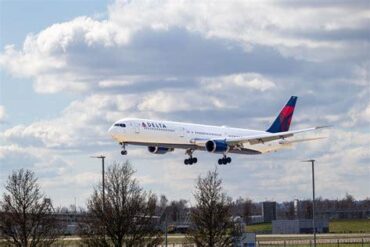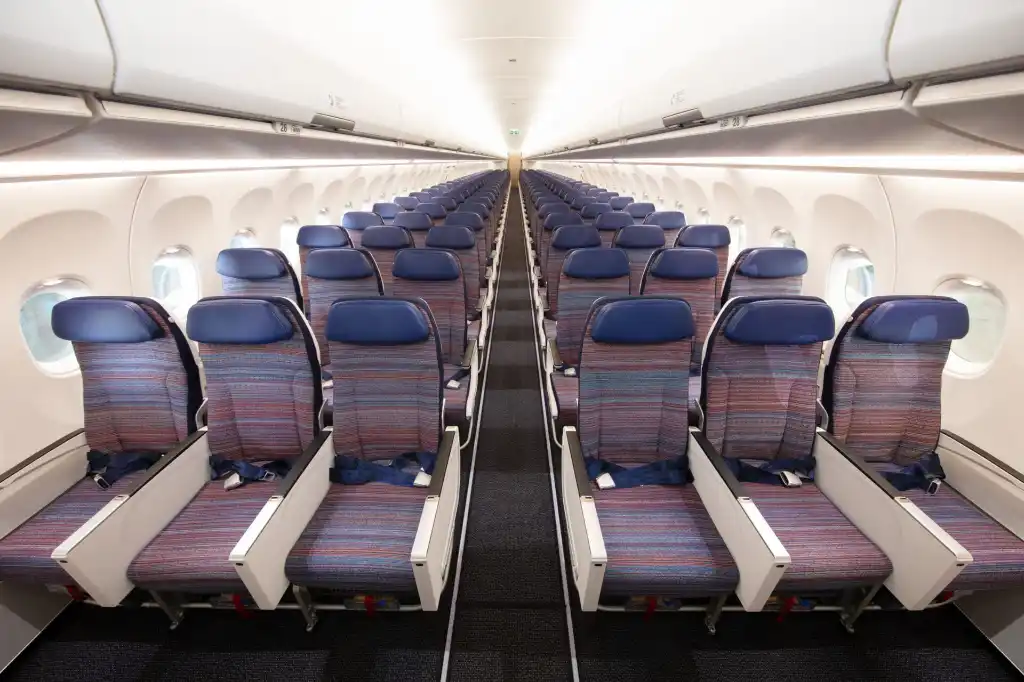
Air travel has evolved dramatically over the past half-century, yet one detail has remained stubbornly consistent: the 3-3 seating layout on narrowbody aircraft. Despite advances in materials, aerodynamics, and passenger expectations, airlines continue to rely on this six-abreast configuration across aircraft like the Boeing 737 and Airbus A320 families. At first glance, it may seem like a relic of outdated design—but the truth is far more nuanced, shaped by a powerful mix of regulatory constraints, engineering decisions, and economic realities.
Understanding why this layout persists requires peeling back layers of aviation design philosophy, safety rules, and competitive airline economics. The answer is not simply about squeezing in passengers—it’s about balancing efficiency, safety, and profitability within tightly defined limits.
The Regulatory Backbone: Why 3-3 Seating Is Not Optional
At the heart of the 3-3 configuration lies a non-negotiable constraint: aviation safety regulations. Authorities such as the FAA (Federal Aviation Administration) and EASA (European Union Aviation Safety Agency) enforce strict rules governing cabin layouts, particularly for single-aisle aircraft.
These rules state that in aircraft with one aisle, no passenger can be seated more than two seats away from an aisle. This effectively caps the maximum configuration at three seats on either side, creating the now-familiar 3-3 layout.
The reasoning is grounded in emergency scenarios. Aircraft must meet the 90-second evacuation rule, meaning every passenger must be able to exit the aircraft within a minute and a half using only half of the available exits. Any configuration exceeding three seats from the aisle would slow evacuation times, increasing risk during emergencies.
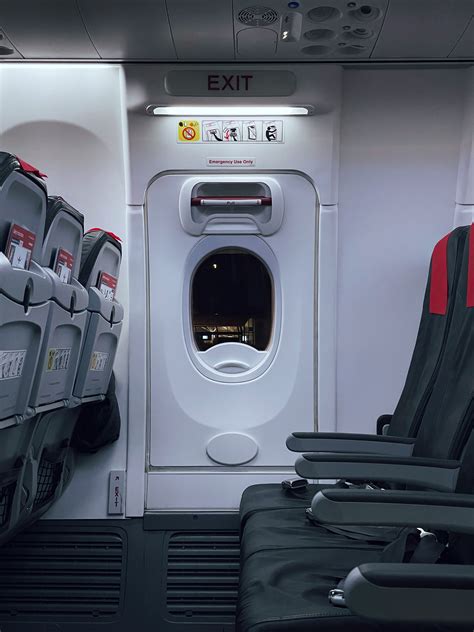
This isn’t just theoretical. Evacuation tests are physically conducted under controlled conditions, and layouts that fail simply never make it into service. While it might be technically feasible to design a wider single-aisle cabin with more seats per row, it would fail certification long before reaching passengers.
Design Legacy: Built Around Six-Abreast From Day One
The dominance of 3-3 seating is also deeply rooted in original aircraft design choices. When Boeing introduced the 737 in the 1960s, it intentionally engineered the aircraft to accommodate six seats per row at the narrowest feasible cabin width. This decision optimized operational efficiency while maintaining acceptable passenger comfort for the era.
Airbus followed a similar philosophy with the A320 in the 1980s, though it introduced a slightly wider cabin. Even so, it retained the six-abreast layout because it represented the best compromise between capacity and structural efficiency.
Once these aircraft became industry standards, airlines built their entire operational models around them—from boarding procedures to revenue calculations. Changing the seating format would disrupt far more than just cabin layouts; it would ripple through fleet planning, ticket pricing, and airport compatibility.
Why Not 2-4 or 4-2? The Hidden Constraints
It’s tempting to imagine alternative configurations like 2-4 seating, which might seem like a clever way to increase capacity or improve passenger flow. However, such layouts violate the same safety principle: no passenger can be more than two seats from an aisle.
In a 2-4 configuration, the passengers seated in the middle of the four-seat block would be three seats away from the aisle, making evacuation significantly slower and more dangerous. This alone disqualifies such designs under modern certification standards.
Historically, there were exceptions. Some aircraft in the 1960s, such as the Hawker Siddeley Trident, briefly experimented with seven-abreast seating. But these existed before today’s strict regulatory framework—and none would pass certification today.
Economics Over Comfort: The Airline Incentive Structure
Even if regulations allowed more flexibility, airlines would still gravitate toward 3-3 seating for one simple reason: profitability. The economics of aviation are brutally precise, and every additional seat represents potential revenue.
Switching to a five-abreast configuration (such as 3-2) on a narrowbody aircraft is technically possible. However, doing so would reduce total seat count, directly impacting revenue per flight. For airlines operating on thin margins, that trade-off is rarely acceptable.
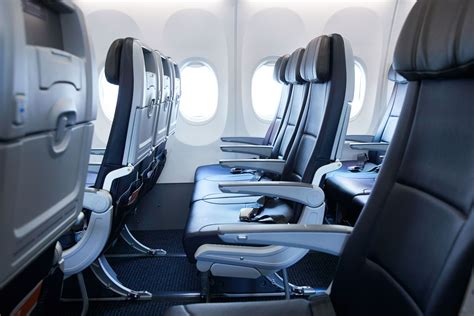
Instead, airlines optimize within the 3-3 framework by adjusting seat pitch—the distance between rows. This allows them to add more rows without changing the aircraft’s width. While passengers often feel cabins are becoming more cramped, the reduction is happening front-to-back, not side-to-side.
The Rise of Smaller Cabins: Regional Jets Break the Mold
Interestingly, not all aircraft follow the six-abreast rule. Smaller planes, known as regional jets, feature narrower cabins and different seating configurations.
Aircraft like the Airbus A220 adopt a 3-2 layout, offering wider seats and a more comfortable experience. Meanwhile, the Embraer E-Jet family uses a 2-2 configuration, eliminating the dreaded middle seat entirely.
These designs are possible because the aircraft themselves are narrower, making six-abreast seating physically impossible. The result is often a superior passenger experience—but with fewer total seats, limiting their use to shorter routes and lower-demand markets.
Cabin Width Wars: Boeing vs Airbus vs New Entrants
While the number of seats per row remains fixed, manufacturers have quietly competed on cabin width. Even small differences can significantly impact passenger comfort.
- Boeing 737: ~11 ft 7 in (354 cm)
- Airbus A320: ~12 ft 2 in (370 cm)
- COMAC C919: ~12 ft 10 in (390 cm)
- MC-21: ~12 ft 6 in (381 cm)
The wider the cabin, the more room airlines have to increase seat width or aisle space. The COMAC C919, for example, offers noticeably more elbow room than older designs, positioning itself as a more comfortable alternative.
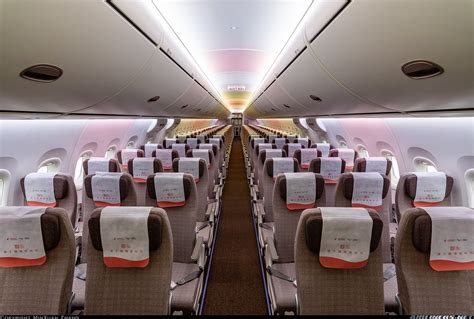
However, despite these gains, all remain bound to the same six-abreast maximum. The extra width enhances comfort but does not change the fundamental layout.
Why Widebodies Can Do More—and Narrowbodies Can’t
The contrast becomes clear when comparing narrowbody aircraft to their larger counterparts. Widebody aircraft feature two aisles, enabling configurations like 3-4-3 or 3-3-3.
With two aisles, passengers are never more than two seats from an exit path, satisfying evacuation rules while allowing more seats per row. This is why aircraft like the Boeing 777 can accommodate ten seats across in economy.
Narrowbodies, by definition, have only one aisle. Adding a second aisle would fundamentally change the aircraft category, turning it into a widebody with entirely different operational characteristics, including higher costs and different airport requirements.
The Illusion of Shrinking Seats
A common perception among travelers is that seats are getting narrower over time. In reality, the side-to-side space in narrowbody cabins has remained largely constant for decades.
What has changed is the design of armrests, seat frames, and padding, allowing airlines to subtly adjust usable space. Combined with reduced seat pitch, this creates the feeling of tighter cabins—even though the aircraft’s internal width hasn’t changed.
This distinction matters. Airlines have very limited ability to alter seat width without redesigning the entire cabin structure. The 3-3 layout effectively locks in the lateral dimensions.
Future Aircraft: Wider Cabins, Same Layout
Looking ahead, both Airbus and Boeing are developing next-generation narrowbody aircraft to replace the A320 and 737 families. These designs are expected to feature slightly wider cabins, improved materials, and next-gen engines.
Yet one thing is almost certain: they will still use 3-3 seating.
The reasons are unchanged. Regulations still enforce aisle proximity rules, and airlines still prioritize seat count efficiency. Even with innovations like open-fan engines or folding wingtips, the cabin layout remains constrained by the same fundamental principles.
The Real Trade-Off: Efficiency vs Experience
The persistence of 3-3 seating reflects a deeper truth about modern aviation: it is a constant negotiation between passenger comfort and operational efficiency.
Airlines operate in a fiercely competitive environment where margins are thin and demand is volatile. The six-abreast configuration represents the optimal balance, maximizing revenue while meeting safety requirements and maintaining acceptable comfort levels.
For passengers, this means that meaningful improvements are more likely to come from better seat design, increased cabin width, or improved in-flight services—not from a radical change in seating layout.
Conclusion: A Design That Endures for a Reason
The enduring presence of 3-3 seating on narrowbody jets is not a failure of innovation—it is a reflection of constraints that are both practical and essential. Safety regulations define the boundaries, engineering locks in the structure, and economics reinforces the status quo.
While newer aircraft may offer subtle improvements in space and comfort, the fundamental layout is here to stay. In a world where every inch and every second matters, the 3-3 configuration remains the most efficient, compliant, and commercially viable solution for single-aisle air travel.
And unless the rules—or the very definition of a narrowbody aircraft—change, that familiar six-seat row will continue to shape the flying experience for millions of passengers every single day.