Aviation’s Digital Time Capsule Still in Active Service
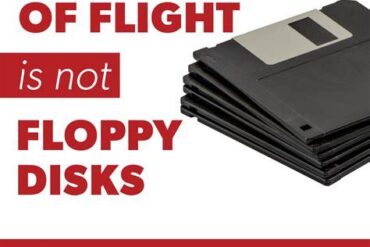
The idea that modern aircraft rely on floppy disks sounds like technological folklore, yet it remains grounded in operational reality. While passengers stream movies over in-flight Wi-Fi, certain avionics systems quietly depend on storage hardware more commonly associated with 1980s computer labs. The contrast is jarring: cutting-edge aerodynamics paired with software delivered on plastic squares holding less data than a single smartphone photo.
This persistence is not born from neglect but from deliberate engineering conservatism. Aviation operates in a domain where reliability outweighs novelty. Every component inside an aircraft must survive vibration, radiation exposure, extreme temperatures, and decades of service life. When a system proves dependable under those stresses, replacing it becomes less about innovation and more about risk management.
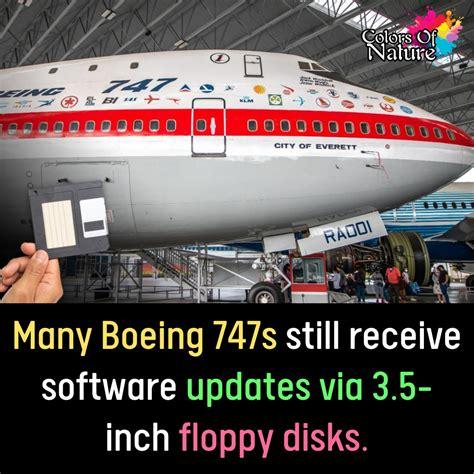
The Boeing 747, including specialized variants such as the U.S. “Doomsday plane,” exemplifies this philosophy. Some 747 fleets used floppy disks to load navigation databases and flight software well into the 21st century, and certain international operators continued the practice long after consumer technology abandoned the format.
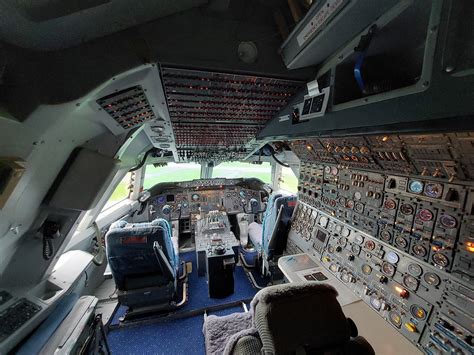
Why Floppy Disks Were Considered Mission-Critical Reliable
From a modern IT perspective, floppy disks appear fragile and limited. In aviation, however, their constraints became strengths. Early airborne data-loading alternatives—particularly wireless transfer—posed unacceptable failure risks. Even minor signal interference could corrupt software uploads, a scenario with potentially catastrophic implications if avionics data became incomplete or damaged.
Physical media offered a closed, deterministic transfer method. Engineers could verify data integrity before installation, ensuring that what entered the aircraft matched certified software exactly. There were no packet losses, no signal drops, no electromagnetic surprises.
Security played an equally decisive role. A floppy disk is functionally air-gapped—it cannot be hacked remotely. In an industry where cybersecurity intersects with passenger safety, limiting external connectivity reduced exposure to malicious intrusion. Sometimes the safest network is no network at all.
Certification, Cost, and the Tyranny of Retrofit Complexity
Modernizing aircraft systems is less like updating a laptop and more like rewriting a spacecraft’s operating system mid-orbit. Aviation authorities such as the Federal Aviation Administration (FAA) require exhaustive validation before any software or hardware modification enters service.
The FAA’s legacy software process mandates detailed software change impact analysis. Engineers must prove that an upgrade will not ripple unpredictably through interconnected avionics systems. Because flight computers interact with navigation, communications, autopilot, and safety subsystems, even a storage-media change can trigger years of testing and certification review.
Retrofitting older aircraft with digital wireless loaders is also financially daunting. Airlines weigh modernization costs against remaining airframe life. If a jet is nearing retirement, investing millions in new data infrastructure yields little operational return.

When Legacy Technology Becomes an Industry Bottleneck
Despite its reliability, aging infrastructure carries systemic risks. Outdated technology can strain maintenance logistics, especially as spare parts grow scarce. The U.S. Government Accountability Office (GAO) found that dozens of FAA information systems were approaching unsustainable status due to aging components and limited replacement availability.
Operational disruption offers a preview of the stakes. In May 2025, technology failures linked to aging systems contributed to more than 2,800 flight delays and cancellations at Newark Liberty International Airport. While floppy disks were not the sole culprit, the incident underscored how legacy architecture can ripple across national airspace operations.
The Gradual Sunset of the Floppy Era
The aviation sector is now transitioning toward secure wireless data loading and encrypted solid-state storage. Advances in transmission stability, redundancy protocols, and cybersecurity frameworks have reduced the risks that once made floppy disks indispensable.
Yet the phase-out remains measured rather than abrupt. Aircraft are designed for multi-decade service lives, and technology refresh cycles must align with safety certification, budgeting, and fleet replacement schedules. The result is a rare technological overlap where next-generation jets coexist with storage media older than many pilots flying them.
There is a poetic irony in this coexistence. The same industry that pushes the frontier of materials science and satellite navigation still preserves a relic of early personal computing—not from nostalgia, but from disciplined engineering logic. In aviation, progress is not defined by speed alone, but by the quiet assurance that every system, no matter how old, performs flawlessly miles above the Earth.