The United States Navy has maintained a century-long commitment to aviation power projection, with several air bases standing as cornerstones of both historical significance and contemporary military strategy. These bases are not only among the Navy’s oldest but continue to drive innovation, readiness, and global reach. In this detailed exploration, we examine the five oldest naval aviation bases, analyzing their evolution, strategic functions, and enduring contributions to U.S. naval dominance.
Naval Air Station Pensacola: The Cradle of Naval Aviation
Naval Air Station (NAS) Pensacola, established in 1914, stands as the birthplace of U.S. naval aviation. Located on Florida’s Gulf Coast, its calm waters, expansive training areas, and proximity to maritime environments made it the ideal choice for pioneering seaplane operations.
Initially developed to host Curtiss Model E seaplanes, Pensacola rapidly evolved into a foundational center for naval flight instruction. During World War I, it emerged as a premier training base, refining the skills of pilots who would become aviation leaders. The interwar period witnessed the development of carrier landing techniques and institutionalized flight curricula, setting the stage for America’s carrier warfare dominance in WWII.
Today, NAS Pensacola serves as home to the Naval Aviation Schools Command, Training Air Wing Six, and the legendary Blue Angels flight demonstration team. Every U.S. Navy aviator begins their journey here, receiving initial training in aircraft such as the T-6 Texan II, T-45 Goshawk, and TH-57 Sea Ranger. The station’s influence is so enduring that nearly every combat-ready naval pilot in the fleet has walked its flight lines.
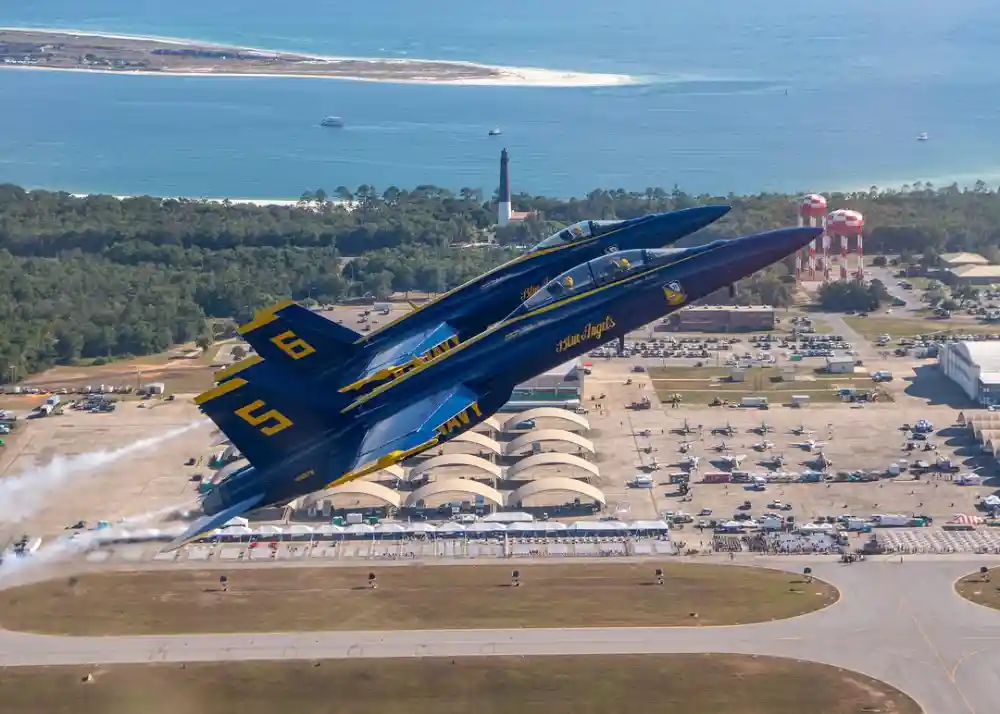
The base’s historic legacy, combined with its role in training the next generation of carrier aviators, ensures Pensacola’s unrivaled prominence in naval aviation history and operational continuity.
Joint Base Pearl Harbor–Hickam: Pacific Powerhouse Since the 1910s
Pearl Harbor’s connection to naval aviation began as early as 1917, when Martin PM seaplanes and early reconnaissance aircraft operated from Ford Island, a strategic centerpiece in the Pacific. The Navy soon recognized the need for robust aviation facilities, establishing forward-deployed bases to cover the vast Pacific theater.
The evolution into Joint Base Pearl Harbor–Hickam in the 2000s, merging Navy and Air Force elements, created a complex uniquely capable of supporting joint maritime and aerial operations. However, its roots remain firmly in naval tradition. During World War II, the Japanese attack on December 7, 1941, not only devastated the surface fleet but underscored the critical importance of aviation resilience. From that day forward, naval air power would never be an auxiliary force—it became the vanguard.
Currently, the base hosts Patrol and Reconnaissance Wing Two (CPRW-2), fleet logistics units, and carrier integration detachments. Aircraft such as the P-8 Poseidon, MH-60R Seahawk, C-40 Clipper, and KC-130J Hercules enable long-range surveillance, strike support, and regional dominance throughout the Indo-Pacific Command (INDOPACOM) area of responsibility.
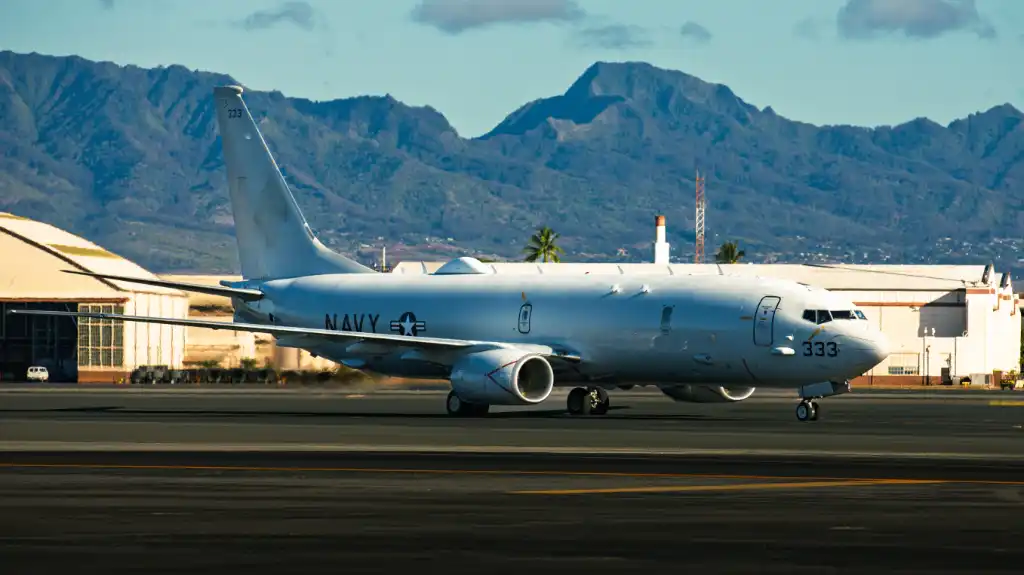
Pearl Harbor–Hickam ranks among the most strategically indispensable aviation bases in U.S. history, maintaining forward deployment readiness across the Pacific and acting as a logistical linchpin for joint naval operations.
Naval Air Station North Island: Carrier Air Power’s Pacific Launchpad
Nestled in San Diego Bay, Naval Air Station North Island began operations in 1917, with its tranquil waters ideal for early Curtiss HS-1 seaplane flights. Its evolution from a seaplane outpost to a carrier aviation nucleus represents the maturing of U.S. sea-air capabilities on the West Coast.
In the interwar years, North Island was central to developing carrier deck operations, including catapult launches, recovery systems, and deck handling. It also played a key role in outfitting and deploying carrier air groups during WWII, including historic ships like USS Enterprise and USS Lexington.
Today, the base supports Carrier Air Wings 9, 11, and 14, including F/A-18 squadrons, E-2 Hawkeye surveillance units, and Helicopter Sea Combat (HSC) and Helicopter Maritime Strike (HSM) squadrons. Its flight line routinely features F-35C Lightning IIs, reinforcing its transition to fifth-generation carrier strike capabilities.
North Island is also headquarters to Commander, Naval Air Forces Pacific (COMNAVAIRPAC), which governs aviation operations across the largest oceanic combat theater in the world.
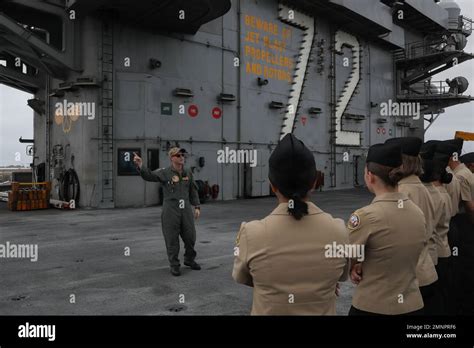
The base’s geographical advantage and deep-rooted integration with Pacific Fleet carriers render it a crucial node in maintaining global power projection and carrier battle group effectiveness.
Naval Air Station Oceana: The East Coast’s Jet Powerhouse
While its official designation dates to 1943, Naval Air Station Oceana is the product of decades of aviation growth in the Norfolk, Virginia area. The need for a large-scale, jet-capable airfield on the Atlantic coast emerged during World War II, and Oceana fulfilled that demand with modern runways and support infrastructure.
Oceana is the Navy’s primary East Coast master jet base, hosting over a dozen F/A-18 Super Hornet squadrons. These units train for carrier air wing deployment, execute integrated warfighting exercises, and conduct Atlantic Fleet strike missions. The base also supports fleet replacement squadrons (FRS), which qualify new naval aviators in the latest multirole platforms.
Its operational synergy with Naval Station Norfolk, located just minutes away, allows seamless coordination between pilots, carriers, and maintenance crews. This physical proximity makes Oceana a vital hub for carrier air group cohesion and deployment readiness.
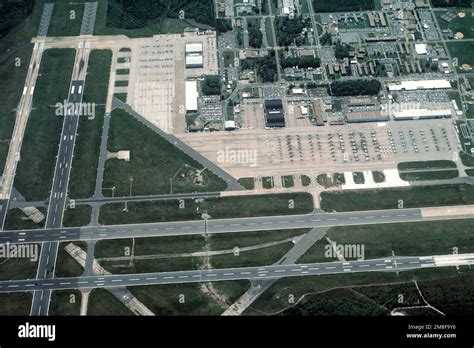
In both volume and capability, Oceana remains indispensable to U.S. Atlantic naval power, generating combat-ready air wings that can surge globally from sea or land.
Naval Air Station Patuxent River: The Future of Naval Flight
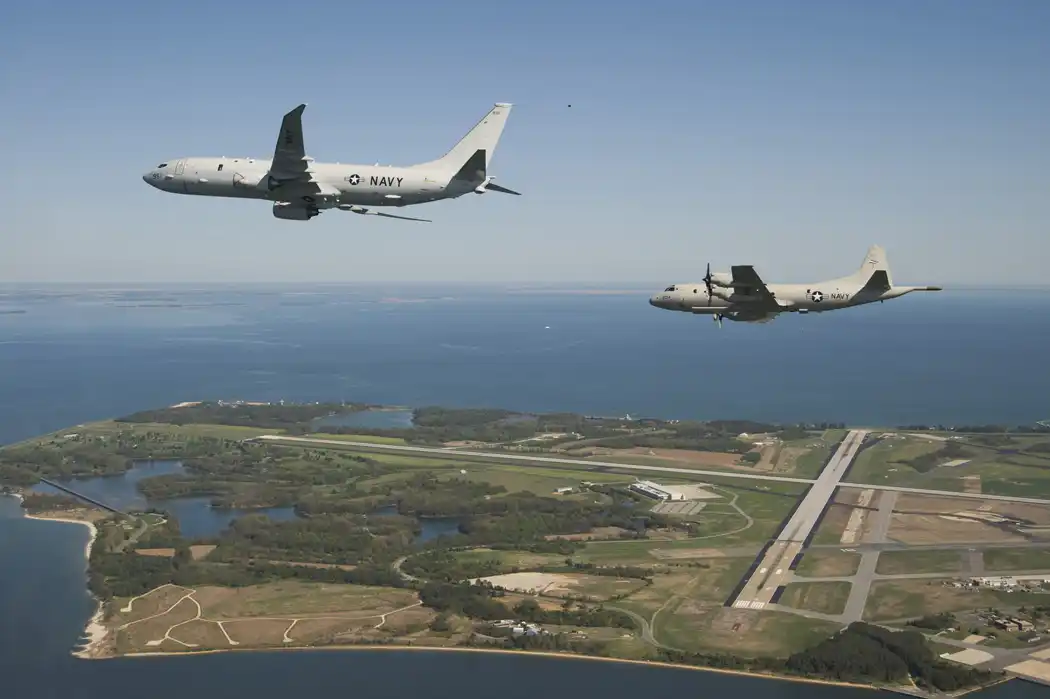
Founded in 1943, Naval Air Station Patuxent River—often referred to as Pax River—was conceived not as a typical operational airfield, but as the Navy’s dedicated test and evaluation center. Located on the Chesapeake Bay in Maryland, Pax River was uniquely constructed to consolidate flight testing efforts from scattered facilities into one centralized, state-of-the-art complex.
From the first experimental F4F Wildcat trials to the most advanced MQ-25 Stingray carrier-based unmanned systems, Pax River has remained at the cutting edge of naval aviation technology. Home to the Naval Air Warfare Center Aircraft Division (NAWCAD) and Air Test and Evaluation Squadron One (VX-1), the base rigorously tests aircraft for airworthiness, weapons compatibility, and carrier suitability.
The station has supported milestones in carrier-based jet propulsion, night flying, advanced sensors, and now leads the transition into autonomous naval aviation. Programs such as the F-35C Lightning II and the E-2D Advanced Hawkeye undergo detailed assessment here before entering frontline deployment.
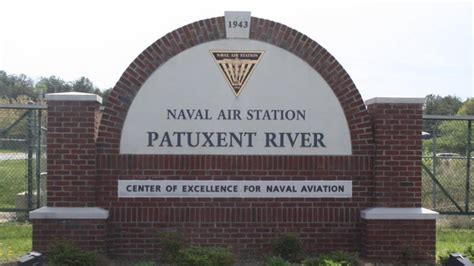
Pax River may be the youngest among these historic bases, but its mission makes it strategically essential to future fleet operations. Every aircraft that lands on a carrier must first prove itself on the runways and telemetry ranges of this crucible of innovation.
Conclusion: Anchors of Naval Air Superiority
Each of these five bases represents a pillar of U.S. naval aviation history, with distinct legacies and strategic functions. From Pensacola’s training roots to Pearl Harbor’s Pacific vigilance, North Island’s carrier deployments, Oceana’s jet dominance, and Patuxent River’s technological mastery, these installations form the bedrock of American sea-air dominance.
In a world where geopolitical flashpoints continue to emerge across the Indo-Pacific, Atlantic, and beyond, these legacy bases ensure that U.S. naval aviation remains not only historically grounded but operationally agile and future-ready. Their runways have launched generations of pilots and will continue to do so, as the Navy transitions into an era defined by multi-domain warfare, autonomous systems, and global strike capability.