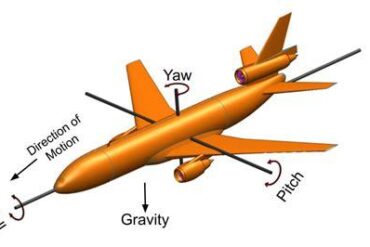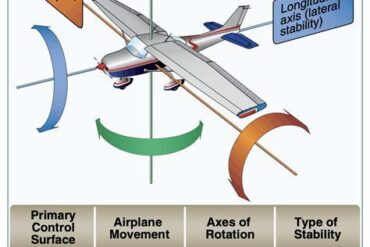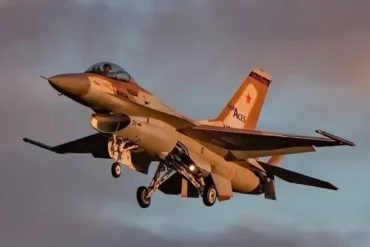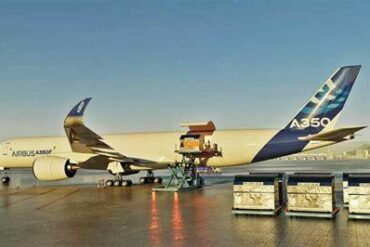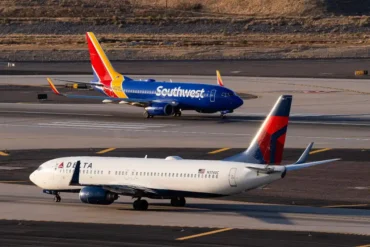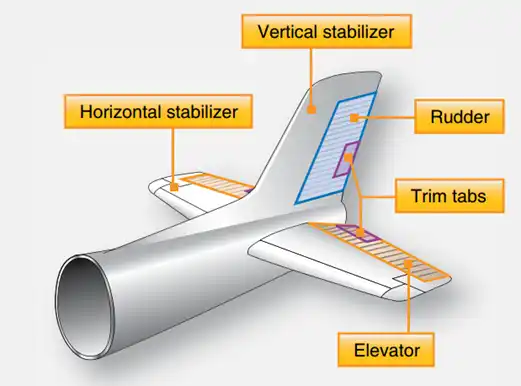
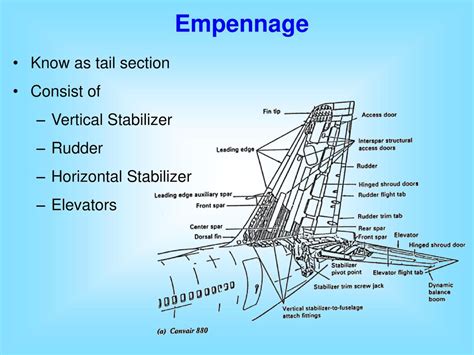
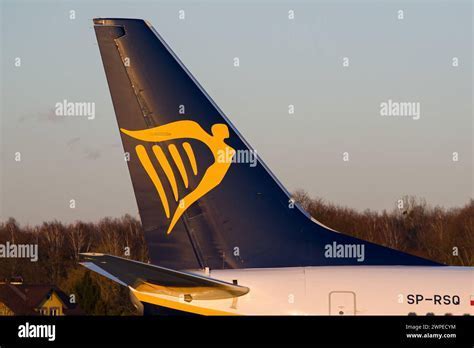
In the sophisticated realm of aeronautical engineering, few components hold as much influence over an aircraft’s yaw stability and directional control as the vertical stabilizer. Often referred to as the tail fin, this structural surface is a critical element of the empennage—the tail assembly that provides equilibrium, control, and responsiveness in all axes of flight. Mounted typically at the aft of the fuselage, the vertical stabilizer works in concert with the rudder to manage yaw—motion around the vertical axis—and ensure the aircraft maintains coordinated, stable flight.
As aerospace platforms have evolved—from subsonic commercial jets to supersonic military aircraft—the design, function, and integration of the vertical stabilizer have been continuously refined to meet new aerodynamic and structural demands. In this article, we explore the engineering principles, control mechanics, and aerodynamic interactions that define the vertical stabilizer’s role across a wide spectrum of aircraft applications.
Core Function and Aerodynamic Principles
The vertical stabilizer is a fixed vertical surface mounted at the tail of the aircraft. In a conventional tail configuration, it is aligned perpendicularly to the horizontal stabilizers, offering directional stability—commonly known as weathercock stability—which causes the aircraft to align with the relative wind, minimizing unwanted yawing motions.
Attached to the vertical stabilizer is the rudder, a movable control surface operated via rudder pedals. Through deliberate rudder deflections, the pilot adjusts the yaw angle, guiding the aircraft’s nose left or right. Together, the stabilizer and rudder regulate:
- Yaw stability during coordinated turns
- Asymmetric thrust compensation (especially vital in multi-engine aircraft during engine-out scenarios)
- Crosswind landings and takeoffs
- Ground steering coordination at low speeds
Aircraft length significantly impacts vertical stabilizer size. For instance, the Airbus A318, being shorter than its A320 counterparts, features a larger tail fin to compensate for the reduced moment arm between the center of gravity and the tail.
Vertical Tail Volume Coefficient and Tail Efficiency
A key metric in tail design is the vertical tail volume coefficient (Vᵥ), which quantifies the tail’s effectiveness by relating its area and arm length to that of the main wing:
Vᵥ = (Sᵥ × Ltail-CG) / (Sₑ × Lw)
Where:
- Sᵥ: vertical tail area
- Ltail-CG: distance from the center of gravity to the tail
- Sₑ: wing reference area
- Lw: wing mean aerodynamic chord
A higher coefficient denotes stronger yaw authority, crucial for jetliners and military platforms that require robust control margins. Tail efficiency, on the other hand, is influenced by its position within the aircraft’s airflow. A tail immersed in clean freestream air is more effective than one partially shadowed by fuselage or wing wakes. For this reason, aircraft like the Panavia Tornado adopted an exceptionally tall fin to preserve yaw control under high angle-of-attack conditions.
Rudder Dynamics and Blowdown Limit
Rudder deflection is the primary means of yaw control and is governed by a rudder travel limiter. The blowdown limit defines the maximum rudder angle achievable under specific flight conditions, balancing aerodynamic loads against actuator strength. In high-speed or low-pressure environments, full rudder deflection may not be possible due to excessive airflow resistance.
In multi-engine aircraft, particularly those with wing-mounted engines, rudders are designed to be exceptionally powerful. They must maintain control during engine failure at V₁ (decision speed)—one of the most critical moments in any flight phase. The rudder must counteract severe yawing moments without inducing excessive side loads on the vertical stabilizer structure.
Ground Steering and Trim Systems
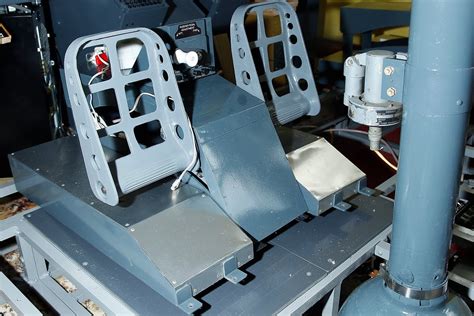
During ground operations, yaw is governed by a combination of rudder inputs and nosewheel (or tailwheel) steering. At low taxi speeds, wheel steering dominates due to the limited effectiveness of aerodynamic surfaces. As the aircraft accelerates during takeoff, the rudder gradually assumes authority, allowing smooth transition from ground to airborne control.
Trim tabs, often integrated on rudders, adjust the control surface’s neutral position. These servo-like mechanisms relieve pilot workload by maintaining a set yaw angle with minimal input. They are critical during long-range flights, where sustained asymmetric drag or crosswinds require continuous trim to prevent rudder-induced fatigue.
Yaw Stability and Aerodynamic Coupling
The vertical stabilizer plays a commanding role in static and dynamic yaw stability. Its performance is influenced by multiple aircraft elements including:
- Wing sweep: Backward-swept wings enhance directional stability.
- Dihedral effect: The upward angle of wings and horizontal stabilizers can introduce subtle yaw-roll coupling.
- Propeller slipstream and jet wash: These can either destabilize or assist in yaw damping depending on the configuration.
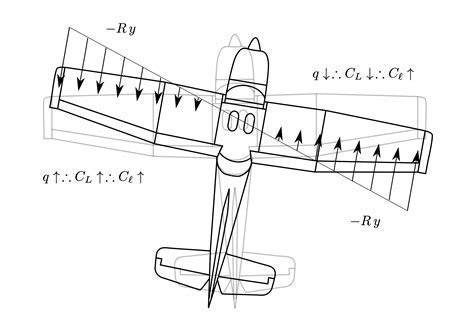
Importantly, the center of pressure of the vertical tail lies above the center of gravity, meaning any side force on the tail can induce a rolling moment. This interaction explains why yaw control is inherently coupled with roll behavior—a critical consideration in aerobatic and fighter aircraft.
Supersonic Challenges and Rudder Reversal
In supersonic flight, the vertical stabilizer’s effectiveness diminishes due to changes in airflow characteristics—shock waves and expansion zones reduce the lift-curve slope. To mitigate this:
- Aircraft like the F-8 Crusader added ventral fins.
- The XB-70 Valkyrie employed folding wingtips to supplement tail force.
- The Avro Arrow introduced automatic rudder deflections to restore yaw stability electronically.
Moreover, the phenomenon of rudder reversal—where deflected rudder forces abruptly change direction—can result in rudder lock. To counter this, many aircraft incorporate a dorsal fin fillet, a vortex-generating structure at the base of the tail to maintain flow attachment and delay stall.
Structural Limits and Failures
The vertical stabilizer is subject to enormous aerodynamic loads, particularly during turbulence, upsets, and full rudder input scenarios. Several incidents underscore the critical structural demands:
- American Airlines Flight 587 suffered total fin failure after excessive rudder movements in wake turbulence.
- B-52 Stratofortress aircraft have experienced vertical fin losses in clear air turbulence, yet demonstrated safe landings due to airframe redundancy.
- The English Electric Lightning T-series suffered fin failures due to inertial roll coupling, leading to structural reinforcements.
To prevent over-engineering, designers accept certain limitations. Full rudder deflections at extreme sideslip are not expected in transport-category aircraft, sparing them from carrying prohibitively heavy tail structures.
Buffet and Fatigue Life in Combat Aircraft
In fighter aircraft, buffeting of the vertical stabilizer is a significant fatigue concern. It results from burst vortices impinging on the fin, especially during high angle-of-attack maneuvers. Examples include:
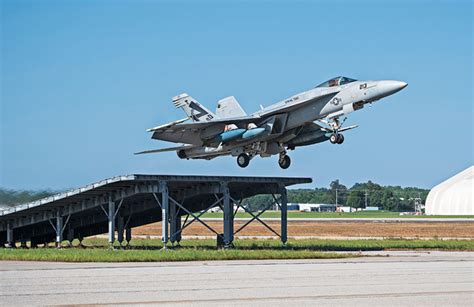
- The F/A-18 Hornet, where vortex breakdown from the leading-edge extension (LEX) generates tail buffet. The LEX fence addition significantly reduced fatigue-inducing loads.
- The Eurofighter Typhoon experiences buffet from canard-generated vortices as well as from the deflected airbrake, contributing to structural fatigue.
Addressing this involves intricate CFD analysis and vortex management via aerodynamic tweaks to prolong tail component life.
Alternative Configurations: All-Moving Fins and Twin Tails
Beyond conventional designs, some aircraft utilize all-moving vertical fins. The A-5 Vigilante and X-15 showcased this concept, where entire fin structures could pivot for enhanced control.
Twin tails, common in modern military designs like the F-22 Raptor, offer several advantages:
- Redundancy: If one tail fails, the other can provide minimal control.
- Control augmentation: Toe-in or flare-out can supplement pitch or roll maneuvers.
- Airbrake functionality: Differential rudder operation acts as a drag brake.
These designs reflect the evolving role of tail systems beyond mere yaw control into dynamic, multi-axis control surfaces in high-performance environments.
Conclusion
The vertical stabilizer is a cornerstone of aircraft stability and control. From subsonic airliners to high-Mach interceptors, its role is integral not just in enabling directional flight, but also in managing complex aerodynamic forces, compensating for asymmetric propulsion, and maintaining flight safety during critical maneuvers. Whether through conventional fin-rudder assemblies, dorsal fin enhancements, or twin-fin redundancies, the vertical stabilizer remains an enduring emblem of aircraft engineering excellence.
FAQs
What happens if an aircraft loses its vertical stabilizer in flight?
If an aircraft loses its vertical stabilizer, its ability to maintain directional control is severely compromised. While some military aircraft have managed to land without a fin due to redundant control systems and careful piloting, such failures in civilian transport aircraft often lead to loss of control. Fin redundancy and control law protections are now integral in modern designs.
Why are some aircraft designed with twin vertical stabilizers?
Twin vertical stabilizers provide enhanced yaw control, redundancy, and structural advantages. They can be spaced farther apart, increasing moment arm for better control authority. Fighter aircraft often use this configuration for stealth shaping and vortex management, as seen in the F-22 Raptor and F/A-18 Hornet.
How does a dorsal fin prevent rudder lock?
A dorsal fin creates controlled vortices that help maintain smooth airflow over the rudder during sideslip or high angle-of-attack conditions. This delays tail surface stall and avoids the reversal of aerodynamic forces acting on the rudder, preventing it from becoming stuck at full deflection—a dangerous condition known as rudder lock.