A common misconception among non-pilots is that turning an aircraft is a job for the rudder alone—akin to a car’s steering wheel. Yet, while the rudder plays a vital role in directional control, it does not function as the primary turning mechanism. To grasp its true purpose, we must explore the aerodynamic principles governing yaw, the interaction with other control surfaces, and the sophisticated scenarios in which the rudder becomes a decisive instrument.
Understanding the Rudder and Yaw Axis
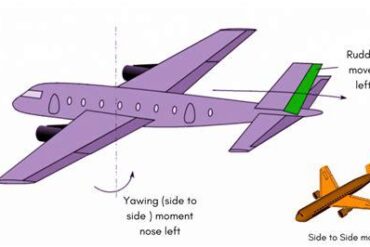
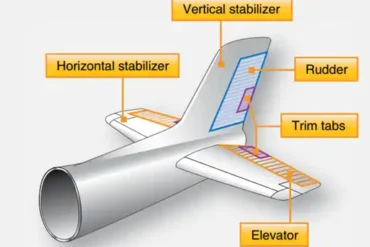
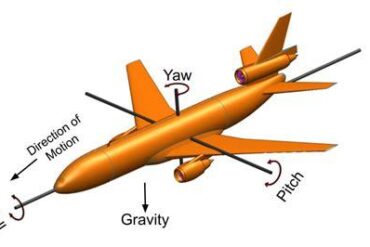
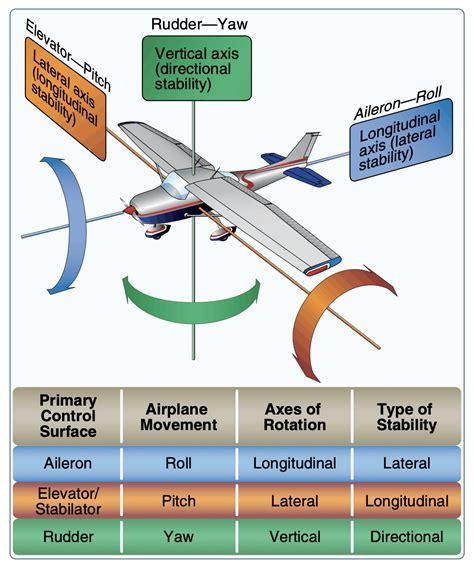
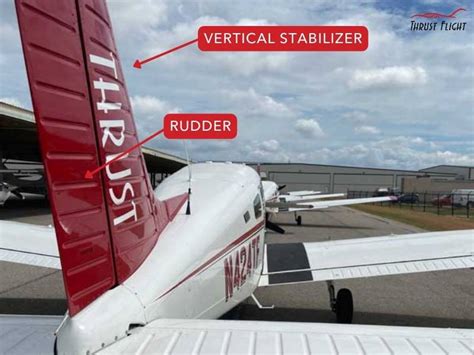
The rudder is a movable surface affixed to the vertical stabilizer, which is the fixed fin rising from an aircraft’s tail. It directly affects the yaw axis, meaning it controls the aircraft’s nose movement left or right. When the pilot pushes the rudder pedals, the rudder deflects, generating a yawing moment that rotates the aircraft about its vertical axis.
This motion is known as yaw, and it is analogous to a car’s front wheels turning left or right. However, unlike a ground vehicle, an aircraft operates in three dimensions, where turns require coordinated control across all axes—pitch, roll, and yaw. The rudder alone does not initiate a proper turn; instead, it aligns the aircraft’s nose with the flight path, ensuring smooth, efficient maneuvering.
Rudder vs. Ailerons: The Mechanics of Turning
In flight, ailerons, located on the trailing edge of each wing, are the primary controls for initiating a bank—a roll around the aircraft’s longitudinal axis. This bank causes one wing to generate more lift than the other, enabling the aircraft to turn via the tilted lift vector. However, this lift differential also introduces adverse yaw: a drag-induced force that yaws the nose in the opposite direction of the roll.
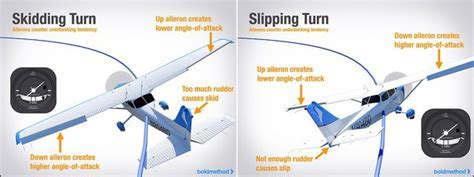
Here, the rudder comes into play. Proper rudder input counteracts adverse yaw, maintaining the nose in alignment with the turn’s arc. The result is a coordinated turn, essential for aerodynamic efficiency, passenger comfort, and control precision. When used in isolation, the rudder can induce a turn-like motion, but such rudder-only turns are typically unstable and sluggish—referred to pejoratively as “boat turns.”
Coordinated Turns and Adverse Yaw Correction
A well-executed coordinated turn uses rudder and aileron in tandem. As the ailerons roll the aircraft, rudder pressure counters the drag imbalance, aligning the nose and tail along the curved flight path. Without this rudder correction, the aircraft would slip or skid, degrading efficiency and making control more difficult, especially during instrument flight or low-speed maneuvers.
Pilots monitor coordination using the slip-skid indicator—typically a ball in a curved tube on the instrument panel. When the ball is centered, the aircraft is in a coordinated state. If the ball drifts left or right, it signals incorrect rudder input, alerting the pilot to adjust accordingly.
Trim and Yaw Dampers: Automation and Efficiency
On many smaller general aviation aircraft like Cessna 172s, rudder trim is a mechanical adjustment made on the ground. Once airborne and properly trimmed, rudder input becomes minimal during cruise, reducing pilot workload. In contrast, aircraft such as those from Piper may feature in-cockpit rudder trim controls, though flight instructors often discourage frequent use to promote proper rudder discipline.
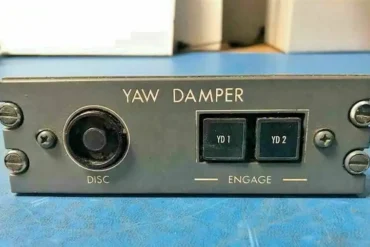
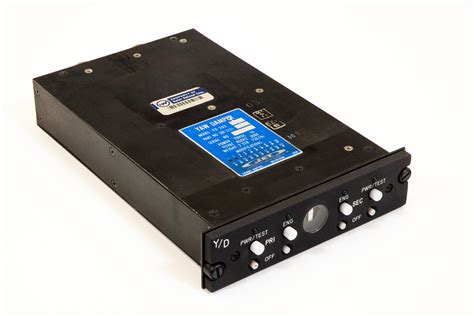
Larger, more complex aircraft often integrate yaw dampers—automated systems that make continuous micro-adjustments to the rudder. These devices enhance stability by suppressing oscillatory yaw movements, especially in swept-wing jets susceptible to Dutch roll. It’s important not to confuse a yaw damper with a shimmy damper, which acts on the nose gear to prevent vibrations during ground operations.
Crosswind Landings: Rudder Mastery at Low Altitude
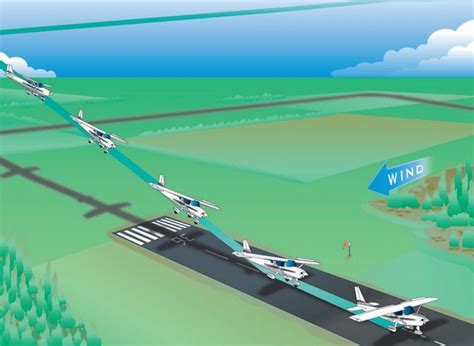
One of the most dramatic demonstrations of rudder control occurs during crosswind landings. Pilots employ techniques such as the crab method or the sideslip approach to counteract lateral wind forces.
- In a crab, the aircraft is yawed into the wind during final approach, maintaining a straight ground track. Just before touchdown, the pilot applies opposite rudder to align the nose with the runway—this is called de-crabbing.
- In a sideslip, also known as the wing-low method, the pilot banks the upwind wing into the wind and simultaneously applies opposite rudder to keep the aircraft’s ground track aligned with the runway.
These maneuvers require precise rudder input and situational awareness, as excessive deflection can lead to tail strikes or loss of control.
Emergency Scenarios: Engine-Out Situations in Multi-Engine Aircraft
The rudder’s role becomes even more crucial in multi-engine aircraft experiencing an engine failure. When one engine fails, the asymmetrical thrust causes the aircraft to yaw violently toward the inoperative engine. To maintain directional control and a safe flight attitude, pilots must apply rudder pressure toward the operating engine.
This compensation must be immediate and forceful, especially at low speeds or during takeoff. Many pilots are trained with the phrase, “dead foot, dead engine,” meaning the foot not applying pressure indicates the failed side. Proper rudder usage here is not merely about comfort—it is critical for survival.
Some multi-engine aircraft feature adjustable rudder trim tabs to aid in maintaining neutral pedal pressure after engine-out correction. However, procedures vary: some pilots prefer resetting trim to neutral during landing to preserve rudder authority during the flare.
Forward Slips and Descent Management
The rudder also serves as a precision tool during controlled descent procedures like the forward slip. In this maneuver, the pilot banks the aircraft one way while applying opposite rudder, presenting the fuselage at an angle to the relative wind. This increases drag, allowing for steep descents without airspeed gain—particularly useful when a pilot must land over obstacles or correct for a high final approach.
Although visually unsettling to passengers, a forward slip is a completely safe and stable maneuver when performed properly. It demands coordinated use of rudder and aileron, again illustrating the rudder’s role as a fine-tuning mechanism rather than a primary control surface.
Aerodynamic Behavior and Self-Stabilization
Once rudder input ceases, the aircraft’s vertical stabilizer, or fin, exerts a restoring moment that gradually returns the aircraft to straight flight. This passive stability is key to safe and manageable yaw dynamics. In essence, the rudder applies a torque, and the fixed fin dampens it over time. The smoother this decay, the more stable the aircraft feels.
This aerodynamic behavior underpins the design of training aircraft, where emphasis is placed on inherent stability. Conversely, high-performance aircraft may exhibit more sensitive yaw characteristics, requiring constant rudder discipline and sometimes additional systems to maintain equilibrium.
Conclusion: A Precision Instrument, Not a Steering Wheel
The rudder is not the aircraft’s steering wheel—it is the fine brushstroke on a pilot’s canvas. Its proper use enhances coordination, counters adverse forces, and ensures safety during complex maneuvers and emergencies. While rarely the star player in straight-and-level flight, the rudder becomes indispensable when precise control matters most.
From crosswind landings and engine-out scenarios to aerobatic coordination and descent profiles, rudder management is both a science and an art. Pilots who master its subtleties understand that aviation is not just about power or speed—but about balance, harmony, and control in three dimensions.