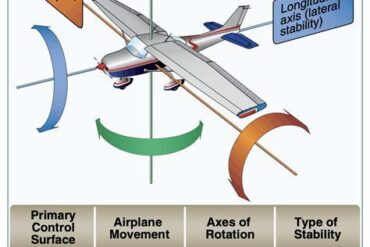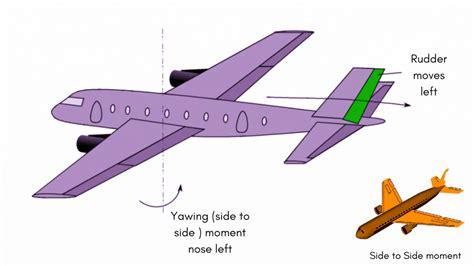
The rudder is an essential flight control surface that helps manage the aircraft’s rotation around its vertical axis, a movement known as “yaw.” It is a movable component attached to the back edge of the vertical stabilizer or fin. Unlike a boat’s rudder, which steers the vessel, the aircraft’s rudder primarily counters adverse yaw caused by turns or engine failure in multi-engine planes. Additionally, it allows pilots to intentionally slip the aircraft when necessary.
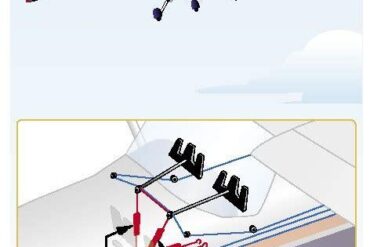
In most planes, the rudder is controlled using pedals in the flight deck. These pedals are mechanically linked to the rudder itself. When a pilot pushes the left rudder pedal, for instance, the rudder moves left. This action turns the aircraft’s nose in that direction. In larger or faster aircraft, hydraulic actuators often assist in overcoming the mechanical and aerodynamic forces acting on the rudder.
The effectiveness of the rudder increases with the aircraft’s speed. At lower speeds, pilots may need to apply significant rudder input to achieve the desired yaw. However, at higher speeds, smaller movements can be sufficient. In advanced aircraft, the range of rudder travel is often automatically restricted when flying above maneuvering speed. This limitation helps prevent deflection angles that could cause structural damage to the aircraft.