Airbus believes the future of US domestic aviation will not be defined only by carrying more passengers or adding more flights. Instead, the next major transformation will come from a growing focus on premium travel experiences, where airlines compete through better cabins, stronger service differentiation, and higher-value products.
During Airbus’ 2026 Global Market Forecast briefing in London, company executives explained that the American aviation market is entering a new phase. Although passenger demand will continue expanding, the strongest opportunities will come from travelers who are willing to pay more for additional comfort, flexibility, and personalized experiences. This shift toward premiumization is expected to influence airline strategies, aircraft purchases, and cabin designs through 2045.
For decades, airline growth strategies focused heavily on increasing passenger volume and lowering operating costs. The traditional model was simple: maximize aircraft utilization, fill as many economy seats as possible, and compete primarily through pricing. While efficiency remains important, Airbus sees a different trend emerging in mature aviation markets such as the United States.
The value of each passenger is becoming increasingly important. Airlines are discovering that profitability is no longer tied only to the number of travelers onboard but also to the quality of products those travelers choose. Premium cabins, including business class, first class, and premium economy, generate significantly higher revenue despite representing a smaller portion of total passengers.
According to industry analysis from McKinsey, premium seating can generate approximately 15% of airline revenue while serving only around 3% of passengers. This imbalance explains why airlines continue investing in upgraded cabins, larger seats, private suites, and improved onboard experiences.
Premiumization Becomes the Core Growth Strategy for US Airlines
Airbus executives highlighted that the premium market has changed significantly over the last decade. Premium travel is no longer limited to executives flying for business purposes. A growing number of leisure travelers are choosing upgraded products for vacations, family trips, and special occasions.
Joost van der Heijden, Airbus Head of Marketing, Commercial Aircraft, explained that airlines have increasingly adopted stronger cabin segmentation. Instead of offering only economy and business class, carriers are developing multiple passenger categories designed around different expectations and budgets.
Modern aircraft cabins can now include several distinct experiences within the same aircraft. Travelers may choose from standard economy, extra-legroom economy, premium economy, business class suites, or first-class-style accommodations depending on their priorities.
This approach allows airlines to capture more revenue from different customer groups. A passenger who cannot justify a full business-class fare may still be willing to pay significantly more for premium economy, additional privacy, or extra comfort.
The result is a fundamental change in how airlines view cabin space. Every square meter inside an aircraft must generate value, and premium products often provide stronger financial returns than additional low-cost seating.
Airbus A321XLR Expands Premium Cabins Beyond Widebody Aircraft
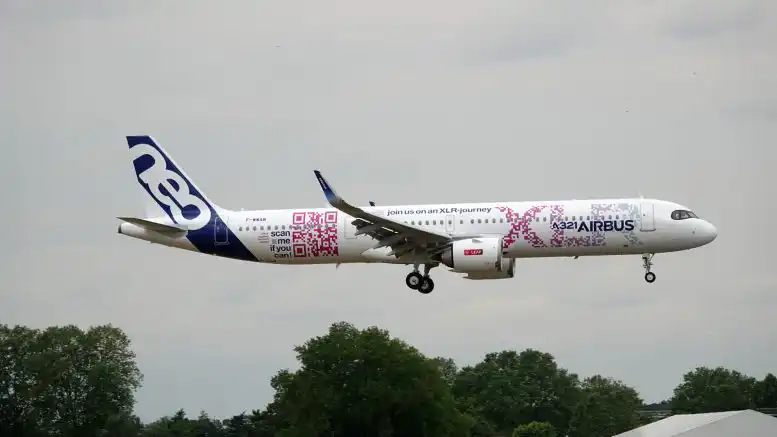
One of the most important factors accelerating premiumization is the arrival of advanced narrowbody aircraft such as the Airbus A321XLR. Traditionally, long-distance premium cabins were associated with large widebody aircraft like the Airbus A350 or Boeing 787. However, the A321XLR has changed expectations by allowing single-aisle aircraft to operate longer international and domestic routes.
With a range of up to 4,700 nautical miles (8,704 kilometers), the A321XLR can connect thinner markets that previously required larger aircraft. Routes lasting six, seven, or even eight hours can now be operated efficiently with a single-aisle platform.
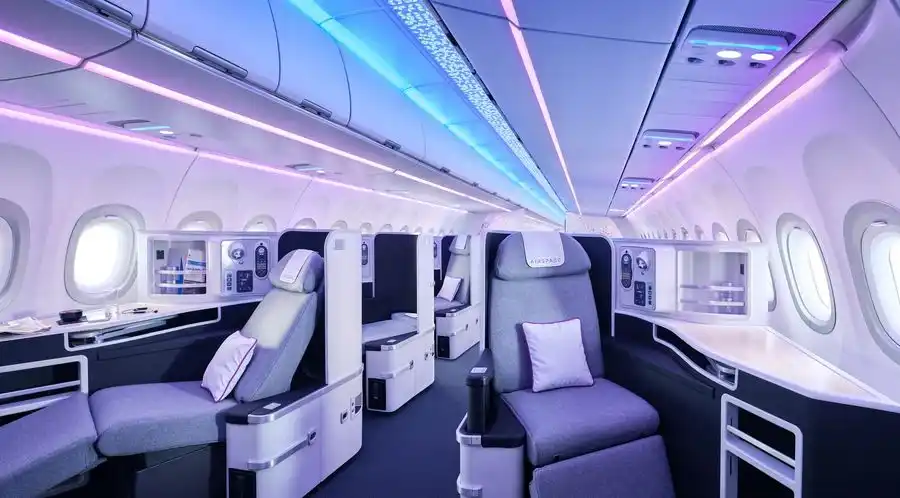
This capability has encouraged airlines to rethink narrowbody cabin layouts. Instead of simply adding more economy seats, carriers are introducing premium-heavy configurations that include lie-flat business seats, enhanced economy products, and dedicated premium sections.
Airbus noted that some airlines are moving toward four-class configurations on A321 aircraft, demonstrating how passenger segmentation is expanding beyond traditional widebody operations.
Several major US carriers are already following this strategy. JetBlue has developed premium-focused A321LR cabins featuring its Mint business-class product alongside additional comfort seating. American Airlines is preparing premium-oriented A321XLR cabins featuring Flagship Suites, while United Airlines continues expanding premium seating through its United Next strategy.
These developments indicate that premium travel is becoming a broader industry trend rather than a niche product.
Premium Economy Emerges as Aviation’s Most Important Cabin Segment
While first class and business class continue generating the highest individual fares, Airbus believes premium economy could become one of the most influential changes in aviation over the coming decades.
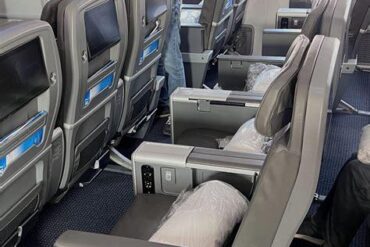
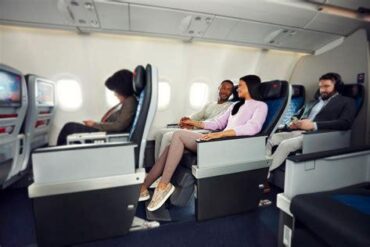
Premium economy occupies an important position between standard economy and business class. It provides passengers with larger seats, improved service, additional space, and a more comfortable journey without requiring the extremely high prices associated with business-class travel.
The growth of this segment reflects changing consumer behavior. Many travelers are willing to spend more for a better experience, especially on longer flights, but they do not necessarily require fully private suites or premium business services.
Industry data shows that premium demand recovered faster than economy demand after the pandemic. Globally, premium traffic returned strongly, while North America experienced especially strong growth. Premium travel demand in the region exceeded pre-pandemic levels faster than standard economy traffic.
Airlines have responded by increasing premium seat capacity. Since 2020, premium seating capacity has grown substantially faster than economy seating, demonstrating that carriers are adjusting aircraft interiors toward higher-value customers.
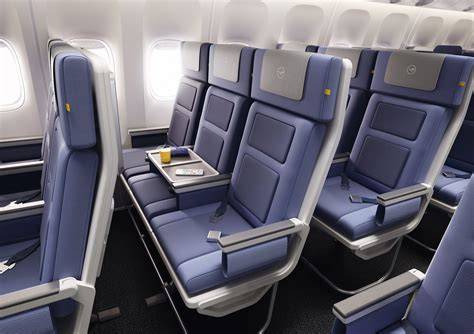
The financial appeal is clear. Premium economy seats require more space than traditional economy seats but can generate significantly higher revenue. For airlines, this creates a powerful incentive to redesign cabins around profitability rather than maximum passenger density.
Rising Household Wealth Will Shape US Aviation Growth
Unlike emerging aviation markets where population growth drives passenger expansion, Airbus believes the US market will develop differently. The company expects rising household wealth and increasing purchasing power to become major factors shaping domestic aviation demand.
Antonio Da Costa, Airbus Head of Market Analysis and Forecast, explained that North America remains one of the world’s largest aviation markets, but its growth dynamics are changing. Rather than depending mainly on population increases, the market will increasingly depend on passengers seeking higher-quality travel experiences.
Airbus forecasts that North America will require approximately 7,000 new passenger and freighter aircraft over the next 20 years. Globally, airlines are expected to need more than 42,000 new aircraft by 2045, with most existing aircraft eventually replaced by more fuel-efficient models.
However, aircraft demand will not only be determined by passenger numbers. Airlines will also consider how aircraft can support more profitable cabin configurations.
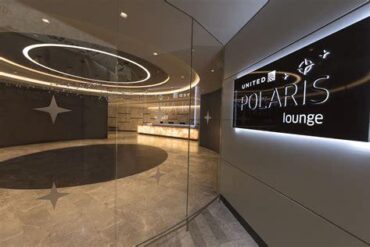
The changing American consumer profile is already visible across major carriers. Delta Air Lines has reported strong growth in premium revenue, while United continues expanding Polaris, Premium Plus, and domestic first-class products. American Airlines is investing heavily in premium cabins across new aircraft deliveries, including Boeing 787 and Airbus A321XLR fleets.
These investments show that airlines increasingly view premium travel as a central business strategy rather than an optional upgrade.
Larger Aircraft Are Needed for More Than Passenger Growth
When airlines order larger aircraft, the common assumption is that they simply need additional seats. Airbus argues that the reality is more complex.
The demand for larger aircraft is increasingly connected to cabin space requirements. Premium passengers need more room, and airlines must balance improved comfort with maintaining efficient capacity.
A business-class suite requires significantly more space than an economy seat. Premium economy also occupies more floor area than standard seating. As airlines increase premium cabin proportions, they require aircraft with greater interior volume.
Van der Heijden explained that premium economy growth is creating a stronger need for larger widebody aircraft because airlines need additional space for increased cabin segmentation.
This trend can already be seen among global airlines. Carriers such as Lufthansa, Air France, Emirates, and Singapore Airlines have all expanded premium offerings on next-generation aircraft.
The goal is not simply to transport more people. The goal is to transport passengers more profitably.
Premium Travel Will Influence Aircraft Decisions Through 2045
Airbus expects premiumization to become one of the defining forces shaping aviation strategy over the next two decades. Sustainability, fuel efficiency, and fleet replacement will remain major factors, but cabin design will play an increasingly important role.
The future aircraft market will not only focus on questions such as how many passengers an aircraft can carry. Airlines will also ask how effectively that aircraft can support different customer segments and generate higher returns.
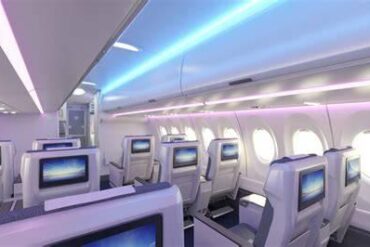
This means future fleets may feature more flexible cabins, expanded premium economy sections, larger business-class areas, and new concepts designed around passenger experience.
The competition between airlines will increasingly move away from simply offering the lowest fare. Instead, carriers will compete through comfort, convenience, and differentiated products that encourage travelers to spend more.
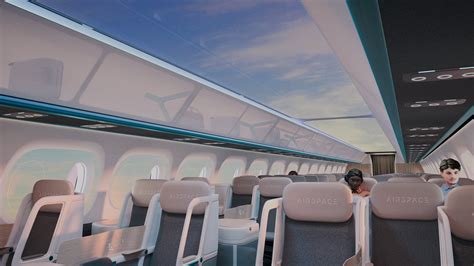
For the US domestic market, this represents a major shift. Even as population growth remains moderate, rising incomes and changing traveler expectations will continue creating demand for better aviation experiences.
Airbus’ outlook suggests that by 2045, successful airlines will not necessarily be those carrying the most passengers. They will be the airlines that understand what passengers value most and design their fleets accordingly.
The next era of American aviation will be shaped not only by how many people fly, but by how much they are willing to invest in a better journey.