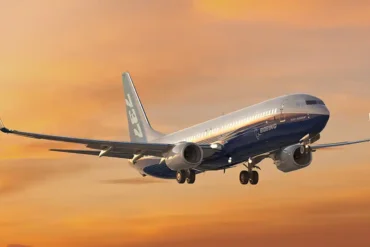
As the global aviation industry braces for its next era of unprecedented growth, Boeing has released a striking forecast: by 2044, airlines will require nearly 2.4 million new aviation professionals across three critical roles — commercial pilots, maintenance technicians, and cabin crew members. This massive hiring demand underscores the dual challenge of replacing a retiring workforce while simultaneously preparing for a rapidly expanding fleet.
The Scale of the Workforce Crisis in Aviation
Boeing’s latest 2025 Pilot and Technician Outlook (PTO) sets the stage for what may be the largest personnel transformation in civil aviation history. According to the report, 660,000 new pilots, 710,000 aircraft maintenance technicians, and 1,000,000 cabin crew members will be needed globally by 2044 — adding up to a staggering 2.37 million personnel. Notably, this demand includes both passenger and freight operations, emphasizing the breadth of aviation’s reach in both commercial and cargo sectors.
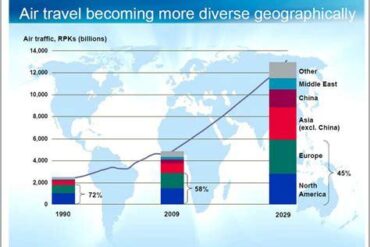
A significant driver of this demand is the planned expansion of the global commercial air fleet, projected to grow by approximately 43,600 new aircraft in the next 20 years. The bulk of this growth will be in the single-aisle segment, which includes aircraft like the Boeing 737 MAX and Airbus A320neo families, serving short- and medium-haul routes that continue to dominate market dynamics.
A Workforce Surge Driven by Replacement and Growth
According to Boeing’s analysis, about two-thirds of the projected workforce demand will arise from retirements and attrition, while the remaining one-third is attributed to growth in global air travel. This dual challenge means aviation stakeholders must build a robust pipeline of new talent while retaining institutional knowledge and ensuring seamless transition.
Chris Broom, Vice President of Commercial Training Solutions at Boeing Global Services, emphasized this point:
“As commercial air traffic demand continues to outpace economic growth and the global fleet expands to meet demand, our industry will keep the fleet flying safely and efficiently by supporting workforce development for carriers worldwide.”

Regional Breakdown: Where Demand Will Hit Hardest
Boeing’s forecast provides a region-by-region breakdown, highlighting areas that will face the greatest pressure to hire new aviation staff:
| Region | Pilots | Technicians | Cabin Crew | Total New Personnel |
|---|---|---|---|---|
| Eurasia | 149,000 | 165,000 | 236,000 | 550,000 |
| North America | 119,000 | 123,000 | 193,000 | 435,000 |
| China | 124,000 | 131,000 | 171,000 | 426,000 |
| Southeast Asia | 62,000 | 78,000 | 103,000 | 243,000 |
| Middle East | 67,000 | 63,000 | 104,000 | 234,000 |
| South Asia | 45,000 | 45,000 | 51,000 | 141,000 |
| Latin America | 37,000 | 42,000 | 55,000 | 134,000 |
| Northeast Asia | 23,000 | 27,000 | 42,000 | 92,000 |
| Africa | 23,000 | 24,000 | 27,000 | 74,000 |
| Oceania | 11,000 | 12,000 | 18,000 | 41,000 |
| Global Total | 660,000 | 710,000 | 1,000,000 | 2,370,000 |
Spotlight on Asia-Pacific: A Region on the Rise
Among the regions with the most accelerated growth, South Asia and Southeast Asia stand out. Boeing predicts tripling staffing requirements in these areas by 2044. This sharp rise reflects the economic dynamism of emerging markets such as India, Indonesia, and Vietnam, where middle-class expansion is fueling air travel demand at an unprecedented rate.
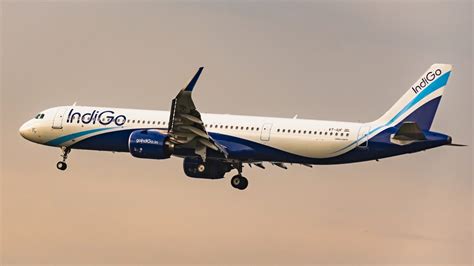
These regions are rapidly modernizing their aviation infrastructure and expanding local carriers. Indian low-cost carriers like IndiGo and Akasa Air, for example, have placed record-breaking orders, signaling long-term growth ambitions that will require thousands of newly trained personnel.
The Aircraft Behind the Numbers: Fleet Expansion in Detail
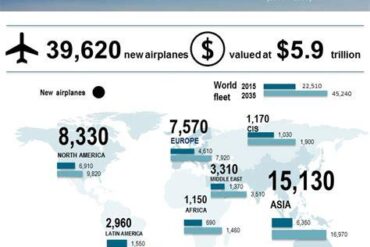
Boeing’s recent Commercial Market Outlook offers insight into the equipment side of this equation. By 2044, the company estimates that 49,640 aircraft will be in active service globally, with 43,600 new aircraft deliveries expected during the period. Of these, approximately 21,100 will replace aging models, while 22,500 will be introduced to accommodate new demand.
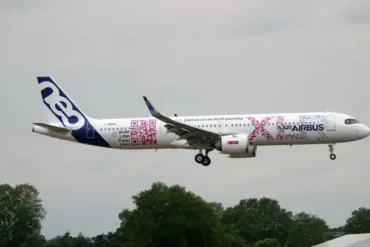
The most popular aircraft in this transformation will be single-aisle jets, notably the 737 MAX series, which continues to anchor Boeing’s order books. At the widebody end, aircraft like the 787 Dreamliner and 777X will help address long-haul route expansion.
Supply chain disruptions and geopolitical challenges, such as strained trade relations and semiconductor shortages, have modestly trimmed Boeing’s earlier projection of 43,975 new aircraft. However, the long-term trend remains one of robust fleet growth.
Training the Future: Competency, AI, and Immersive Tech
With the clock ticking on this global personnel gap, Boeing is doubling down on training innovation. While the company maintains a foundation in competency-based training and assessment (CBTA), it is also investing heavily in next-generation tools, including:
- Artificial Intelligence (AI)-driven learning platforms for adaptive instruction.
- Virtual and Augmented Reality (VR/AR) systems that immerse students in flight scenarios and emergency protocols.
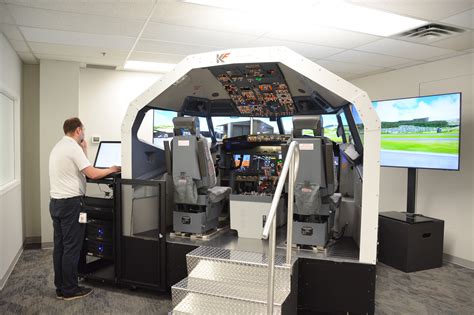
- Advanced simulator-based training programs with dynamic environment modeling.
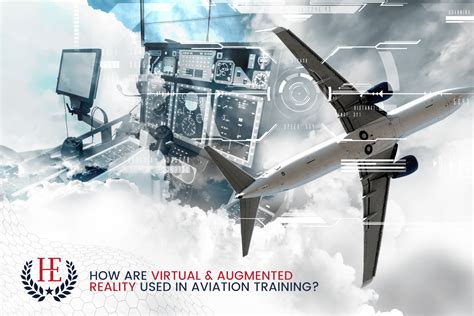
Such tools are not only efficient but can also scale globally, reducing time-to-competency for new hires and enabling customized pathways for airline-specific SOPs.
Airline Strategy: Talent Pipelines, Scholarships, and Outreach
Leading carriers are already reacting to Boeing’s call-to-action. Airlines in high-growth regions are:
- Partnering with flight schools and technical colleges.
- Launching scholarship programs targeting underrepresented groups.
- Investing in in-house training academies, such as Lufthansa Aviation Training and Emirates Flight Training Academy.
In North America, major carriers like Delta, American, and United are launching direct-to-cockpit programs and early-career mentorship pipelines. These aim to attract high school and college students before they consider alternative careers in tech, finance, or healthcare.
The Economic Ripple Effect
The surge in aviation hiring is more than a sectoral issue—it’s a macroeconomic phenomenon. According to Boeing, the aviation sector supports millions of indirect jobs, from tourism and logistics to airport operations and aircraft manufacturing. An under-supplied aviation workforce could disrupt trade, global business connectivity, and even national security.
To mitigate risks, governments and private institutions must collaborate on scalable solutions. This includes visa reform for technical labor, aviation-focused STEM programs, and incentives for regional training hubs in emerging economies.
Boeing’s Role and Legacy
Founded in 1916, Boeing has long served as a bellwether for the global aerospace industry. With its headquarters in the United States, the company continues to lead not only in aircraft manufacturing but also in aviation strategy, workforce planning, and training methodologies.
As geopolitical tensions and demographic shifts reshape the aviation landscape, Boeing’s projection of 2.4 million new aviation professionals by 2044 becomes more than a forecast — it is a blueprint for action. From pilot schools in Florida to maintenance colleges in Malaysia, the next generation of aviation leaders is already in training.
Conclusion: The Sky Is Not the Limit—It’s the Start
The next two decades promise transformation unlike any seen in the history of aviation. With air traffic demand poised to outpace economic growth, the world needs more than just new aircraft — it needs a new generation of aviators, technicians, and crew.
Boeing’s projections are both ambitious and essential. Meeting these workforce goals will require unprecedented cooperation between governments, airlines, training institutions, and aerospace giants. If done right, the outcome will be a safe, connected, and sustainably growing aviation industry.
The race for talent has already begun, and the runway is clear.