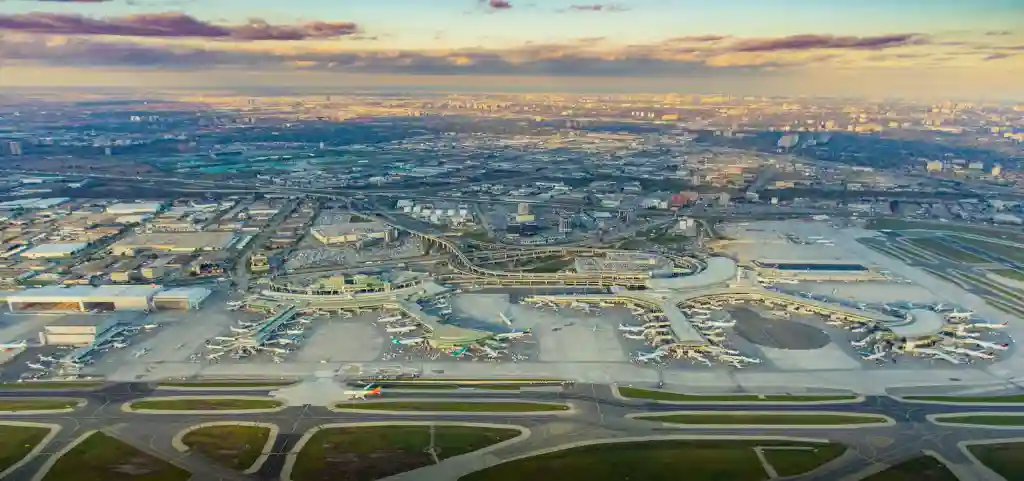
Toronto Pearson International Airport is taking on one of the most complicated infrastructure challenges in Canadian aviation: expanding and rebuilding a major airport while keeping it fully operational. Rather than closing sections of the airport for years or waiting until existing facilities become overwhelmed, the Greater Toronto Airports Authority (GTAA) is moving forward with multiple major projects at the same time.
Canada’s largest and busiest airport handled approximately 47.3 million passengers in 2025, representing close to 30% of all air passengers in the country. Passenger demand is still increasing, and Toronto Pearson expects annual traffic to reach roughly 65 million passengers by the early 2030s. That growth is forcing the airport to address infrastructure that was designed for a different era of Canadian aviation.
The response is Pearson LIFT, a decade-long infrastructure program involving billions of dollars in investment. Three major components sit at the center of the program: Accelerator, T1/T3 Revitalization, and Gateway. While the projects have different purposes, together they are designed to solve a single problem: how to give Pearson substantially more capacity without bringing the airport’s existing operation to a halt.
The strategy is particularly important because Pearson cannot simply stop serving Toronto while construction crews rebuild its terminals, baggage systems, aircraft stands and airfield infrastructure. Airlines still need gates, passengers still need to travel, and cargo and connecting traffic still need to move through the airport. The construction therefore has to happen around the operation rather than instead of it.
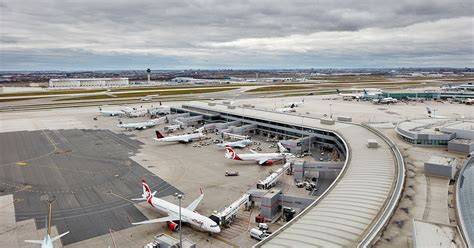
Pearson LIFT Is A Decade-Long Investment In Toronto Pearson
Toronto Pearson introduced the Pearson LIFT program in April 2024, describing it as a multi-billion-dollar investment that would extend across more than a decade. The program builds on the airport’s broader 2017–2037 Master Plan, which anticipated continued passenger growth and identified the need for major investment in airport infrastructure.
The timing reflects a problem that has been building for years. Pearson has already had to devote substantial resources to maintaining and upgrading existing facilities simply to keep pace with passenger demand. That approach can work temporarily, but it becomes increasingly difficult when an airport is simultaneously dealing with aging infrastructure, higher passenger volumes, changing airline requirements and increasingly complex technology.
The GTAA has therefore moved toward a more comprehensive strategy. Instead of repeatedly extending the life of individual systems, Pearson LIFT is intended to replace obsolete infrastructure, increase capacity and introduce systems designed around modern airport operations.
The scale of the program is significant even by international airport standards. Pearson is not building an entirely new airport somewhere outside Toronto. It is attempting to transform one of Canada’s most important transportation hubs while millions of passengers continue passing through its existing terminals every year.
That distinction explains why the projects have to be carefully sequenced. A new terminal or baggage system cannot simply be switched on while an old system is immediately demolished. Construction crews need to work around aircraft movements, passenger flows, security areas, baggage operations and airline schedules.
The C$3 Billion Accelerator Program Is Already Under Construction
The first major Pearson LIFT project to enter construction is Accelerator, a program valued at approximately $2.2 billion, or C$3 billion. Toronto Pearson began work on the project in May 2026.
Accelerator focuses primarily on the airport’s airside and baggage infrastructure, making it fundamentally different from a conventional terminal renovation. Much of the work is happening behind the scenes, where passengers may not immediately notice the construction but where infrastructure has a direct effect on how efficiently aircraft and baggage move through the airport.
One of the biggest elements is the renewal and expansion of approximately 2.2 million square meters of airfield infrastructure. Pearson is adding aircraft stands and a high-speed taxiway designed to improve the movement of aircraft between gates and runways.
That additional capacity matters because airport congestion is not simply a question of how many terminal seats or check-in counters are available. Aircraft need somewhere to park, taxi and turn around. If gates or taxiways become bottlenecks, adding capacity elsewhere can produce limited benefits.
The expanded airfield is expected to support up to 28,000 additional passengers per day, giving Pearson more room to handle future growth without relying entirely on its existing infrastructure.
The airport is also modernizing the technology supporting aircraft movements. Around 20,000 smart LED airfield lights are being installed alongside a new lighting control and management system. These systems are intended to improve the management of the airfield while supporting more efficient airport operations.
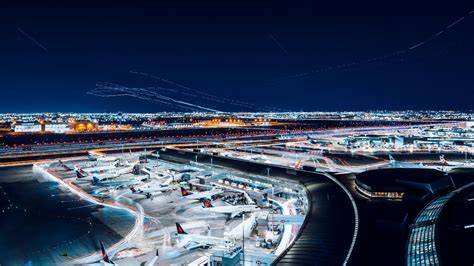
Pearson Is Rebuilding Its Baggage System While Passengers Keep Flying
The baggage component of Accelerator may be less visible than a new terminal, but it could be just as important to the airport’s daily operation.
Pearson is upgrading approximately 30 kilometers of baggage infrastructure and adding new baggage carousels in Terminal 1. The project also introduces additional cameras and sensors designed to identify problems earlier.
Baggage systems are particularly sensitive to disruption because a relatively small problem can quickly spread through an airport. A jam or malfunction in one part of the system can delay bags, require manual intervention and ultimately affect passengers and aircraft turnaround times.
By adding more monitoring technology, Pearson is attempting to move toward a more proactive operating model. Cameras and sensors can help identify where problems are occurring so that staff can respond before a minor interruption develops into a larger operational disruption.
The airport is also upgrading its energy network and expanding electric vehicle charging infrastructure as part of the broader Accelerator program. These elements demonstrate that the project is not solely about increasing passenger throughput. Pearson is also attempting to modernize the underlying infrastructure needed to support its long-term operational and environmental goals.
C$1.5 Billion T1/T3 Revitalization Will Modernize Existing Terminals
While Accelerator is already under construction, Pearson has also moved the Terminal 1 and Terminal 3 Revitalization Program into its next stage.
On July 21, 2026, Toronto Pearson awarded design and construction contracts to NORR-DIALOG and PCL Construction for the approximately C$1.5 billion program.
This project is focused on the parts of Pearson that passengers encounter directly. Terminals 1 and 3 are both now roughly 20 to 30 years old, and their infrastructure needs to evolve as passenger expectations, security requirements and airline operations have changed.
The revitalization program will include expanded terminal spaces and modernized check-in areas. Pearson will also upgrade baggage processing, security screening, gates, lounges and customs facilities.
Passenger processing areas are another major part of the work. The objective is not simply to make the terminals look newer. Modern airport terminals need to move passengers through multiple processes efficiently, including check-in, baggage drop, security, immigration and boarding.
Digitalization is expected to play a larger role as well. Pearson’s plans include infrastructure that can support more modern passenger-processing systems, while expanded charging facilities will address an increasingly common passenger expectation.
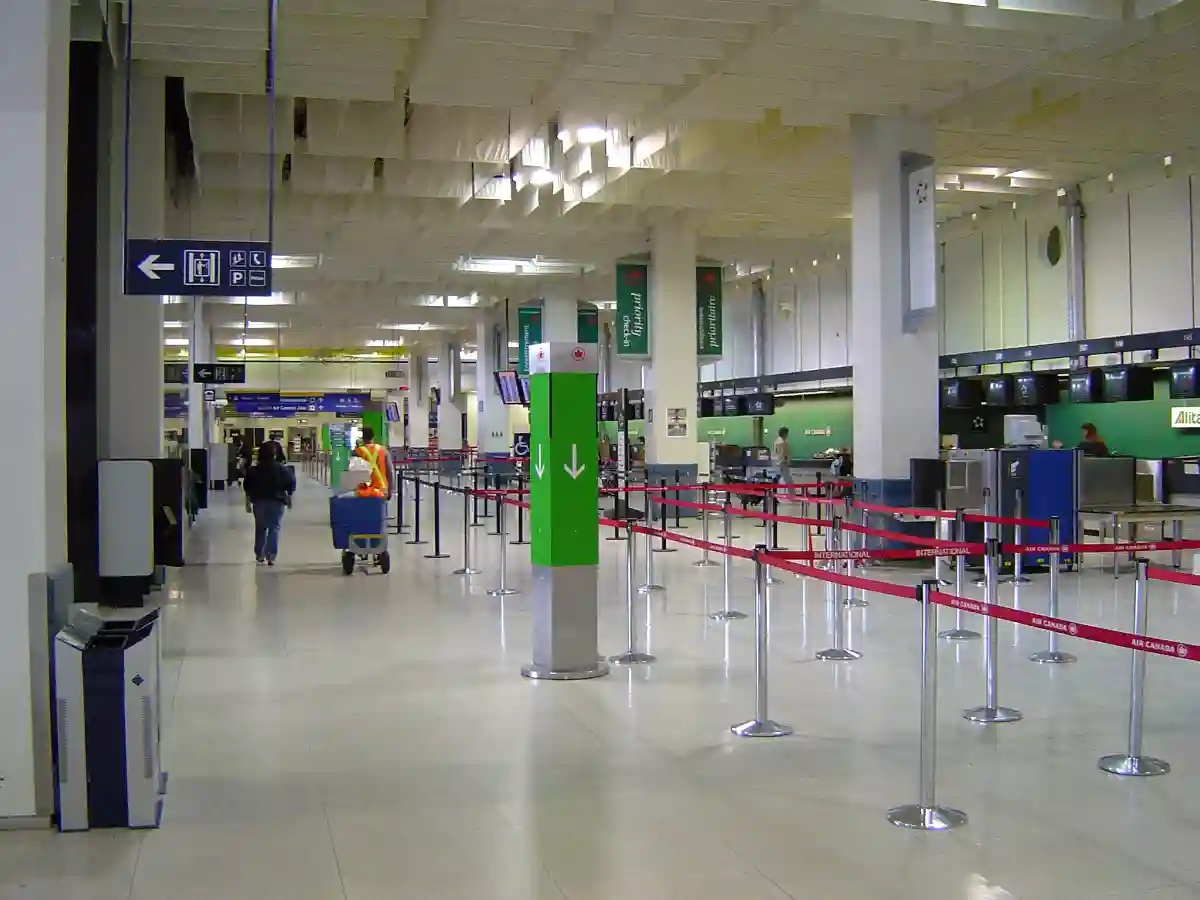
Construction Will Happen In Stages Instead Of Closing Terminals
The most important feature of the T1/T3 project may be how it is being delivered.
Pearson intends to carry out the construction in stages, rather than taking large sections of the terminals out of service simultaneously. That approach is more complicated for contractors, but it allows the airport to continue handling passengers and airline operations throughout the redevelopment.
This is where Pearson’s construction strategy becomes particularly interesting. The airport is effectively trying to modernize the infrastructure while preserving the infrastructure’s ability to function.
Every construction zone has to be considered in relation to passenger flows, airline operations, security requirements and emergency access. A temporary closure that looks manageable on a construction drawing can become much more consequential when thousands of passengers and hundreds of airport employees have to navigate around it.
The staged approach therefore reduces the risk that a single construction phase will overwhelm the rest of the airport.
Pearson has not yet provided a firm construction start date for the T1/T3 revitalization work. Over the coming months, the airport plans to work with its project partners on design and development before the physical work progresses further.
Gateway Will Add 15 Million Passengers Of New Capacity
The third major element of Pearson LIFT is Gateway, which is different from both Accelerator and T1/T3 Revitalization because it is primarily an expansion project.
Gateway is intended to add net new terminal space capable of accommodating approximately 15 million additional passengers annually.
That additional capacity could become increasingly important as Pearson approaches the projected 65-million-passenger level in the early 2030s. Simply renovating the existing terminals cannot provide unlimited growth. At some point, additional space is required.
Gateway will also change how Pearson uses its apron and aircraft parking areas. The project includes more Multiple Aircraft Ramp System gates, giving the airport greater flexibility in how aircraft are handled around the terminal.
Aircraft flow and parking will be optimized as part of the project, with the goal of improving ground operations and reducing unnecessary movements. Better connections between gates are also intended to make transfers easier for passengers.
The project will provide additional commercial space and create more flexibility for passenger, baggage and aircraft operations. Sustainable infrastructure is also part of the plan as Pearson works toward the GTAA’s longer-term net-zero carbon objectives.
Gateway is currently in the procurement phase. Pearson had initially projected that construction would begin in 2026, but the airport has not confirmed a firm start date. The schedule is therefore less certain than the timelines for projects already moving forward.
Pearson Needs More Capacity Without Losing Its Existing Capacity
The reason all three projects matter is that Pearson cannot afford to solve one capacity problem by creating another.
The airport currently operates Terminal 1 and Terminal 3 for passenger traffic. Terminal 2 was demolished in 2007, and the former site has since been incorporated into the development of Terminal 1.
Both remaining terminals handle domestic, international and transborder traffic. As passenger numbers increase, the infrastructure supporting those terminals faces greater pressure.
Recent traffic figures illustrate the direction of travel. Pearson handled approximately 12.4 million passengers between April and June 2026, an increase of 3.3% compared with the same period in 2025. Passenger traffic during the first half of 2026 reached about 23.5 million, up 3.5% year over year.
At the same time, airlines continue to plan for additional growth. Air Canada, Pearson’s dominant carrier, has announced further expansion for summer 2027, adding another layer of pressure to an airport that is already preparing for significantly higher passenger volumes.
This is why simply repairing individual facilities is no longer enough. Pearson needs more capacity across the entire system, from aircraft stands and taxiways to baggage handling, passenger processing and terminal space.
Two Multi-Billion Programs Are Running At The Same Time
Toronto Pearson’s current construction strategy can be understood as two different forms of investment happening simultaneously.
Accelerator is rebuilding the machinery that makes today’s airport work, including the airfield, baggage system, lighting and supporting infrastructure. T1/T3 Revitalization is preparing the existing passenger terminals for their next phase of operation, while Gateway is designed to create the additional capacity Pearson will need as traffic continues to rise.
That makes the timing important. The airport is not waiting until passenger demand reaches 65 million before beginning construction. Major infrastructure takes years to design, procure and build, meaning decisions made today will determine whether Pearson has enough capacity several years from now.
The GTAA estimates that Pearson LIFT could create approximately 16,000 new jobs at the airport, support around 160,000 jobs across Canada, and contribute approximately C$30 billion annually to the Canadian economy.
Those figures underline why Pearson’s infrastructure is more than an airport issue. Toronto Pearson is a major gateway for international travel, Canadian business and tourism, and the airport’s capacity affects a much broader transportation network.
Toronto Pearson Is Building For Growth Without Closing The Airport
The defining challenge of Pearson LIFT is therefore not simply its price tag. It is the fact that Toronto Pearson has to remain an operating airport throughout the transformation.
A complete shutdown would make construction easier, but it is not a realistic option for Canada’s largest airport. Airlines need access to Toronto, passengers need to travel, and the airport’s role in Canada’s economy cannot simply be paused for several years.
Instead, Pearson is taking the more complicated route: build, replace and expand while continuing to operate.
Accelerator has already entered construction, T1/T3 Revitalization is progressing toward its construction phase, and Gateway remains in procurement as Pearson prepares for the next stage of expansion. Together, the projects represent a long-term attempt to ensure that the airport’s infrastructure grows at roughly the same pace as the demand placed upon it.
If Pearson reaches the expected 65 million passengers annually in the early 2030s, the success of today’s construction strategy will become much easier to judge. The airport’s challenge is to reach that future without allowing the process of getting there to overwhelm the airport that Toronto depends on today.