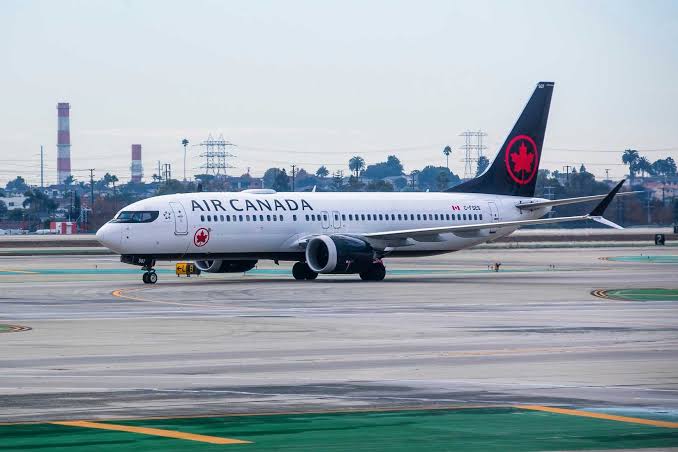
Air Canada, a founding member of Star Alliance and the dominant carrier at Toronto Pearson International Airport (YYZ), has confirmed the cancellation of nine nonstop routes from its largest hub, a network reshuffle that removes roughly 11,358 miles of scheduled flying across ten airports. The cuts, mapped by route analysts this month, touch everything from a once-prized New York link to the airline’s entire Cuban leisure network, and they land just as the carrier prepares to add Oslo, Shannon, Nice, Tenerife, Mérida, Quito, Guatemala City, and Roatán to its Toronto map. For a hub that dispatches about 1,564 departures in a typical mid-November week, nine routes sound small on paper. In practice, they rewrite travel plans for thousands of passengers who booked nonstop connections that will no longer exist.
The timing matters. Air Canada holds roughly 40% to 50% of the market share at Toronto Pearson, so every schedule change at YYZ ripples through connecting itineraries across Canada and into the United States. The airline has not framed the cancellations as a retreat so much as a reallocation: capacity pulled from underperforming and geopolitically strained markets is being redirected toward sun destinations, transatlantic growth, and routes where demand is sturdier. Still, travelers who rely on specific nonstops should read the fine print carefully, because several of these cuts arrive with short notice and limited alternatives.
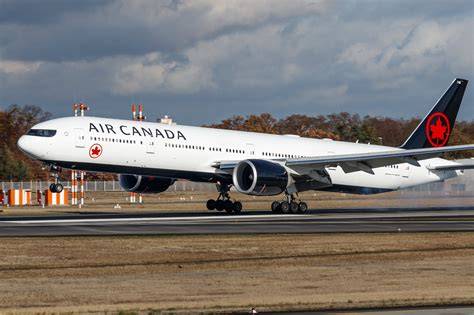
New York JFK and Charleston Lead the US Route Cuts From Toronto
Two American destinations anchor the list. The first is New York John F. Kennedy International Airport (JFK), where Air Canada had been scheduled to reinstate flights from October 25. That reinstatement has now been removed from the schedule entirely. JFK has always been the awkward piece of Air Canada’s New York strategy: the carrier dropped the airport in 2016, returned in 2023, and now steps away again. The logic is straightforward when you look at the broader picture. Air Canada already operates up to 34 daily flights into LaGuardia Airport (LGA) and Newark Liberty International Airport (EWR) from various Canadian cities, giving travelers three airports’ worth of New York access without the congestion and slot constraints of JFK.
The second US casualty is Charleston, South Carolina (CHS), which ends in September 2026. Air Canada launched the service in March 2024 with genuine optimism about the southeastern leisure and business market, but demand never materialized. US Department of Transportation data shows the route averaged a load factor of just 66.5% between March 2024 and July 2026, and not a single month crossed the 70% threshold. For a mainline narrowbody operation, that cushion of empty seats is fatal over time. Charleston loyalists will now connect through hubs rather than fly nonstop, adding hours to a journey that once felt effortless.
Cuba Suspensions End Toronto’s Caribbean Gateway Role
The largest cluster of cancellations is Cuban. Cayo Coco (CCC), Varadero (VRA), Holguín (HOG), and Santa Clara (SNU) all end in February 2026, and together they dismantle a network that Toronto had anchored for years, with frequencies of four weekly flights to Cayo Coco, four to Varadero, two to Holguín, and one to Santa Clara. The cause was not weak demand but an operational emergency. In February, the Cuban government issued an urgent Notice to Air Missions warning that Jet A-1 fuel would no longer be commercially available at the island’s airports from February 10, following disruptions to the country’s oil supplies.
Air Canada suspended all flights and flew empty southbound services to bring roughly 3,000 Canadian tourists home, an expensive and logistically demanding operation that underscored how quickly leisure markets can collapse. The initial fuel restriction was expected to lift by March 11, but conditions never improved enough to justify a return. In June, the airline postponed resumption of Cuban services indefinitely, confirming it would suspend all Cuban operations rather than gamble on a volatile fuel market. WestJet and Air Transat initially attempted workarounds to keep flying to the island, but both eventually joined Air Canada in fully suspending service. The result is a striking gap for Canadian winter travelers who treated Cuba as an affordable, reliable escape.

Yellowknife, North Bay, and Zihuatanejo Round Out the Nine Route Cuts
Beyond the US and Cuba, three more destinations disappear from the Toronto schedule. Yellowknife (YZF) ends in August 2026 after the service proved commercially unviable, leaving northern travelers to connect rather than fly direct. North Bay (YYB) ends far sooner, in January 2026, a short regional hop whose thin traffic never supported sustained mainline economics. Zihuatanejo (ZIH) ends in April 2026, closing a seasonal Pacific Mexican link that many winter sunseekers had come to count on. Each cut follows the same logic: routes that cannot fill seats consistently are liabilities when aircraft and crews can earn more elsewhere.
The US picture is broader than the two Toronto cancellations alone. Air Canada’s scheduled flight data shows at least five US routes discontinued this year, two of them from YYZ, a decline consistent with reporting that capacity on US routes has fallen by around 10% over the past two years amid diplomatic and trade tensions between Canada and the United States. That translates into fewer seats, fewer frequencies, and fewer nonstop options than travelers enjoyed when cross-border demand was peaking.
New Winter Destinations Signal a Rebuilt Toronto Network
None of this means Toronto is shrinking. Beginning October 25, Air Canada launches twice-weekly service to Tenerife in Spain’s Canary Islands using its 182-seat Airbus A321XLR, an aircraft type that makes thinner transatlantic routes economically viable. In November, it adds two weekly flights to Mérida, Mexico, followed in December by weekly services to Guatemala City, Quito, and Roatán. Next summer brings Oslo, Norway, Shannon, Ireland, and Nice, France. The pattern is unmistakable: Air Canada is trading struggling markets for destinations with stronger yields and less geopolitical exposure, betting that Canadian travelers will pay for Europe, Mexico, and Central America rather than for marginal domestic and cross-border links.
For passengers holding bookings on any of the nine canceled routes, the practical advice is immediate action rather than passive waiting. Air Canada typically rebooks affected travelers on connecting itineraries or issues refunds, but travelers who booked through third parties may need to contact their agency directly, and hotel, tour, and cruise packages tied to these flights can require separate adjustments. Anyone planning winter travel to Cuba should confirm the status of every segment before paying for ground arrangements, and travelers eyeing Charleston or Zihuatanejo should check whether connecting options through Charlotte, Atlanta, or Mexico City are priced competitively.
The map tells a clear story: nine routes gone, a hub intact, and a carrier deliberately choosing where it flies next rather than preserving every line it once drew.