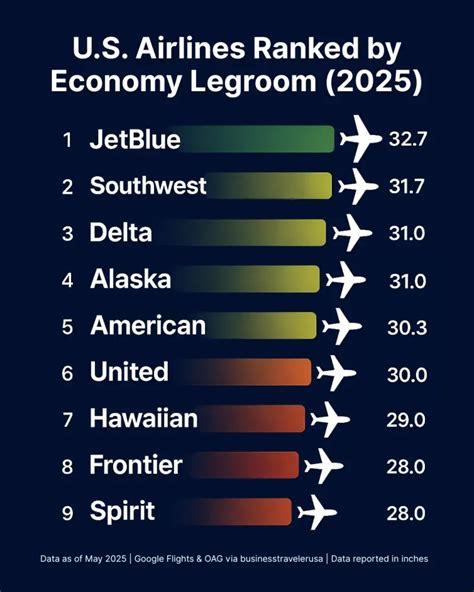
For decades, flying economy class was designed around a simple promise: affordable transportation with a reasonable level of comfort. That balance has quietly disappeared. Across the airline industry, seat pitch — the distance between one point on a seat and the same point on the seat in front — has steadily shrunk, transforming modern cabins into densely packed revenue machines. What once averaged around 35 inches in the 1970s now frequently sits at just 30 or 31 inches on major US carriers, while some ultra-low-cost airlines have compressed passengers into as little as 28 inches.
The reduction sounds insignificant until experienced in practice. Five inches may appear trivial on a specification sheet, but inside a narrow-body cabin packed with travelers, laptops, backpacks, and tray tables, it fundamentally changes the physical experience of flying. Knees press into seatbacks. Recline becomes controversial. Standing up during a flight often requires awkward coordination with neighboring passengers. The modern economy cabin is no longer merely crowded; it is intentionally calibrated to maximize density.
What makes this transformation especially significant is that airlines did not simply remove legroom to save costs. They turned those lost inches into one of the industry’s most lucrative upsell strategies. By reducing comfort in standard economy while simultaneously introducing extra-legroom sections, premium economy cabins, and bundled fare tiers, airlines created an entirely new market where passengers increasingly pay to regain the comfort they once received automatically.
The strategy has reshaped aviation economics worldwide.
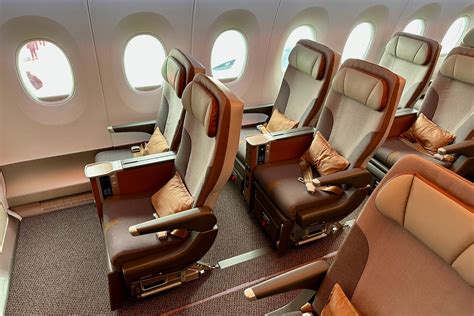
The Quiet Shrinking Of Economy Class Legroom
The erosion of economy-class space happened gradually enough that many travelers barely noticed it at first. Airlines rarely advertised smaller seating configurations directly. Instead, cabin densification arrived through fleet retrofits, redesigned interiors, thinner seat frames, and revised seating charts that allowed carriers to fit additional rows onto aircraft already in service.
During the deregulation era of the late 1970s and early 1980s, airlines faced growing pressure to compete on price. Lower fares attracted more travelers, but shrinking ticket revenue forced carriers to search for new efficiencies. Aircraft cabins quickly became one of the easiest targets. Every additional row represented extra revenue potential on every single flight.
On a Boeing 737 or Airbus A320 family aircraft, adding merely six to ten seats can generate thousands of additional dollars per departure. Multiplied across hundreds of daily flights and an entire global network, those extra seats produce enormous financial returns. Even a modest increase in passenger density can create hundreds of millions in additional annual revenue for a major airline.
The math became irresistible.
Instead of treating comfort as part of the core product, airlines began viewing cabin space as monetizable real estate. Each square foot had to generate maximum revenue. Passenger experience became secondary to revenue optimization models carefully designed around load factors and yield management.
The result is today’s economy cabin, where airlines continuously push the limits of how tightly passengers can be seated without triggering widespread consumer backlash or regulatory intervention.
Why Five Inches Became Worth Billions
The genius of the airline industry’s strategy lies in how discomfort itself became profitable.
Reducing standard seat pitch did not merely allow airlines to add more passengers. It also created a visible and measurable comfort gap between standard economy and upgraded seating products. Once passengers experienced increasingly cramped conditions, even small improvements suddenly felt valuable enough to purchase.
An extra three or four inches of legroom now commands premiums ranging from $50 to well over $200 depending on route length and airline branding. Carriers discovered that travelers would willingly pay substantial amounts simply to avoid discomfort deliberately engineered into the baseline experience.
This transformed the economics of the cabin.
Rather than relying exclusively on business class and first class for premium revenue, airlines introduced multiple comfort tiers inside economy itself. Standard economy became the stripped-down baseline. Economy Plus, Comfort+, Main Cabin Extra, and similar branded products emerged as intermediate upgrades offering slightly more space and earlier boarding privileges.
Passengers are no longer buying transportation alone. They are buying relief.
The psychological effect is powerful. When standard seating becomes restrictive enough, upgrades begin to feel less like luxuries and more like necessities. A taller traveler facing a five-hour flight in a 28-inch seat pitch may perceive a $79 upgrade as completely reasonable despite the fact that similar spacing was once standard across the industry.
Airlines recognized this behavioral shift early and aggressively expanded premium seating inventories accordingly.
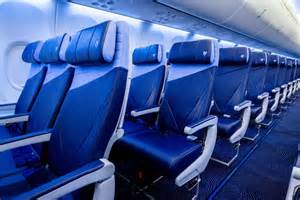
How Ultra-Low-Cost Airlines Redefined Passenger Expectations
Ultra-low-cost carriers accelerated the entire industry’s shift toward densification.
Spirit Airlines, Frontier Airlines, and similar carriers embraced extreme seat compression models that prioritized maximum passenger volume above virtually everything else. Spirit’s 28-inch pitch became symbolic of the industry’s willingness to test consumer tolerance for discomfort.
Initially, many travelers viewed these cabins as unusually harsh exceptions. Yet they also normalized tighter seating across the broader market. Once passengers became accustomed to extremely dense low-cost cabins, legacy airlines could gradually reduce their own economy spacing while still appearing comparatively reasonable.
This competitive pressure reshaped the industry.
American Airlines and United Airlines steadily reduced economy pitch while expanding extra-legroom offerings. Delta Air Lines invested heavily in segmented cabin products that separated passengers into increasingly granular pricing categories. Even Southwest Airlines, long viewed as more passenger-friendly, maintained tighter cabin layouts than those common decades earlier.
Importantly, airlines rarely frame these changes as reductions. Marketing language instead emphasizes “choice,” “flexibility,” and “personalized travel experiences.” In practice, however, many travelers are paying extra simply to access comfort levels that previous generations considered normal.
The cabin became a hierarchy of monetized physical space.
Premium Economy Became Aviation’s Sweet Spot
While business class remains glamorous, premium economy has quietly become one of the most financially valuable sections on modern aircraft.
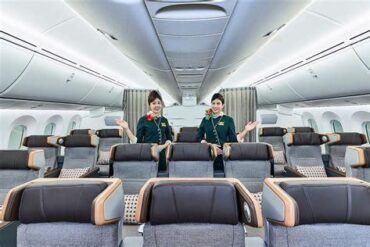
The concept originated in the early 1990s when airlines like EVA Air and Virgin Atlantic introduced intermediate cabins designed for travelers unwilling to pay business-class fares but eager to escape standard economy discomfort. The timing proved perfect. Corporate travel policies tightened, leisure travelers gained more disposable income, and long-haul flying became increasingly exhausting in shrinking economy cabins.
Premium economy solved multiple airline problems simultaneously.
It delivered significantly higher ticket revenue than economy while occupying far less space than lie-flat business seats. It also attracted customers who might otherwise remain in standard coach, creating entirely new revenue streams rather than merely cannibalizing existing premium demand.
Airlines quickly realized the profit potential.
American Airlines, United Airlines, Delta Air Lines, Lufthansa Group, Air France, and countless global carriers rapidly expanded premium economy installations throughout their fleets. Industry executives openly described the cabins as exceptionally efficient revenue generators with some of the highest returns per square foot anywhere onboard.
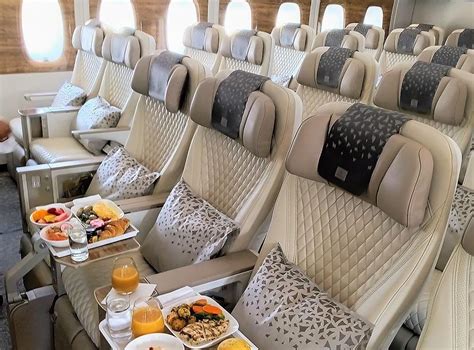
Typical premium economy products now offer:
- Seat pitch between 36 and 40 inches
- Wider seats with enhanced recline
- Improved meal service
- Larger entertainment screens
- Priority boarding and baggage handling
- Additional storage and workspace
These features may appear modest compared to business class, but they dramatically improve passenger comfort on long-haul flights. More importantly, they create a visible contrast against increasingly compressed economy cabins.
That contrast is precisely what makes premium economy so effective commercially.
Basic Economy Changed The Psychology Of Flying
Seat pitch is only part of the airline industry’s broader monetization strategy. The introduction of basic economy fundamentally changed how passengers evaluate fares and cabin comfort.
Originally marketed as budget-friendly options for price-sensitive travelers, basic economy fares gradually lost privileges once included in standard tickets. Airlines stripped away seat selection, boarding priority, baggage allowances, loyalty earning potential, and ticket flexibility.
The goal was not merely to create cheaper fares.
It was to make standard economy feel more attractive by comparison.
This tactic mirrors strategies used throughout the hospitality and entertainment industries. By intentionally limiting the baseline product, companies increase the perceived value of upgrades. Airlines mastered this approach by layering restrictions across fare classes until passengers began voluntarily paying more simply to avoid inconvenience.
A traveler booking a flight today often encounters multiple decision points during checkout:
- Pay extra for seat selection
- Pay extra for early boarding
- Pay extra for carry-on baggage
- Pay extra for additional legroom
- Pay extra for cancellation flexibility
The modern airline booking process has effectively become a sophisticated upsell funnel.
What once constituted a complete ticket is now fragmented into dozens of purchasable features.
The Economics Behind Cabin Densification
From a financial perspective, the strategy works extraordinarily well.
Airlines operate within notoriously thin profit margins vulnerable to fuel prices, labor disputes, economic downturns, and geopolitical disruptions. Cabin densification provides one of the few controllable mechanisms for improving profitability without dramatically increasing fares.
Every inch matters because aviation economics operate at enormous scale.
Consider a narrow-body aircraft completing six flights daily. Adding just eight seats could generate tens of thousands of additional dollars per aircraft each week. Across fleets numbering hundreds of aircraft, the numbers become staggering.
Simultaneously, extra-legroom seating generates disproportionately high margins because the operational cost difference between standard and upgraded economy seats is relatively small. Airlines are not serving caviar or installing lie-flat beds. They are monetizing physical space already available within the cabin footprint.
This creates an unusually efficient business model:
- Reduce standard comfort slightly
- Create upgraded comfort tiers
- Charge passengers to escape discomfort
- Repeat across the entire network
The strategy proved so successful that ancillary revenue — including seat upgrades and optional fees — evolved into one of the industry’s most important profit centers.
For many airlines, these revenues now represent billions annually.
Passenger Backlash Is Growing
Despite the profitability, passenger frustration continues to intensify.
Travelers increasingly complain about knee clearance, limited recline space, reduced seat width, and physical discomfort during longer flights. Viral social media posts regularly highlight cramped cabins, while consumer advocates argue that shrinking seat dimensions may eventually raise safety concerns during emergency evacuations.
The backlash reflects more than simple inconvenience. Flying itself has become more stressful as airports grow busier, flights operate near maximum capacity, and disruptions become increasingly common. In that environment, tighter seating amplifies passenger fatigue and irritation.
Airlines understand the risks carefully.
Most carriers avoid dramatic reductions all at once because sudden changes generate stronger negative reactions. Instead, cabin densification typically occurs incrementally over years through fleet updates and reconfigurations. Passengers adapt slowly, even while noticing that flying somehow feels less comfortable than before.
That gradual normalization has been essential to the strategy’s success.
The Future Of Airline Comfort Will Depend On Price
There is little evidence suggesting economy cabins will become significantly more spacious in the near future. If anything, airlines are doubling down on segmented cabin products and premium monetization strategies.
The future of air travel increasingly revolves around personalized comfort tiers rather than uniform passenger experiences. Travelers willing to pay more will continue accessing additional space, quieter cabins, enhanced service, and greater flexibility. Those seeking the lowest fares will encounter increasingly restrictive baseline products.
This evolution reflects a broader transformation in aviation philosophy.
Airlines no longer view comfort as a universal standard distributed equally throughout the cabin. Comfort has become inventory — something measurable, marketable, and individually priced.
Five missing inches of legroom helped create one of the airline industry’s most reliable profit engines. What passengers lost in physical space, airlines gained in pricing power, ancillary revenue, and premium segmentation opportunities.
The modern cabin is no longer divided simply between economy and first class. It is divided between passengers who accept discomfort and passengers willing to pay to escape it.