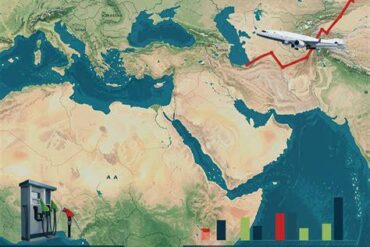
The modern aviation empire built by the Gulf carriers depends on a deceptively simple idea: geography can be turned into a machine that moves the world. Airlines like Emirates, Qatar Airways, and Etihad Airways perfected the art of funneling passengers through gigantic hub airports in the Middle East, connecting Europe, Asia, Africa, and the Americas with seamless precision. When those hubs run smoothly, the system functions like a perfectly tuned engine. But when geopolitics intervenes, the machine grinds to a halt—and the financial consequences are staggering.
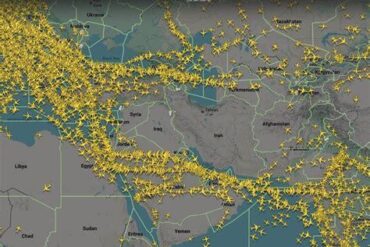
Since the United States–Israel strikes on Iran on February 28, the region’s airspace has been thrown into chaos. Retaliatory threats and sudden airspace closures forced aviation authorities across the Gulf to shut down large corridors of the sky. Commercial aviation, which thrives on predictability and tightly choreographed schedules, suddenly found itself navigating uncertainty and danger.
Within days, the financial toll on Gulf airlines surged past $1 billion in lost revenue, with daily losses estimated at more than $200 million. Airports that normally process hundreds of thousands of passengers became eerily quiet, while aircraft sat idle on tarmacs around the world.
For airlines whose entire strategy revolves around connecting global traffic through a handful of mega-hubs, the crisis represents something close to a worst-case scenario.
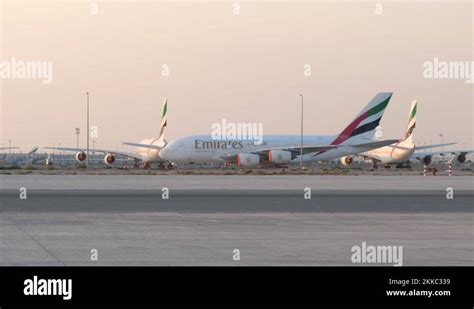
Airspace Closures Cripple The Gulf Hub Model
To understand why the losses are so severe, it helps to understand how Gulf aviation works. Unlike traditional airlines that rely heavily on domestic markets, the Gulf carriers operate enormous hub-and-spoke networks. Passengers from dozens of countries converge at airports such as Dubai International Airport (DXB), Hamad International Airport (DOH), and Abu Dhabi’s Zayed International Airport (AUH) before transferring onward.
This model relies on carefully timed “banked connections.” Large groups of flights arrive within short windows, passengers transfer quickly, and then another wave of departures carries them onward. The choreography is tight, elegant—and fragile.
When airspace suddenly closes, the entire system collapses. Flights cannot arrive, connections cannot be made, and aircraft scheduled for later flights end up stranded in the wrong locations. Even a short disruption cascades across hundreds of routes.
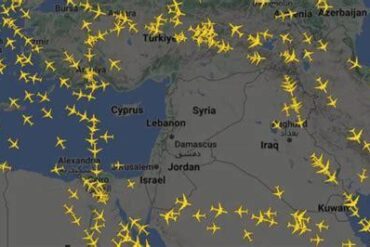
In the current crisis, several Gulf countries shut their airspace entirely, while others imposed strict restrictions that limited flights to narrow “safe corridors.” The result was immediate operational paralysis across the region.
Thousands of flights disappeared from global schedules almost overnight.
More Than 7,000 Daily Flight Cancellations
Data from Flightradar24, cited by international reporting agencies, paints a stark picture of the disruption. Across major Gulf airports, more than 7,000 flights per day were canceled during the height of the crisis.
For the traveling public, the consequences were visible in crowded terminals and stranded passengers. For airlines, the damage appeared on balance sheets.
Several key hubs remain partially or fully constrained:
- Doha (DOH): Operations suspended due to Qatari airspace closure
- Bahrain (BAH): Flights halted as regional restrictions remain in place
- Kuwait City (KWI): Commercial operations suspended indefinitely
- Dubai (DXB): Limited operations via controlled corridors
- Abu Dhabi (AUH): Restricted activity while airlines gradually resume flights
- Sharjah (SHJ): Minimal movements with extended airline suspensions
Dubai, the region’s busiest airport and a cornerstone of Emirates’ global network, has cautiously restarted a trickle of flights. Emirates announced that around 100 flights would operate over two days, a fraction of its typical schedule.
Elsewhere, recovery has been slower. Qatar Airways, one of the world’s largest long-haul carriers, remains largely grounded due to airspace restrictions over Qatar.
Even airports that have technically reopened are operating far below normal capacity, leaving airlines unable to restore their carefully structured networks.
The Revenue Mathematics Behind A Billion-Dollar Loss
Airlines generate revenue at astonishing speed. A single long-haul flight can carry hundreds of passengers paying thousands of dollars each, plus valuable cargo in the aircraft’s belly hold. Multiply that by hundreds of daily departures and the numbers escalate rapidly.
Using recent financial reports, analysts have calculated the average daily revenue “run rate” for the region’s largest airlines. The results show how quickly the losses accumulate when operations stop.
Estimated Daily Revenue Losses
- Emirates: $97.6 million per day
- Qatar Airways: $66.1 million per day
- Etihad Airways: $23 million per day
- flydubai: $10.1 million per day
- Air Arabia: $6.8 million per day
- Gulf Air: $4.5 million per day
- Kuwait Airways: $3.1 million per day
Combined, these carriers generate roughly $211 million in daily revenue under normal operations. When flights halt, much of that income simply vanishes.
Within a single week, that figure translates to nearly $1.5 billion in lost revenue.
Seasonal factors and rescheduled bookings may soften the final financial damage somewhat. Passengers who rebook flights weeks later will eventually bring back some revenue. But the immediate financial hit remains enormous.
For Emirates alone, analysts estimate that cumulative losses could exceed $1 billion by the weekend if disruptions continue.
Aviation’s Invisible Costs Begin To Mount
Lost ticket sales make headlines, but aviation economics hides another layer of costs beneath the surface. These are the expenses that accumulate quietly while operations remain disrupted.
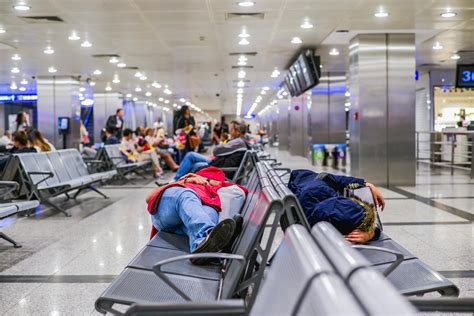
Airlines have a duty of care to stranded passengers. That means hotels, meals, transport, and assistance until travelers reach their destinations. In many cases across the Gulf, governments and airlines coordinated emergency accommodations for thousands of people.
The cost adds up quickly. If the average support cost reaches $300 per passenger per day, and hundreds of thousands of travelers are stranded, airlines may be spending tens of millions of dollars daily just to manage the humanitarian side of the disruption.
Operational complexity creates additional financial headaches. Aircraft and flight crews are designed to operate in tightly scheduled rotations. When a network collapses, those rotations break.
Widebody jets may end up parked at foreign airports with unexpected parking, maintenance, and handling fees. Pilots and cabin crews may exceed legal duty limits, requiring hotels and repositioning flights. Spare aircraft must sometimes be dispatched across continents simply to restore order to the schedule.
Even after airspace fully reopens, the network cannot instantly return to normal. Airlines must gradually reposition aircraft, restore cargo schedules, and rebuild connections that travelers rely upon.
The process can take weeks or even months.
Cargo Disruptions Ripple Across Global Trade
Passenger operations often receive the most attention, yet cargo plays a massive role in Gulf aviation economics. Airlines such as Emirates SkyCargo and Qatar Airways Cargo rank among the largest freight carriers on the planet.
When their fleets stop flying, the global logistics system feels the shock.
Current estimates suggest that the Middle East aviation disruption has caused a 22% reduction in global air cargo capacity along key trade routes. Everything from electronics to pharmaceuticals relies on fast air transport, particularly between Asia and Europe.
With fewer aircraft flying and major hubs offline, freight is forced onto longer routes or delayed entirely. The financial damage spreads beyond the airlines themselves into manufacturing, retail supply chains, and high-value logistics networks.
The Crisis Spreads Beyond The Gulf
Although Gulf airlines face the most direct impact, the crisis has rippled across international aviation. Airlines that normally pass through Middle Eastern airspace are being forced to reroute flights thousands of kilometers around restricted zones.
These longer paths increase fuel consumption, crew costs, and travel times.
Major Asian airlines including Singapore Airlines, Cathay Pacific, and Thai Airways have all reported operational strain due to the detours required on Europe-bound routes. Every additional hour in the air means thousands of extra dollars in fuel.
Meanwhile, Turkish Airlines confirmed it had paused Middle East flights accounting for 6% of its total capacity and revenue, a substantial disruption for one of the world’s fastest-growing carriers.
Budget airline Wizz Air has also warned that the crisis could result in a $58 million hit to profits if instability continues.
The global aviation network is an intricate web. Tug on one thread in the Middle East and tension spreads across the entire structure.
When Geography Becomes A Trap
The success of Gulf aviation has always been rooted in geography. Sitting roughly midway between Europe, Asia, and Africa, the region became a natural crossroads for long-haul travel.
Airlines transformed that advantage into a business model capable of moving millions of passengers through single hubs each year. Dubai, Doha, and Abu Dhabi evolved into some of the most important transit airports on Earth.
Yet geography carries a paradox. The same location that enables global connectivity can also expose airlines to geopolitical volatility.
When conflict erupts nearby, the crossroads becomes a bottleneck.
Aircraft cannot safely fly through closed airspace. Hub airports lose their connecting flows. Carefully synchronized global networks fragment into isolated routes.
The result is the stark financial reality Gulf airlines are experiencing today: a billion dollars in losses and counting.
Aviation history shows that airlines are resilient creatures. Networks eventually recover, passengers return, and schedules stabilize. But the Middle East aviation meltdown offers a vivid reminder of how fragile even the most sophisticated global systems can be.
In the span of a few days, the skies above the Gulf transformed from one of the busiest air corridors on Earth into a patchwork of restricted zones and emergency routes. For the airlines that built empires on those skies, the cost of that transformation is now measured not just in canceled flights—but in billions of dollars evaporating at jet speed.