The shockwaves from the recent Iran attacks and retaliatory drone strikes have traveled far beyond military and political circles. They have landed squarely in the heart of the global aviation system. For decades, Gulf airlines have built their reputations on precision, safety, and seamless global connectivity. Now, images of damaged airport infrastructure and burning hotels have disrupted not only flight schedules but also the powerful perception of stability that underpins the Gulf’s aviation dominance.
The question is not simply whether operations will resume. They will. The deeper issue is how complex, fragile, and psychologically charged the recovery process may prove to be.
The Strategic Importance of Gulf Aviation Hubs
Airlines such as Emirates, Etihad Airways, and Qatar Airways are not regional players. They are strategic connectors between continents. Their hub-and-spoke model allows passengers to travel efficiently between Europe, Asia, Africa, and Australia with a single stop in the Gulf. Over time, Dubai, Abu Dhabi, and Doha have become indispensable transit arteries in global aviation.
This system thrives on three pillars:
- Operational reliability
- Competitive pricing and premium service
- Perceived geopolitical stability
When even one of these pillars weakens, the network feels strain. The recent attacks did not just disrupt airport infrastructure; they challenged the carefully cultivated image of the Gulf as insulated from regional volatility.
Dubai’s Brand: Safety as a Strategic Asset
Dubai in particular has marketed itself as a paradox in the Middle East: geographically close to instability, yet functionally distant from it. Its appeal has always rested on a combination of ultra-modern infrastructure, strict security, and political predictability. Travelers did not merely choose Dubai for convenience. They chose it because it felt controlled, stable, almost engineered for comfort.
The sight of drone-related damage at Dubai International Airport and fires near iconic properties such as the Burj Al Arab unsettles that narrative. Even if casualties remain limited and systems are restored quickly, aviation is deeply tied to perception. Aviation thrives on confidence. Once shaken, confidence must be rebuilt methodically.
Historically, the UAE has managed crises with swift containment and decisive communication. That pattern will likely repeat. Yet in a hyperconnected digital world, dramatic visuals circulate faster than official reassurances.
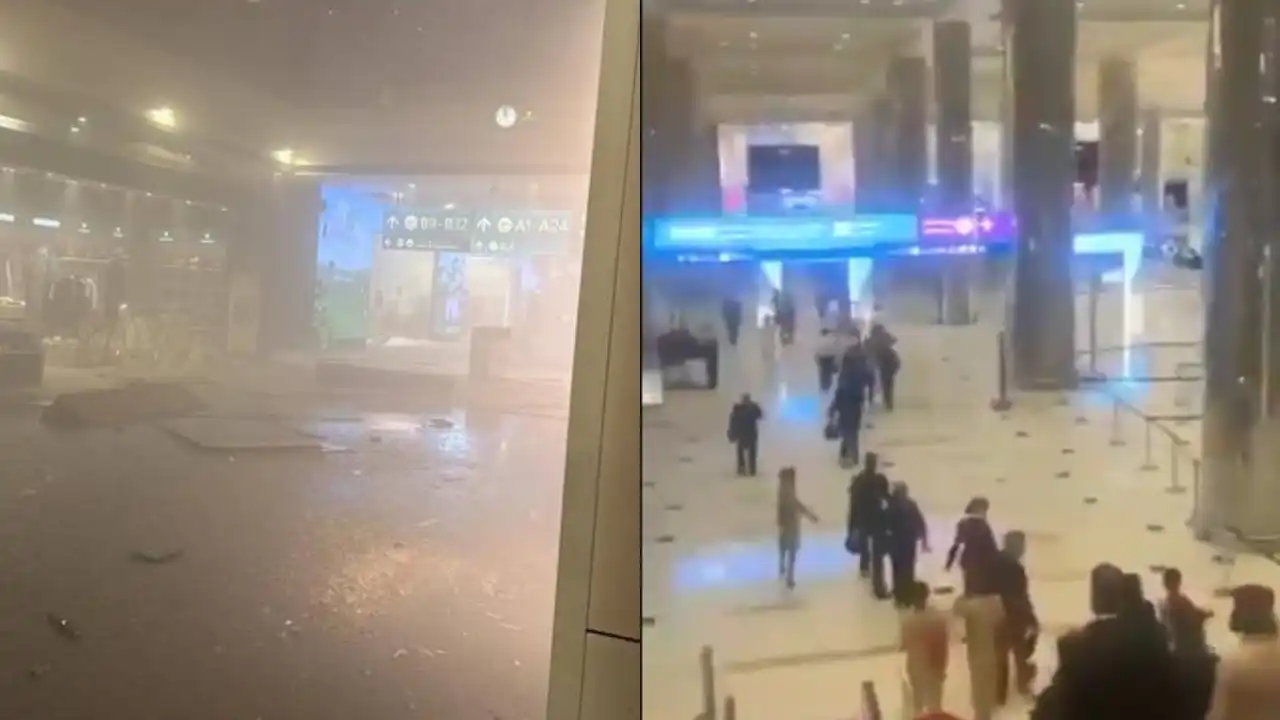
Immediate Operational Disruptions and Financial Strain
In the short term, grounding flights is both a safety measure and a financial hemorrhage. A three-day suspension for a carrier the size of Emirates translates into:
- Massive revenue loss
- Aircraft and crew displacement
- Cascading global schedule disruptions
- Passenger rebooking liabilities
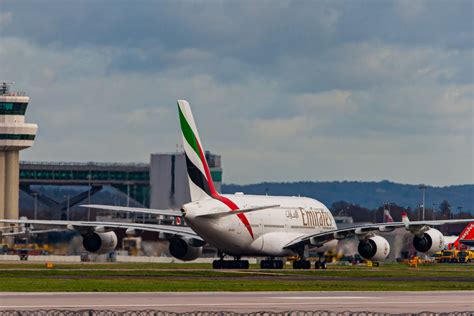
The Gulf carriers operate high-frequency long-haul networks. Their fleets consist largely of wide-body aircraft such as the Airbus A380 and Boeing 777, assets that depend on near-constant utilization to remain profitable. When grounded, these aircraft do not simply sit idle; they represent millions in sunk daily costs.
However, these airlines are not financially fragile startups. Emirates and Qatar Airways have weathered oil price shocks, diplomatic embargoes, and the COVID-19 collapse. Their capital reserves and government backing provide a cushion that many global competitors lack.
Will Consumer Behavior Shift?
This is where recovery becomes tricky. Air travel decisions are not purely rational. They are emotional calculations dressed in price comparisons.
For years, travelers from Australia to Europe or from Southeast Asia to North America have willingly chosen Gulf carriers over nonstop alternatives because the combination of price, comfort, and service was compelling. The transit experience in Dubai or Doha was often marketed as part of the journey, not merely a stop.
Now a subtle behavioral shift may emerge.
Some travelers may reason:
- “A nonstop flight avoids geopolitical uncertainty.”
- “What if regional airspace closes again?”
- “Will insurance or travel advisories change?”
Even if actual safety risks remain low, uncertainty alone can divert bookings. Aviation demand elasticity is sensitive to perception. A modest percentage of diverted passengers can ripple through load factors and yield management models.
The Airspace Variable: A Structural Concern
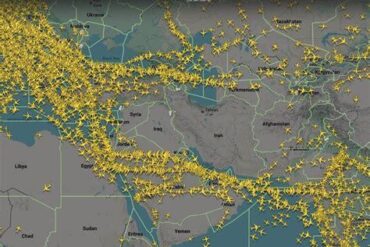
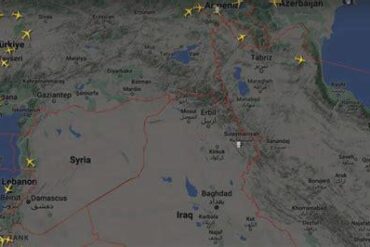
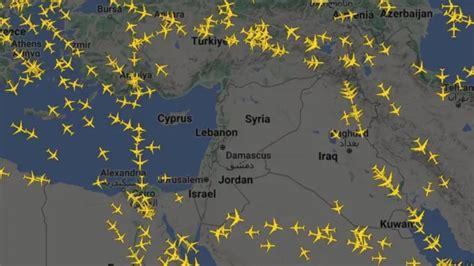
Beyond physical damage lies a more complex operational challenge: regional airspace stability. Gulf carriers rely on intricate routing across Middle Eastern air corridors. If airspace closures become sporadic or politically reactive, flight planning becomes less predictable.
Airspace detours mean:
- Longer flight times
- Increased fuel burn
- Higher operating costs
- Schedule unpredictability
In an era where fuel efficiency and punctuality drive margins, such instability matters. Even temporary route extensions can erode profitability on already competitive long-haul sectors.
This does not imply sustained disruption is inevitable. Historically, aviation corridors adapt quickly. But the possibility of recurring closures introduces strategic uncertainty that network planners must now factor into route economics.
Lessons From Past Crises
The aviation industry has faced existential fear before. After 9/11, global passenger confidence collapsed. After the COVID-19 pandemic began, airlines grounded fleets worldwide, and some analysts predicted permanent structural shrinkage.
Yet traffic returned. Aircraft orders resumed. Hubs recovered.
The lesson is not that crises are trivial. It is that aviation possesses a remarkable capacity for normalization. Humans are mobile creatures. Trade, tourism, and family ties exert gravitational pull stronger than temporary fear.
The Gulf carriers in particular demonstrated resilience during the Qatar diplomatic blockade in 2017. Despite losing access to neighboring airspace overnight, Qatar Airways rerouted flights and preserved its long-haul strategy. Adaptation is embedded in the operational DNA of these airlines.
Competitive Landscape: Opportunity for Rivals?
Whenever uncertainty touches a major hub, competitors observe carefully. European carriers such as Lufthansa, Air France-KLM, and British Airways, as well as Asian giants like Singapore Airlines, could benefit marginally if travelers opt for nonstop or alternative routings.
However, Gulf carriers retain structural advantages:
- Geographically optimal positioning between East and West
- Modern fleets with high seat density efficiency
- Aggressive pricing strategies supported by scale
Short-term demand dips may occur, but displacing Gulf hubs entirely from global transit flows would require sustained instability, not isolated incidents.
The Optics Challenge: Rebuilding the Narrative
Aviation is both infrastructure and storytelling. Dubai’s rise as a global hub was built not only on runways and terminals but on a narrative of futuristic ambition and stability. Rebuilding after visible drone damage requires narrative recalibration.
Expect coordinated messaging emphasizing:
- Rapid infrastructure repair
- Reinforced air defense systems
- Continued government stability
- Minimal casualty figures
Travel advisories and international insurance assessments will also influence perception. If major governments refrain from issuing severe travel warnings, recovery accelerates.

Short-Term Dip, Long-Term Normalization?
A realistic forecast suggests a temporary demand softening, particularly among discretionary travelers. Business travel and essential transit flows are likely to rebound more quickly. Corporate contracts and alliance commitments create built-in passenger baselines.
Over the longer term, normalization is probable. Global travel demand remains structurally strong. The Gulf’s geographic advantage does not disappear because of a few days of disruption.
Yet the episode serves as a reminder that the Gulf aviation model depends profoundly on stability optics. Its brilliance lies in efficiency and service, but its vulnerability lies in perception.
The Bottom Line: A Test of Confidence
The recovery of Gulf airlines from the Iran-related attacks will not hinge solely on repairing terminals or resuming schedules. It will depend on restoring confidence at scale. Confidence is intangible, but in aviation, it is everything.
The Middle East has long been portrayed as volatile, while Gulf hubs positioned themselves as exceptions. The recent events blur that distinction, even if temporarily.
History suggests resilience will prevail. Fleets will fly. Terminals will reopen. Passenger volumes will likely rebound. But for a moment, the illusion of insulation cracked, revealing how intertwined geopolitics and aviation truly are.
And in global aviation, perception can be as critical as altitude.