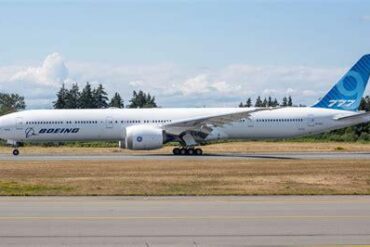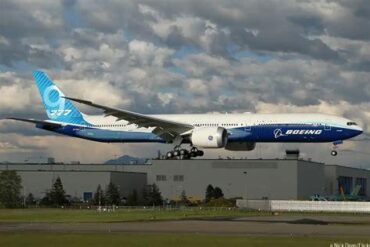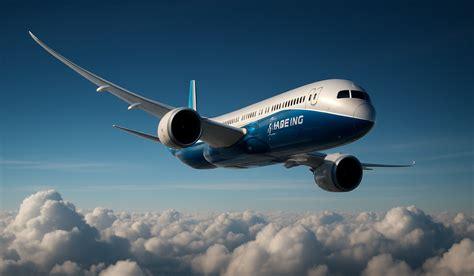
The Boeing 777X has become one of the most unusual aircraft programs in modern commercial aviation. It was originally expected to enter revenue service around 2020, yet by 2026, airlines are still waiting for the first customer deliveries. The program has endured engine problems, software revisions, structural modifications, certification challenges, factory disruptions, and enormous financial charges. Boeing is now targeting 2027 for the first deliveries of the 777-9, meaning the aircraft could arrive roughly seven years later than originally planned.
Ordinarily, such a prolonged delay would put severe pressure on an aircraft program’s order book. Airlines need predictable fleet planning, especially when a new widebody is supposed to replace aircraft that are already aging. Yet the 777X has produced an unusual response. Rather than abandoning the aircraft in large numbers, major international carriers continue to hold substantial backlogs and, in some cases, have increased their commitments. The reason is not simply brand loyalty to Boeing. The underlying economics of operating a very large twin-engine aircraft remain extremely difficult for airlines to ignore.
The financial consequences for Boeing have been enormous. In the third quarter of 2025, the company recorded a $4.9 billion charge connected with the 777X program, reflecting the cost of extended testing, production complications, certification delays, and other development pressures. The program’s cumulative development write-downs have reportedly reached roughly $15 billion, turning the 777X into one of the most expensive commercial aircraft development efforts in Boeing’s history. Early-production aircraft have also required substantial modification work to bring them toward the final certified configuration.
Why the Boeing 777X Has Taken So Long to Enter Service
The 777X was conceived as an evolution of the highly successful 777 family rather than an entirely clean-sheet aircraft. However, combining a familiar fuselage concept with a new wing, new engines, revised systems, and advanced flight-control technology created a far more complicated development program than the name might suggest. The GE9X engine became one of the most important elements of the aircraft, while the enormous composite wing introduced another layer of engineering and certification requirements.
The original entry-into-service target of around 2020 was progressively pushed back. Engine development issues were among the early obstacles, while the COVID-19 pandemic added disruption to an already complicated program. Later, the aircraft faced additional scrutiny from regulators and extensive work associated with bringing early production examples into conformity with the final design.
That process is particularly expensive because Boeing had already built numerous 777X airframes before certification. Aircraft used during testing are not necessarily configured exactly like the final production aircraft. Structural tests, flight-test requirements, design changes, and certification findings can therefore create a large amount of rework. In some cases, modifying an early airframe can be so expensive that dismantling and recycling it becomes more practical.
The result is a difficult industrial equation. Boeing must spend heavily today to create an aircraft that will generate revenue for decades, while investors must absorb the financial impact long before the program reaches its intended production rhythm. The 777X therefore represents both a major financial burden and a strategic bet on the future of long-haul aviation.
The 777-9 Occupies a Rare Position in the Widebody Market
The strongest argument for the 777X comes from its size. The 777-9 is designed to carry up to approximately 450 passengers in a standard two-class configuration, according to Boeing’s published specifications. That places it substantially above the typical capacity of aircraft such as the Airbus A350-1000, which is commonly positioned around the 350-to-400-seat range depending on configuration.
This capacity difference matters because the 777-9 is not merely another choice among similarly sized long-haul aircraft. It occupies an upper tier of the twin-engine widebody market that has become increasingly important following the disappearance of very large four-engine passenger aircraft.
The Airbus A380 once provided airlines with enormous passenger capacity, while Boeing’s 747 family served a similar role for decades. Both aircraft could move hundreds of passengers on major international routes, but their four-engine designs came with higher operating complexity and fuel requirements than modern twinjets. As airlines retired these aircraft, the market moved toward smaller and more efficient widebodies.
The problem is that the industry has not produced many alternatives for airlines that still need extremely high passenger capacity. The A350-1000 is an important competitor, but it does not occupy exactly the same capacity category as the 777-9. Boeing has therefore positioned the 777X in a market segment where the number of direct alternatives is limited.
That helps explain why airlines continue to wait.
Airport Slot Restrictions Make Aircraft Size More Important
For airlines operating at major global hubs, aircraft capacity can be just as important as aircraft range or fuel efficiency. Airports such as London Heathrow, Tokyo Haneda, and Dubai International operate under significant slot constraints, particularly during peak periods. An airline cannot simply add another flight whenever demand increases.
This creates a powerful incentive to put more seats on each available departure.
A carrier operating a 777-9 can potentially move hundreds of passengers through a single airport slot. Replacing that aircraft with a smaller widebody could require additional frequencies to transport the same number of travelers. At a capacity-constrained airport, those extra slots may not exist.
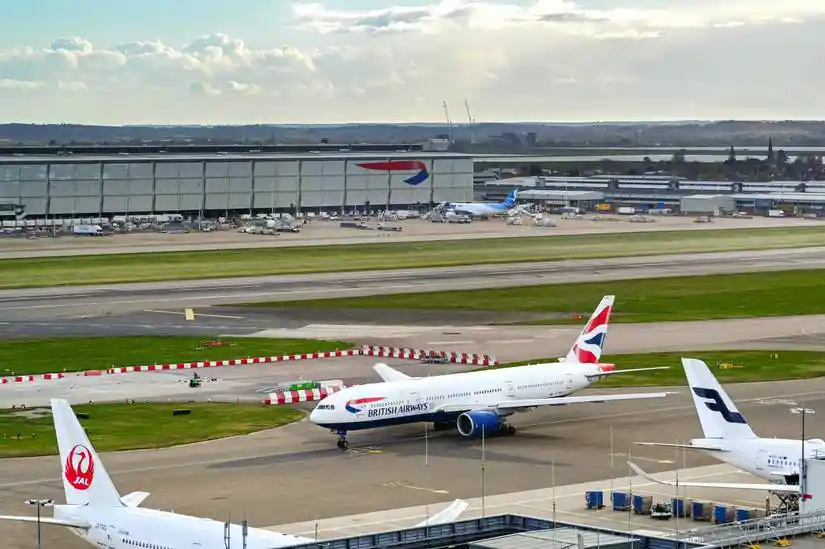
This is especially relevant to airlines built around large international hubs. Emirates, for example, has developed its Dubai network around the concept of concentrating passengers through a massive connecting hub. Qatar Airways has similarly relied on Doha as a major transfer point between continents. For such airlines, aircraft capacity directly affects how efficiently scarce airport infrastructure can be used.
The 777-9 offers an unusual combination: enormous passenger capacity without returning to a four-engine configuration. That distinction is central to the aircraft’s commercial appeal.
Emirates Shows Why Airlines Are Still Buying the 777X
No airline illustrates the contradiction surrounding the 777X better than Emirates. The Dubai-based carrier has publicly expressed frustration over Boeing’s delays, yet it has continued to expand its commitment to the aircraft.
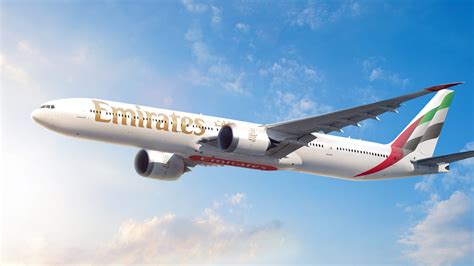
During the 2025 Dubai Airshow, Emirates ordered another 65 Boeing 777-9 aircraft, bringing its total 777X commitment to 270 aircraft. The carrier expects the type to become an important part of its long-term fleet through the 2030s.
That decision is significant because Emirates is one of the world’s largest operators of large widebody aircraft. Its network depends heavily on moving large numbers of passengers through Dubai, and its fleet has historically included both the 777-300ER and A380.
At the same time, Emirates has not been indifferent to the delays. President Tim Clark has been openly critical of the program’s progress, and the airline has indicated that it did not want some of the earliest production aircraft because they would require substantial rework.
The combination is revealing. An airline can be deeply frustrated with an aircraft manufacturer while still believing that the aircraft itself fits its future fleet strategy.
Why Switching to Another Aircraft Is Not Simple
On paper, an airline could respond to the 777X delays by switching to another aircraft. In reality, fleet planning is much more complicated.
A carrier that replaces a planned 777-9 order with a smaller aircraft must reconsider passenger capacity, route economics, airport slots, crew requirements, maintenance systems, spare parts, training, and long-term fleet commonality. A fleet is not simply a collection of airplanes that can be exchanged one for one.

The GE9X-powered 777-9 also promises significantly improved fuel efficiency compared with earlier generations of large widebodies. Boeing has targeted roughly a 10% to 12% improvement in fuel burn relative to predecessor aircraft, depending on the comparison and operating assumptions. Over a commercial aircraft’s multi-decade lifespan, even relatively modest efficiency improvements can become financially significant.
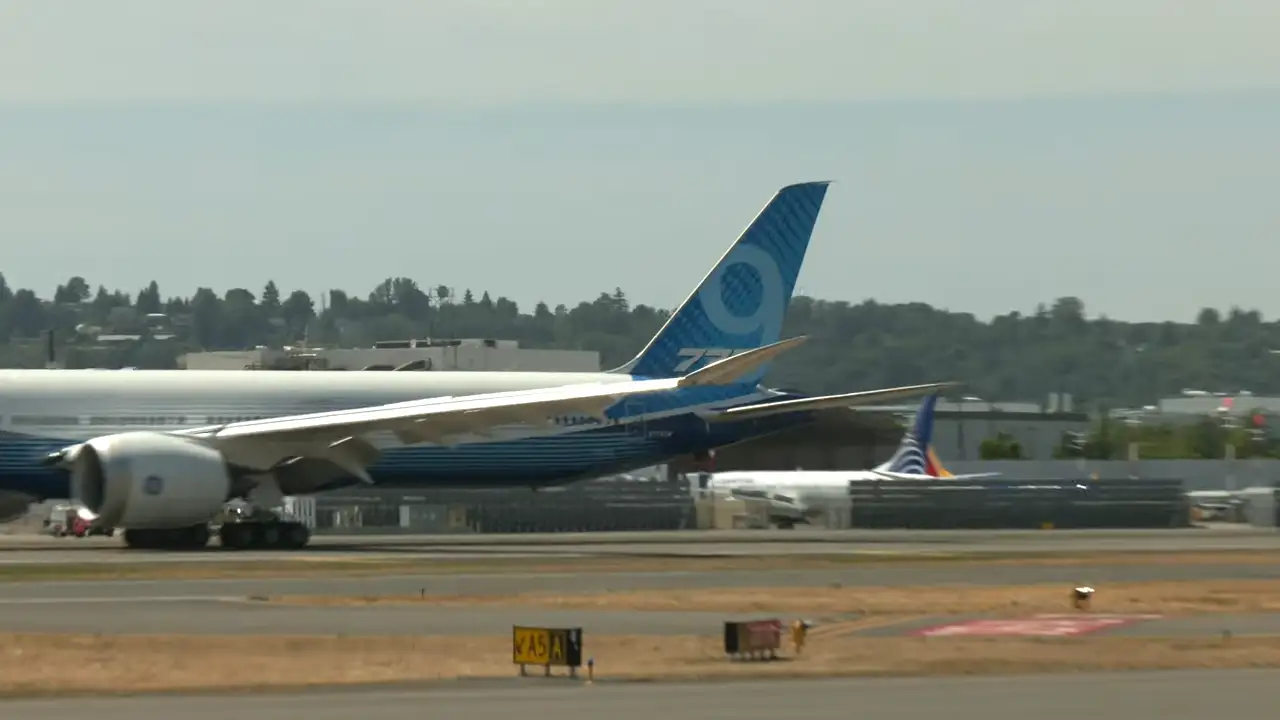
The aircraft’s enormous wing also demonstrates the engineering compromises involved. The 777-9 has a wingspan of approximately 235 feet 5 inches (71.75 meters) when its wingtips are extended. That would create serious airport compatibility problems at many facilities if the entire wing remained extended on the ground.
Boeing’s solution is the aircraft’s distinctive folding wingtips. Each wingtip folds upward after landing, reducing the aircraft’s ground footprint sufficiently to fit within the airport gate category associated with smaller widebodies. This allows airlines to operate a very large aircraft without requiring every airport to rebuild its gates around an enormous wingspan.
The GE9X Is Central to the 777X Business Case
The 777X’s commercial proposition depends heavily on the GE9X, the largest commercial aircraft engine ever produced. Its enormous size reflects the amount of thrust required to propel a jet of the 777-9’s dimensions while improving efficiency compared with older engines.
The engine is not simply a powerplant for a larger 777. It is part of the aircraft’s strategy to make high capacity economically viable. Airlines want more seats, but they do not want the fuel consumption and operating costs associated with previous generations of very large aircraft.
That is why the 777-9’s economics matter so much. If an airline can carry substantially more passengers on a single flight while achieving lower fuel burn per seat than an older 777 or four-engine aircraft, the aircraft can make sense even if its purchase and development history has been unusually expensive.
The same logic explains why airlines may tolerate years of waiting. Their fleet plans are often built around 20- to 30-year aircraft lifecycles, not quarterly financial results.
The 777X Could Become Boeing’s High-Capacity Flagship
The 777X program currently presents a striking contrast. Boeing has absorbed billions of dollars in development costs, while airlines continue to treat the aircraft as a long-term fleet asset. Those two realities are not necessarily contradictory.
For Boeing, the development expense represents the cost of bringing a highly complex aircraft to market. For airlines, the question is different: whether the finished aircraft will provide useful capacity, range, efficiency, and airport compatibility for decades.
The answer will ultimately depend on certification, reliability, production quality, and real-world operating performance. Until customer aircraft enter commercial service, many of the 777X’s promised economic advantages remain projections rather than proven airline results.
Nevertheless, the continued commitments from major carriers show that the aircraft addresses a genuine market requirement. High-capacity twinjets are becoming increasingly important as airlines retire older 747s and A380s while continuing to face severe slot limitations at major international airports.
The 777X therefore does not need to replace every widebody in an airline’s fleet. Its role is much more specialized. It is designed for routes where demand is high enough to justify a very large aircraft but where airlines still want the efficiency and operational flexibility of a modern twinjet.
Why Airlines Are Still Waiting for Boeing’s 777X
The Boeing 777X’s story is ultimately about the difference between development risk and fleet economics. Boeing has paid an enormous price for the program’s delays, and the aircraft has arrived years later than originally promised. Yet airlines continue ordering it because the market has few direct alternatives for moving roughly 400 or more passengers efficiently with a modern twin-engine aircraft.
For Emirates, Qatar Airways, and other major long-haul operators, the calculation extends far beyond the current delay. Their networks are planned years in advance, their major hubs face capacity restrictions, and their largest routes need aircraft capable of carrying enormous passenger volumes.
The 777-9 is therefore entering a market that has changed significantly since Boeing first launched the program. The A380 era is fading, the 747 has largely disappeared from passenger service, and airlines increasingly want the capacity of a very large aircraft without four engines.
If Boeing achieves certification and begins customer deliveries in 2027, the seven-year delay will remain one of the program’s defining historical facts. But the more important question for airlines will be what happens afterward: whether the 777-9 can deliver the capacity, efficiency, reliability, and operational flexibility that convinced carriers to wait for it.
That is why the aircraft’s enormous development bill has not killed demand. The 777X is late, expensive, and exceptionally complicated—but it is also designed for a part of the long-haul market that airlines still have very few ways to serve.