The Federal Aviation Administration’s newest proposed rule is shaping up to be one of the most expensive regulatory shifts U.S. airlines have faced in decades, not because it introduces a new aircraft or an exotic safety system, but because it reaches deep into the existing fleet and demands change at massive scale. At the heart of the proposal sits a deceptively small piece of avionics hardware: the radio altimeter.
Under the FAA’s January proposal, tens of thousands of aircraft operating in U.S. airspace may be required to replace or upgrade their radio altimeters to withstand interference from adjacent 5G wireless networks. The agency estimates the total cost could exceed $4.5 billion, a figure that instantly reframes the rule from a technical adjustment into a full-blown economic event for the airline industry.
This proposal arrives as the U.S. government accelerates the reallocation of valuable mid-band spectrum for commercial wireless use. That transition has long been controversial in aviation circles, and the FAA’s rule now converts years of warnings into binding financial consequences. Airlines are not being asked to tweak procedures or update software. They are being asked to physically modify fleets that were never designed for this spectrum environment.
By the FAA’s own accounting, up to 58,600 radio altimeters could be affected. That number alone explains why the industry response has been swift, cautious, and quietly alarmed. This is not a marginal compliance issue. It is a structural cost shock tied directly to national spectrum policy.
The Spectrum Shift Driving the Rule
The regulatory spark behind the FAA’s proposal lies in federal legislation with a deceptively grand name: the One Big Beautiful Bill Act. Section 40002 of the law directs the government to complete competitive bidding for at least 100 megahertz of spectrum in the 3.98–4.2 GHz band, known as the Upper C-band.
This slice of spectrum sits uncomfortably close to the frequencies used by aircraft radio altimeters, which operate between 4.2 and 4.4 GHz. Radio altimeters do not simply transmit and receive signals like conventional radios. They emit signals toward the ground and measure the reflected return to determine an aircraft’s precise height above terrain. The system is exquisitely sensitive by design.
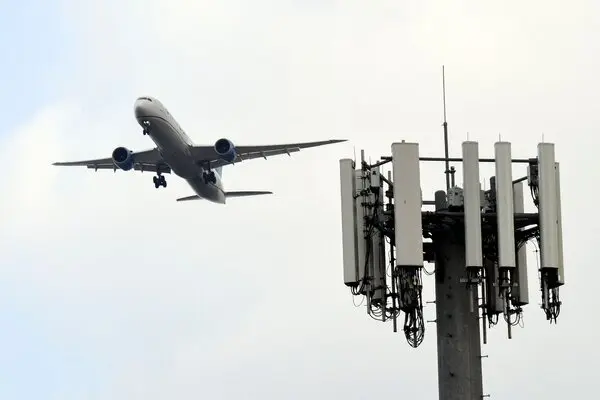
As wireless carriers push powerful 5G signals closer to this aviation-critical band, the FAA has concluded that legacy altimeters were not built to tolerate this new electromagnetic neighborhood. Even faint interference, reflected or scattered under certain conditions, can lead to erroneous readings, nuisance alerts, or system dropouts during critical phases of flight.
From the FAA’s perspective, the spectrum decision is already made. The agency’s rule does not attempt to stop 5G expansion. Instead, it shifts the burden squarely onto aircraft operators, requiring them to ensure their equipment can survive in a noisier radio environment.
What the FAA Is Actually Requiring
The proposed regulation would establish new minimum performance standards for radio altimeters operating in U.S. airspace. These standards are designed to ensure altimeters can tolerate interference from wireless signals in adjacent frequency bands, reflecting what the FAA describes as the best achievable interference tolerance using current technology.
Aircraft operating under Parts 121 and 129, along with aircraft configured for 30 or more passengers or a payload exceeding 7,500 pounds, would be subject to the most stringent compliance timeline. These aircraft form the backbone of commercial air transport in the United States, encompassing mainline airlines, large regional jets, and many international operators flying into U.S. airports.
The initial compliance window stretches broadly, with deadlines expected to fall between 2029 and 2039, depending on equipment availability and retrofit feasibility. That long runway is intentional. The FAA recognizes that manufacturers cannot instantly produce tens of thousands of compliant units, and that airlines cannot ground fleets en masse for avionics surgery.
Smaller aircraft outside these categories would still be required to comply, but within a shorter two-year window once the rule takes effect. The message is clear: no segment of aviation escapes this rule entirely.
Why Radio Altimeters Are Non-Negotiable
Radio altimeters sit quietly beneath the cockpit workload until the moment they become indispensable. They feed data directly into autoland systems, ground proximity warning systems, terrain awareness alerts, wind-shear detection, and traffic collision avoidance logic. In modern aircraft, dozens of safety functions depend on accurate radio altitude data.
When interference corrupts that data, the consequences cascade. Pilots may receive false warnings or lose critical cues during approach and landing. Automated systems may disengage or refuse to arm. In low-visibility operations, where precision is everything, even brief altimeter anomalies can escalate risk.
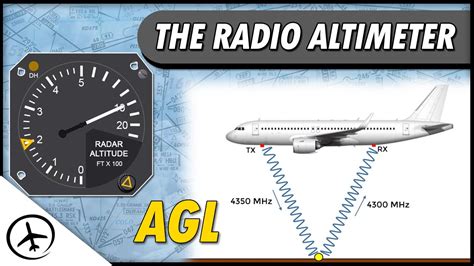
The FAA’s proposal emphasizes that interference does not need to be constant to be dangerous. Reflections from terrain, buildings, or even weather phenomena can distort signals in unpredictable ways. The agency cites scenarios where faint reflections masquerade as legitimate returns, confusing onboard systems and triggering nuisance alerts that distract crews at precisely the wrong time.
From a safety regulator’s standpoint, tolerating such ambiguity is unacceptable. The rule is framed not as a reaction to confirmed disasters, but as a preemptive barrier against future ones.
The Billion-Dollar Price Tag Explained
The FAA estimates that retrofitting or replacing interference-tolerant radio altimeters could cost more than $4.5 billion across the U.S. aviation fleet. When annualized over 20 years at a 7 percent discount rate, the agency pegs the figure at approximately $424 million per year.
That number reflects more than just the price of hardware. It includes certification costs, installation labor, aircraft downtime, engineering integration, and the operational disruption that comes with modifying active fleets. For airlines already operating on thin margins, the timing is painful.
Unlike fuel price spikes or labor negotiations, this cost cannot be offset through operational efficiency alone. It is a capital expense forced by regulatory change, not by market competition or customer demand. Airlines cannot choose to defer it indefinitely without risking non-compliance.
Industry group Airlines for America has acknowledged the proposal’s inevitability while signaling concern. The organization notes that it has worked collaboratively with the telecommunications industry, the FAA, and the FCC, but is still evaluating the full impact before submitting formal comments.
Why This Isn’t the First 5G-Aviation Clash
The collision between 5G expansion and aviation safety is not new. In 2021, European aviation regulators examined similar concerns and concluded that interference risks were manageable under Europe’s spectrum configurations. The U.S. situation, however, is structurally different.
American 5G deployments operate with higher power levels and closer proximity to aviation frequencies than many European counterparts. This difference explains why European conclusions cannot be cleanly imported into U.S. regulatory logic.
By late 2023, the FAA declared that most of the U.S. airline fleet had been upgraded to mitigate immediate 5G interference risks. That decision allowed carriers to resume normal operations near 5G-equipped airports. Yet the agency now argues that these interim measures are insufficient for the long term, especially as spectrum use intensifies.
Data published by AeroTime adds weight to this caution. Reviewing 625 reports through August 2025, analysts identified 118 events where C-band interference was considered a potential factor, including display errors and nuisance alerts linked to radio altimeter inputs. While none resulted in catastrophe, regulators see these incidents as warning tremors rather than harmless noise.
Politics, Revenue, and Unavoidable Trade-Offs
Spectrum is money. Reallocating portions of the Upper C-band generates billions in licensing revenue for the federal government, a fact that looms quietly behind the safety language. Under the current administration and earlier spectrum decisions, opening this band to bidders was framed as both an economic and technological imperative.
The FAA’s rule effectively acknowledges that aviation must adapt to this reality, not resist it. The agency is not questioning whether the spectrum should be auctioned. It is ensuring that aircraft systems survive the consequences of that auction.
For airlines, this creates an uncomfortable asymmetry. They bear the cost of protecting safety margins while the financial upside of spectrum sales flows elsewhere. That imbalance is a central reason the rule is generating such intense scrutiny during the public comment period, which remains open until March 9.
Why Airlines Can’t Ignore the Clock
Even with compliance deadlines stretching into the 2030s, airlines face immediate strategic decisions. Avionics upgrades require long lead times, coordination with manufacturers, and alignment with maintenance schedules. Waiting too long risks bottlenecks as demand spikes closer to regulatory deadlines.
Fleet planners must now factor radio altimeter compatibility into aircraft acquisition, leasing decisions, and retirement timelines. Older aircraft nearing the end of their economic life may not justify expensive retrofits, accelerating fleet turnover. Newer aircraft, meanwhile, may still require modification depending on their original certification basis.
This rule, in effect, reshapes the economics of fleet management, not just safety compliance.
A Rule That Redefines the Cost of Connectivity
The FAA’s newest proposal illustrates a broader truth about modern aviation: safety does not exist in isolation from telecommunications, politics, or economics. As the electromagnetic environment grows more crowded, the cost of protecting critical systems rises accordingly.
Radio altimeters, once taken for granted, have become the focal point of a national trade-off between wireless connectivity and aviation resilience. The FAA has chosen its side, and the price tag reflects the seriousness of that choice.
For airlines, the question is no longer whether this rule will happen, but how they will absorb one of the most consequential avionics mandates of the 21st century. The bill is coming, measured not just in dollars, but in the complex reengineering of fleets built for a quieter spectrum age.