In the world of commercial aviation, safety regulations exist for every part of the flight experience—from how luggage is stowed to the exact position of seat backs. Yet, one rule that often goes unnoticed by passengers is the requirement that armrests be in the down position during takeoff and landing. At first glance, this may seem like an insignificant detail, but it serves a critical function in ensuring passenger safety during the most dangerous phases of flight.
The Federal Aviation Administration (FAA) mandates that airlines follow rigorous safety protocols, including those found in Air Carrier Operations Bulletin No. 1-94-9. This bulletin specifically instructs cabin crews to verify that armrests are in the normal forward/down position before the aircraft departs or arrives. But what might appear as a trivial requirement is actually a finely tuned precaution based on decades of safety analysis and incident reporting.
The Real Risk Behind Upright Armrests
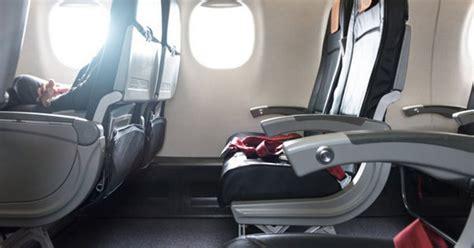
The cabin of a commercial aircraft is a tightly organized space designed to balance comfort, efficiency, and safety. When an armrest is raised, it can extend beyond the seat’s footprint, subtly narrowing the pathway between seat rows and potentially obstructing a passenger’s ability to reach the aisle in an emergency.
Aircraft design standards strive to ensure quick and unimpeded evacuation in case of an incident. A raised armrest, however, can significantly compromise this effort, especially in a crowded cabin where every inch counts. Imagine a scenario involving an emergency landing or an engine malfunction. Passengers must exit the aircraft within 90 seconds, as per FAA regulations. In that narrow window, a single obstructive armrest could mean the difference between escape and entrapment.
Even more alarming is the possibility that an upright armrest becomes a projectile hazard. In a sudden deceleration or crash-landing scenario, the force of impact can cause armrests to snap downward violently, leading to bruises, fractures, or concussions. It’s a seemingly small component, but its role in cabin dynamics is far from trivial.
How Obstructions Compromise Evacuation Routes
Evacuation efficiency is one of the most scrutinized elements in airline safety. Emergency drills consistently emphasize the need for clear, direct paths to the nearest exit. In most aircraft configurations, rows are spaced tightly, and passengers are seated just inches apart.
During an emergency evacuation, passengers instinctively move toward the aisle, especially if they’re seated near a window. A raised armrest can disrupt that natural flow, acting as a speed bump or even tripping hazard in a moment when every second matters. Cabin crews are trained to survey the seating area during final safety checks specifically to spot such obstructions.
It’s not just about the first few rows. On a full flight, the cumulative effect of multiple armrests in the raised position can seriously impede traffic flow. This has prompted airline regulators and safety boards to emphasize universal compliance with the armrest-down rule.
The Hidden Safety Design of the Aircraft Seat
Aircraft seats are not just designed for comfort; they are precision-engineered safety devices. The structure of each seat, including the armrest, is designed to absorb energy and limit movement during turbulence or impact.
The armrest’s role in this equation is twofold: it provides lateral support to passengers and serves as a barrier to minimize injury from neighboring seatmates. When down, the armrest helps create a physical boundary that limits the side-to-side motion that passengers might experience during sudden changes in altitude or speed.
Furthermore, many modern aircraft include armrests with built-in electronics, such as seat controls and USB charging ports. If these are raised during takeoff or landing, not only do they become structural hazards, but exposed wiring or mechanisms can be inadvertently damaged, adding an electrical risk to an already sensitive situation.
Accessibility vs. Safety: A Regulatory Balance
Interestingly, there’s a nuance when it comes to accessibility. The U.S. Department of Transportation (DOT) allows for some exceptions regarding movable armrests on aisle seats, particularly when those seats are designated for passengers with mobility impairments. Airlines are not required to install movable armrests on seats where FAA safety rules prohibit it or where practicality is lacking.
However, this does not mean a blanket exemption for safety regulations. If a movable armrest exists, it must still be placed down during takeoff and landing unless used for boarding or deplaning by a person with a documented need. In such cases, the cabin crew is trained to make appropriate accommodations while ensuring overall safety compliance.
Cabin Crew: The Guardians of Protocol
Flight attendants are more than just in-flight hospitality providers—they are first responders at 30,000 feet. Their job is to maintain vigilance and enforce safety standards that most passengers barely notice.
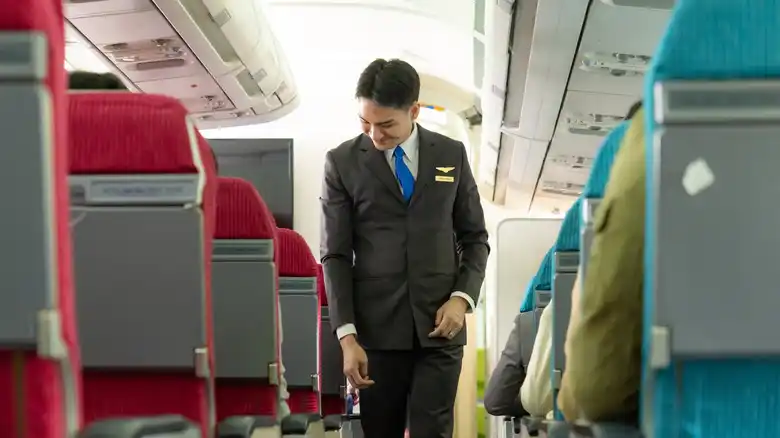
Cabin crew members perform final crosschecks before departure and landing. During these moments, they scan for seatbacks that aren’t upright, tray tables that haven’t been stowed—and armrests left raised. It’s not uncommon for flight attendants to politely instruct passengers to lower armrests that may have been lifted unconsciously or for added comfort.
This isn’t about inconvenience; it’s about adhering to proven safety protocols. In emergencies, hesitation kills. Familiarity with these rules—especially among frequent fliers—can speed up evacuation and reduce panic.
The Psychology of Passenger Compliance
Despite clear signage and announcements, compliance with armrest regulations often relies on passenger perception. Many travelers simply don’t understand the importance of the rule or assume it’s optional. In fact, studies in aviation psychology suggest that passenger behavior during boarding and disembarkation is often dictated by habit, not safety awareness.
For this reason, airlines are pushing for more educational in-flight safety videos and explicit demonstrations during briefings. Some carriers even integrate animated graphics to visually highlight how armrests, if not positioned correctly, can delay or hinder emergency exit.
A System Built on Redundancy and Preparation
The armrest policy is just one of hundreds of redundancies built into commercial aviation. Every rule—from the position of your window shade to where your carry-on must be placed—contributes to a broader matrix of fail-safe operations. The fact that commercial air travel remains one of the safest modes of transportation is a testament to this layered approach.
It’s worth noting that aviation is an industry where lessons are written in loss. Seemingly minor oversights have led to major policy changes. For example, outdated assumptions about evacuation efficiency were revised after the 1985 Manchester Airport disaster, where cabin obstructions contributed to fatal delays. Today’s armrest policy owes its rigor to those hard-learned lessons.
Conclusion: Minor Detail, Major Impact
While it may seem trivial, the requirement to lower armrests during takeoff and landing is a carefully considered safety rule, not a courtesy or formality. It exists to ensure smooth, unobstructed evacuations, prevent injuries from loose or swinging equipment, and uphold the structural integrity of cabin seating during abrupt movements.
Passengers can contribute meaningfully to their own safety—and that of others—by respecting this and other seemingly minor protocols. As with all aviation safety measures, it’s the aggregation of small precautions that protects lives in critical moments.
So the next time you’re tempted to lift the armrest for comfort, remember: it’s not just a shared space—it’s a potential lifeline.