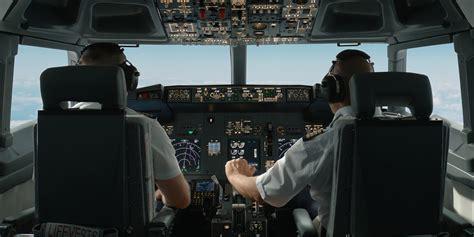
The Federal Aviation Administration has taken a decisive step in modernizing aviation safety oversight by extending the required recording duration for cockpit voice recorders (CVRs) from two hours to 25 hours, a sweeping change that regulators argue will transform accident investigations and prevention strategies. The move follows years of debate, regulatory delays, and vocal resistance from pilot unions, and it aligns the United States with international safety standards set by ICAO and EASA.
For decades, CVRs have been one of aviation’s most critical investigative tools, capturing cockpit conversations, alarms, and ambient sounds that help reconstruct events leading up to incidents and accidents. Yet their two-hour recording loop has long been considered a blind spot in modern long-haul operations, where flights routinely exceed ten hours and critical events can occur far outside the final two-hour window.
Why Extending Cockpit Voice Recorder Duration Matters
The rationale behind the rule is straightforward: more data equals clearer insight. When incidents occur early in a flight—or when an aircraft continues flying after an event—critical cockpit conversations often vanish before investigators can retrieve the recorder. This has hampered numerous investigations over the past two decades.
Regulators point to more than a dozen incidents since 2003 in which investigators would have benefited from longer recordings. One widely cited example is a 2023 incident in which an American Airlines Boeing 777 taxied onto an active runway at New York JFK, narrowly avoiding a catastrophe. Because the aircraft continued its flight, the cockpit conversation during the event was overwritten, leaving investigators without the human context that could explain decision-making errors, communication breakdowns, or procedural misunderstandings.
The extended recording requirement will help capture full duty-cycle cockpit interactions, providing insight into fatigue, crew coordination, automation management, and deviations from standard operating procedures.
A Regulatory Timeline Rooted in Safety Reform
The push for longer CVR recordings gained momentum during the FAA’s 2023 Safety Summit, where more than 200 aviation safety leaders gathered to address systemic risks in U.S. aviation. Former FAA Administrator Mike Whitaker emphasized that expanded recordings would provide “substantially more data” to identify root causes and prevent recurrence.
Under the finalized rule, all newly manufactured aircraft must comply with the 25-hour recording requirement starting in 2027, while existing passenger aircraft must be retrofitted by 2030. This phased implementation reflects both the technical complexity of upgrades and the cost considerations faced by airlines.
The rule brings U.S. aviation in line with global regulatory frameworks, ensuring that multinational carriers and aircraft manufacturers operate under consistent safety expectations.
Technical Implications for Modern Aircraft Fleets
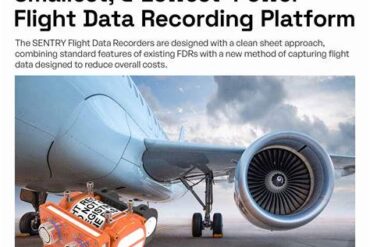
From a technical standpoint, modern solid-state CVRs already possess the storage capacity and reliability needed for extended recordings. The challenge lies in integration, certification, and retrofit logistics, especially for older aircraft models still in active service.
Airlines will need to coordinate with avionics manufacturers, maintenance providers, and regulators to certify upgraded systems. While the cost per aircraft is modest relative to the price of modern airliners, the cumulative expense across large fleets could be substantial. However, regulators and safety experts argue that the cost-benefit analysis overwhelmingly favors longer recordings, given the potential to prevent catastrophic accidents.
Pilot Pushback and Privacy Concerns
Despite broad support from safety regulators, pilot unions have strongly opposed the expanded CVR mandate, citing privacy risks and potential misuse of recordings. The Air Line Pilots Association (ALPA) has argued that existing laws protect CVR data during investigations but do not fully prevent airlines or third parties from releasing transcripts, potentially exposing pilots to reputational harm or disciplinary actions.
From the pilot perspective, the cockpit is a workplace where candid communication, informal language, and stress-driven expressions are common. Recording 25 hours of dialogue could capture personal conversations unrelated to flight operations, raising concerns about surveillance and professional autonomy.
Yet critics of the opposition argue that aviation professionals already operate in heavily monitored environments. Pilots fly aircraft worth hundreds of millions of dollars with hundreds of lives onboard, and their decisions are subject to scrutiny through flight data recorders, ATC logs, and operational audits. Expanding CVR duration is seen as a logical extension of existing accountability mechanisms.
Transparency vs. Trust in the Flight Deck
The debate highlights a deeper philosophical tension in modern aviation: how much transparency is necessary for safety, and how much privacy is essential for trust and performance?
Supporters of the rule argue that transparent data improves training, procedures, and systemic design. By analyzing extended cockpit conversations, airlines and regulators can identify subtle patterns such as fatigue-induced errors, CRM (Crew Resource Management) breakdowns, or automation complacency.
Opponents fear that excessive surveillance could create a chilling effect, making pilots less willing to speak openly in the cockpit, which could ironically degrade safety. The challenge for regulators will be to ensure strict data protection policies that prevent misuse while enabling safety-critical analysis.
Global Alignment and International Safety Standards
The FAA’s move harmonizes U.S. regulations with international aviation authorities, particularly ICAO and EASA, which have already adopted extended CVR recording standards. This alignment simplifies certification for aircraft manufacturers and operators serving multiple jurisdictions and reinforces a global commitment to data-driven safety improvements.
In an industry where aircraft cross borders daily, inconsistent safety rules can create regulatory friction and uneven investigative capabilities. Standardizing CVR requirements ensures that incidents involving multinational crews, international routes, and foreign-manufactured aircraft can be investigated with comparable data quality.
Lessons from Past Incidents and Near Misses
Aviation safety evolves through learning from failure and near-failure. Extended CVR recordings could transform investigations by capturing the full narrative arc of a flight, including pre-departure briefings, en route decision-making, and crew interactions during irregular operations.
Near misses, such as runway incursions, altitude deviations, and automation mismanagement, often occur hours before landing. Under the old two-hour limit, these events could vanish before the aircraft even touched down. With 25-hour recordings, investigators gain access to the cognitive and procedural context that flight data alone cannot provide.
This richer dataset will feed into training programs, simulator scenarios, and procedural updates, creating a feedback loop that continuously refines aviation safety.
The Parallel Push for Cockpit Video Recorders
The CVR debate has reignited discussion about cockpit video recorders, a technology long advocated by the National Transportation Safety Board (NTSB) but opposed by pilot unions. Video recordings could capture control inputs, instrument readings, and pilot actions in real time, resolving ambiguities that audio and flight data cannot.
The controversial crash of Air India Flight AI171, where the aircraft lost power shortly after takeoff, has been cited as a case where cockpit video could have instantly clarified whether the event was due to pilot action or mechanical failure. While the exact cause remains debated, the incident underscores how incomplete data can fuel speculation and hinder definitive conclusions.
Extending CVR duration may be a stepping stone toward broader adoption of visual flight deck monitoring, though privacy concerns will intensify if video recording becomes mandatory.
Operational and Legal Safeguards for CVR Data
To balance safety benefits with privacy rights, regulators are expected to strengthen data governance frameworks. These may include:
- Strict limits on who can access CVR recordings
- Enhanced penalties for unauthorized disclosure
- Clear distinctions between safety investigations and disciplinary actions
Such safeguards are crucial to maintaining trust between pilots, airlines, and regulators. Without robust protections, the extended recording mandate could erode cooperation and create adversarial dynamics in safety reporting.
A Turning Point in Data-Driven Aviation Safety
The 25-hour CVR mandate represents a philosophical shift in aviation safety toward comprehensive data capture and systemic learning. As aircraft become more automated and complex, understanding human-machine interaction becomes increasingly vital. Longer recordings provide the narrative layer that complements digital telemetry, bridging the gap between technical performance and human decision-making.
Airlines, regulators, and manufacturers will now have unprecedented insight into cockpit dynamics, enabling predictive safety models and targeted interventions. Over time, this could reduce human-factor accidents, which remain one of the leading causes of aviation incidents.
Economic and Industry Impact
While airlines will incur retrofit and certification costs, the broader industry impact is likely positive. Enhanced safety records can reduce insurance premiums, regulatory scrutiny, and reputational risk. Manufacturers may also integrate extended recording capabilities into next-generation avionics architectures, making the feature standard rather than an add-on.
The rule could also influence litigation and liability frameworks. More comprehensive recordings provide clearer evidence in accident investigations, potentially accelerating legal processes and clarifying accountability.
The Future of Flight Deck Accountability
Extending CVR duration is part of a broader trend toward continuous monitoring and accountability in aviation. As artificial intelligence, predictive maintenance, and real-time analytics become standard, cockpit recordings may integrate with broader safety ecosystems that detect anomalies before they escalate into incidents.
The challenge will be ensuring that technological oversight enhances human performance rather than undermining professional autonomy. Striking that balance will define the next era of aviation safety governance.
Bottom Line: A Necessary Evolution with Cultural Implications
The FAA’s decision to extend cockpit voice recorder recording duration to 25 hours marks a pivotal evolution in aviation safety infrastructure. By capturing the full spectrum of cockpit interactions, regulators and airlines gain a powerful tool to prevent accidents, refine training, and understand human factors in unprecedented detail.
Yet the rule also forces the industry to confront fundamental questions about privacy, trust, and surveillance in the cockpit. As aviation becomes increasingly data-driven, the social contract between pilots, airlines, and regulators will need to evolve alongside technology.
Ultimately, the expanded CVR mandate reflects aviation’s relentless pursuit of safety, where every data point, every conversation, and every decision contributes to a system designed to learn, adapt, and protect lives at 35,000 feet.