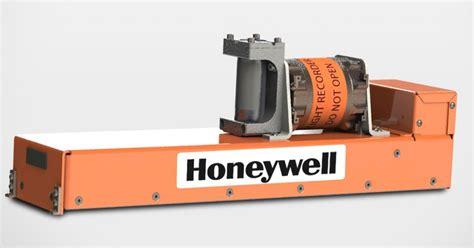
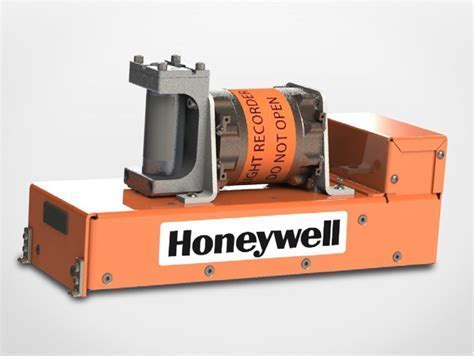
The Honeywell Cockpit Voice Recorder (CVR) represents a crucial evolution in aviation safety technology. With the introduction of the Honeywell Connected Recorder-25 (HCR-25), developed in collaboration with Curtiss-Wright, the standards for flight data retention, transmission, and analysis have dramatically shifted. Designed to exceed both current and forthcoming regulatory requirements, the HCR-25 ensures that vital cockpit audio is preserved, accessible, and actionable even under the harshest circumstances.
Extended Recording Duration: Meeting New Global Standards
The most revolutionary feature of the HCR-25 is its 25-hour audio recording capability, a substantial leap from the industry-standard two-hour CVRs. This expanded timeline covers all flight phases, including critical mid-flight events often lost in legacy systems. With this advancement, regulators and investigators gain access to a far richer audio dataset for reconstructing incident sequences and understanding crew interactions over extended periods.
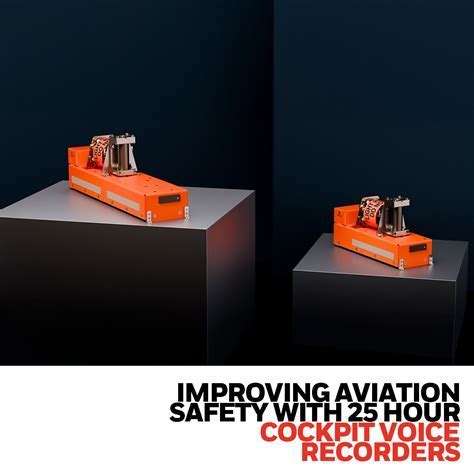
This enhancement aligns with the 2024 FAA Reauthorization Act, mandating all new commercial aircraft to be equipped with 25-hour CVRs. Honeywell’s early compliance ensures not only regulatory readiness but also sets a precedent for proactive safety integration in modern aircraft fleets.
Real-Time Data Transmission: Bridging Air and Ground in Real Time
The HCR-25’s integration with satellite communications systems—such as Honeywell’s own Aspire platform—enables the real-time transmission of cockpit voice data to secure ground-based servers. This capability fundamentally transforms post-incident investigations. In catastrophic events where the physical retrieval of the CVR is compromised, such as deep-sea crashes, investigators can still access crucial data moments after they are recorded.
This level of data redundancy and survivability represents a monumental leap in black box design, addressing long-standing challenges where data was previously lost due to inaccessibility or damage.
High-Fidelity, Multi-Channel Audio for Precision Analysis
Beyond duration and transmission, the HCR-25 delivers high-fidelity recordings across four independent audio channels, including:
- Captain’s microphone
- First officer’s microphone
- Cockpit area microphone (ambient sounds)
- Spare channel for redundancy or expansion
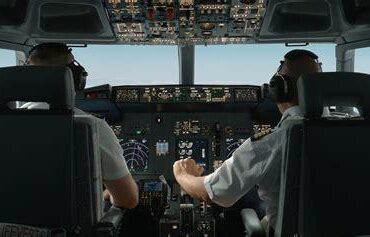
This ensures the acoustic environment of the cockpit is captured with remarkable clarity, aiding in precise identification of spoken instructions, warnings, background alarms, and environmental noises. The granularity of such audio enables deeper and more conclusive safety analyses.
Engineered for Survival: Impact and Fire Resistance
The HCR-25 meets stringent international crash survivability standards, including TSO-C123c and ED-112A certifications. Its construction ensures:
- Fire resistance at temperatures up to 1,100°C for one hour
- Impact survivability of up to 3,400 g
- Submersion protection at depths up to 20,000 feet
These specifications make the HCR-25 not just a recorder but a resilient data guardian, capable of withstanding the most extreme aviation disasters while safeguarding mission-critical audio logs.
Seamless Integration and Retrofit Capabilities
Honeywell has engineered the HCR-25 for plug-and-play compatibility with existing aircraft systems. Aircraft operators benefit from:
- Minimal airframe modification during upgrades
- Reduced installation downtime
- Cost-effective compliance with upcoming EASA and FAA mandates
This approach is particularly beneficial for fleet-wide retrofitting, as seen in the rapid deployment of the HCR-25 across Boeing 737, 767, and 777 platforms. Honeywell is also actively pursuing certification on the Airbus A320 family, expanding its reach across both major aircraft manufacturers.
Integrated Safety Ecosystem: A Unified Data Recorder Suite
Through collaboration with Curtiss-Wright, the HCR-25 leverages Fortress CVR technology and seamlessly integrates with Honeywell’s HFR5 Flight Data Recorder (FDR). This unified solution provides:
- Synchronized flight and audio data logging
- Consolidated system health monitoring
- Streamlined incident reconstruction workflows
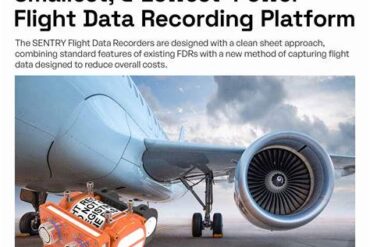
By co-locating CVR and FDR functions, airlines and investigators are equipped with holistic black box systems that dramatically enhance response and diagnostic capabilities.
Operational Enhancements and Real-World Applications
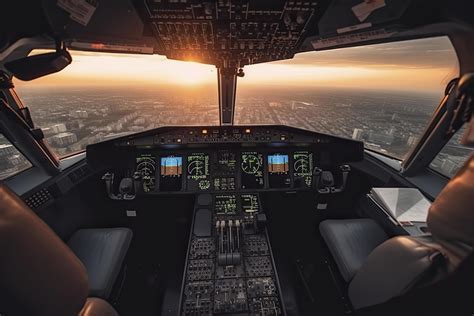
Honeywell’s cockpit voice recorders are already in service across major fleets, including the Boeing 737 MAX. These aircraft also feature the IntuVue RDR-4000 3D weather radar and the TPA100B Traffic Collision Avoidance System (TCAS), creating a comprehensive flight safety envelope.
In operational settings, the HCR-25 has also proven its reliability through proactive maintenance protocols. For example, a known issue involving control panel bushing melting was addressed swiftly through Honeywell’s release of a Service Information Letter (SIL), guiding operators in executing a standardized hardware replacement.
Supporting Investigations and Enhancing Training Protocols
Case studies, such as the Alaska Airlines door plug incident, underscore the investigative power of 25-hour CVRs. Investigators were able to construct a continuous timeline of cockpit audio from hours prior to the event—something that would have been impossible with traditional 2-hour devices. This allowed for a granular understanding of pre-incident discussions, warnings, and procedural adherence.
In training contexts, recorded data can be anonymized and used in simulator scenarios, enhancing pilot education through real-world case integration. This application is being further developed with AI overlays that can automatically flag anomalies or deviations, transforming how flight data is used to prevent future mishaps.
Market Leadership and Future Outlook
Honeywell stands as one of the two dominant global CVR manufacturers, alongside Curtiss-Wright. With coverage across over 80% of the commercial aircraft market, Honeywell’s black box solutions are industry benchmarks for safety, resilience, and innovation.
Looking ahead, Honeywell is investing in AI-driven voice analytics and real-time anomaly detection. Future CVRs may incorporate:
- Speech-to-text engines for searchable cockpit transcripts
- Real-time alerting systems based on voice stress analysis or procedural non-compliance
- Cloud-based analytics platforms for centralized safety oversight
These developments will transition the CVR from a post-event investigation tool to a proactive safety intelligence engine, enabling airlines to act on insights before risks escalate into incidents.
Conclusion
The Honeywell HCR-25 is not just a technological upgrade—it is a strategic leap in aviation safety infrastructure. With its unprecedented 25-hour recording duration, real-time transmission capabilities, and robust survivability, it addresses both regulatory mandates and real-world safety demands. Its seamless integration, data fidelity, and future-forward design solidify Honeywell’s position as a vanguard of next-generation cockpit voice recording technology. In an era where data equals safety, the HCR-25 ensures that no vital cockpit moment is lost, overlooked, or inaccessible—ushering in a new age of transparency, accountability, and preparedness in commercial aviation.