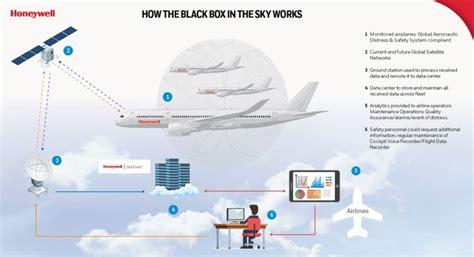
Honeywell has established itself as a leading force in the development and production of flight data recorders (FDRs), commonly known as black boxes. These devices play a crucial role in ensuring aviation safety, offering invaluable data that aids both in-flight operations and post-incident investigations. In this article, we will explore the advanced technology behind Honeywell’s flight data recorders, examining their key models, technical advancements, and their impact on the aviation industry.
Key Models and Features of Honeywell’s Flight Data Recorders
Honeywell has designed a range of flight data recorders to meet the varying needs of the aviation sector, from commercial airliners to regional jets and helicopters. Among these models, several stand out due to their advanced capabilities and compliance with international safety standards.
Connected Recorder-25 (CR-25/HCR-25)
The Connected Recorder-25 (CR-25), also known as HCR-25, is a next-generation flight data recorder that has redefined the industry standard. One of its standout features is its ability to stream flight data in real time to ground systems. This feature offers airlines a powerful tool for proactive maintenance, enabling them to monitor aircraft performance remotely and identify anomalies before they escalate. The CR-25 also complies with the European Union Aviation Safety Agency (EASA) regulations, which require 25-hour cockpit voice recording (effective from 2021). Additionally, the CR-25 integrates crash-survivable memory to ensure the safety of flight data during emergencies, even under extreme conditions. This model offers an unprecedented combination of real-time data access and robust crash protection.
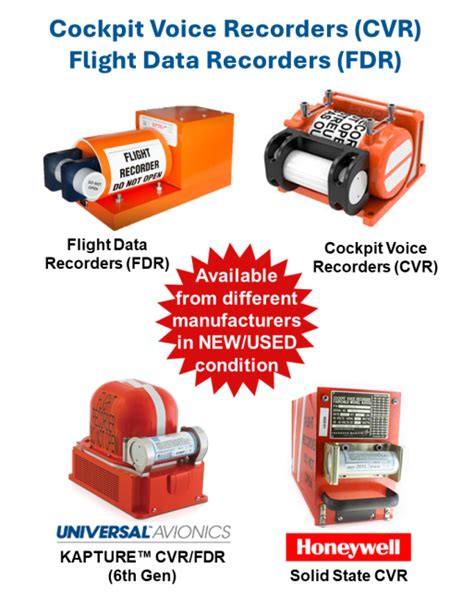
HFR5-D FDR
The HFR5-D FDR is designed for commercial aircraft and records up to 25 hours of flight data, including critical parameters like altitude, speed, and engine performance. This data is stored in solid-state, crash-resistant memory, ensuring that it remains intact even in the aftermath of an accident. The HFR5-D complies with the ARINC 717 format, which is widely used in the aviation industry for standardized data recording and transmission.
Lightweight Recorders
For regional jets and helicopters, Honeywell offers a range of lightweight flight data recorders. These devices feature modular crash-survivable memory units (CSMUs), which provide the same level of durability and reliability as larger recorders while being more compact and easy to install. These FDRs meet the rigorous standards set by the Federal Aviation Administration (FAA) and the European Union Aviation Safety Agency (EASA), with optional data-link recording (DLR) capabilities for enhanced connectivity.
Technological Advancements in Honeywell’s Flight Data Recorders
Honeywell’s commitment to innovation has resulted in several technological advancements that set their flight data recorders apart from competitors. These include features such as real-time data streaming, enhanced security, and resistance to 5G interference, all of which contribute to the reliability and effectiveness of their devices.
Real-Time Data Streaming
One of the most groundbreaking advancements in Honeywell’s flight data recorder technology is the ability to stream data in real time. The CR-25 model, in particular, enables airlines to monitor flight parameters and performance metrics from the ground, allowing for predictive maintenance and early detection of potential issues. This capability empowers airlines to act before minor issues turn into serious problems, improving operational efficiency and safety.
Enhanced Security
The security of flight data is paramount, and Honeywell has taken significant steps to ensure that their recorders are equipped with the latest security features. All data stored on Honeywell’s flight data recorders is encrypted to protect sensitive information. Additionally, the company provides specialized decryption software to ensure that authorized personnel can access and interpret flight data when necessary.
5G Interference Resistance
With the global rollout of 5G networks, there have been concerns about potential interference with critical aviation systems, particularly radar altimeters. Honeywell has addressed this issue by incorporating radar altimeters, such as the ALA-52B, into its flight data recorders. These altimeters are designed to filter out 5G broadband interference, ensuring accurate altitude measurements even in areas with high 5G signal activity.
Support Systems and Tools for Honeywell Flight Data Recorders
Honeywell provides a suite of support systems and tools to enhance the functionality and usability of their flight data recorders. These tools are critical for maintenance teams, allowing them to efficiently download, decrypt, and analyze data from flight data recorders.
Recorder Test and Ground Support Equipment (RPGSE)
The RPGSE is a rugged, laptop-based system that allows maintenance crews to download, decrypt, and analyze data from Honeywell’s flight data recorders. This system is designed for easy integration with other maintenance tools and systems, offering a streamlined approach to managing and interpreting FDR data. The RPGSE also includes software like ADRAS-32, which converts raw flight data into engineering units that can be easily understood by maintenance teams.
Handheld Download Units (HHDLU)
For faster, on-the-go data extraction, Honeywell offers handheld download units (e.g., the 69001074-060 model). These portable devices allow for the extraction of up to 25 hours of flight data in under five minutes without the need to remove the flight data recorder from the aircraft. This capability significantly reduces downtime and enhances operational efficiency.
Industry Impact and Market Leadership
Honeywell’s flight data recorders are widely adopted by major airlines and are an essential component of the aviation safety ecosystem. The company has positioned itself as a dominant player in the FDR market, which is expected to grow significantly in the coming years.
Safety Compliance
Honeywell’s flight data recorders are trusted by major airlines, including United Airlines, and are fully compliant with international aviation regulations. Their devices meet or exceed the stringent requirements set by regulatory bodies such as the FAA, EASA, and the International Civil Aviation Organization (ICAO). As a result, Honeywell’s FDRs are integral to the safety operations of airlines worldwide.
Market Leadership
With a market value projected at $2 billion from 2025 to 2033, the flight data recorder industry is poised for steady growth. Honeywell is expected to maintain its dominant position, driven by innovations in artificial intelligence (AI), machine learning (ML), and cloud-based analytics. These technologies are enabling the integration of predictive maintenance tools, further improving the efficiency and safety of air travel.
Applications in Accident Investigation
Flight data recorders are essential tools in the aftermath of aviation incidents, providing critical data that helps investigators reconstruct events leading up to an accident. Honeywell’s flight data recorders have been instrumental in several high-profile investigations, offering invaluable data that aids in identifying the cause of accidents.
In the case of the tragic 2022 China Eastern Airlines crash, for example, Honeywell’s flight data recorders provided key information, including altitude and throttle settings, which were essential in the investigation. Their robust design ensures that they can withstand extreme conditions, such as being submerged in water, and remain operational in the aftermath of an incident.
In addition to being used by aviation authorities like the National Transportation Safety Board (NTSB) and EASA, Honeywell’s flight data recorders are analyzed by specialized agencies to enhance aviation safety and prevent future accidents.
Conclusion
Honeywell’s flight data recorders represent the pinnacle of aviation safety technology. From their advanced models like the CR-25 and HFR5-D to the integration of cutting-edge features such as real-time data streaming and 5G interference resistance, these devices continue to evolve, ensuring that flight data is captured, stored, and analyzed with the utmost precision and security. As the aviation industry continues to advance, Honeywell remains at the forefront, offering innovative solutions that enhance safety, improve operational efficiency, and contribute to the overall integrity of global aviation operations.