Flight safety investigations often hinge on one crucial piece of technology: the black box recorder. Despite its ominous nickname and its association with aviation disasters, the black box is one of the most vital tools in unraveling the causes behind aircraft accidents. Known for its resilience, precision, and indispensable value in post-crash analysis, the black box is more than just a simple recording device. It is a marvel of aerospace engineering, refined over decades to record and preserve essential data even in the harshest conditions.
These flight recorders contain a wealth of information that can turn speculation into scientific fact. Yet, while many travelers are aware of the general purpose of a black box, fewer know the complex history, construction, and regulatory framework behind it. Here, we explore six in-depth facts about black box recorders that go far beyond their surface-level reputation.
Black Boxes Are Not Black
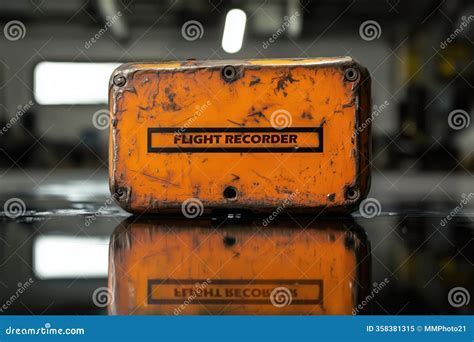
Despite the universally accepted term “black box,” these critical devices are, in reality, painted a vivid international orange. The term “black box” is a legacy of early aviation, where technical instruments were typically housed in dark enclosures. As aircraft crash investigation evolved, it became apparent that a jet-black casing was impractical in wreckage searches. High-visibility orange, often coupled with reflective tape, was adopted to improve post-accident recovery efforts, especially in challenging environments such as dense forests or deep oceans.
This change in color was driven not by aesthetics, but by the urgent necessity of rapid identification amid debris. Today, orange remains the global standard, set by aviation authorities and manufacturers alike, reinforcing the principle that visibility equals retrievability.
The First Black Boxes Used Magnetic Tape
The history of black box technology dates back to the early 1960s, when Australian scientist Dr. David Warren developed the first prototype of a flight recorder capable of capturing cockpit audio and flight metrics. This early device used magnetic tape—a then-standard medium for data storage, akin to audio cassettes of the time. These analog recorders offered a rudimentary but invaluable way to track parameters such as airspeed, altitude, and engine performance.
Magnetic tape, however, had limitations: it was susceptible to physical degradation, had limited capacity, and required manual review. Over time, these early systems were phased out in favor of solid-state memory. By the late 1990s, most airlines had transitioned to digital black boxes, which allowed for greater durability, faster data retrieval, and broader recording parameters. This transition marked a turning point in aviation safety, bringing with it a leap in data fidelity and forensic capability.
Modern Black Boxes Have Two Key Components: FDR and CVR
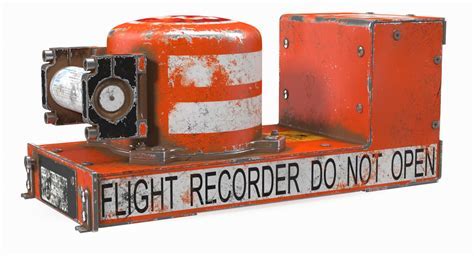
Every modern black box system is actually composed of two distinct recorders: the Flight Data Recorder (FDR) and the Cockpit Voice Recorder (CVR). While both are housed in reinforced enclosures, they serve different functions vital to understanding an aircraft’s final moments.
- The FDR captures technical flight parameters—up to 25 hours of data from over 88 distinct sensors including airspeed, altitude, vertical acceleration, heading, throttle position, and autopilot mode.
- The CVR, on the other hand, stores audio from the cockpit, typically the last two hours of ambient and crew conversation. This includes verbal commands, alarms, engine sounds, and even background noise.
The synergy between these two devices offers a multi-dimensional narrative—a simultaneous record of mechanical performance and human decision-making. Without this dual capability, aviation accident reconstruction would be speculative at best.
Built to Withstand Extreme Catastrophes
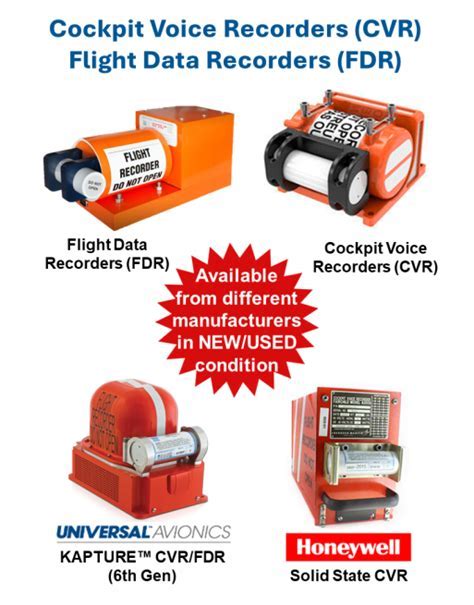
Perhaps the most astounding feature of a black box is its ability to endure the unimaginable. Engineered for survivability, these recorders are housed in titanium or stainless steel shells and undergo rigorous certification standards dictated by organizations like EUROCAE and RTCA.
Key performance standards include:
- Impact resistance up to 3,400 G-forces (approx. 3,400 times the force of gravity)
- Fire resistance at 2,000°F (1,100°C) for 60 minutes
- Water pressure survival up to 20,000 feet (6,000 meters) underwater
- Crush resistance against 5,000 pounds (2,250 kg) of static force
- Corrosion resistance against jet fuel, lubricants, saltwater, and hydraulic fluids
Additionally, each recorder is fitted with an Underwater Locator Beacon (ULB) that emits a signal detectable from up to 14,000 feet deep. The beacon activates upon immersion and operates for a minimum of 30 days, increasing the chances of timely recovery in oceanic crashes.
Mandated by International Law and Aviation Standards
The installation of black boxes is not a matter of airline preference but an internationally enforced requirement. The International Civil Aviation Organization (ICAO) mandates that all commercial aircraft above a certain weight and passenger threshold must be equipped with both an FDR and a CVR.
In the United States, the Federal Aviation Administration (FAA) and National Transportation Safety Board (NTSB) implement and monitor these standards, while similar authorities do so in Europe and Asia. These agencies dictate not only the presence of black boxes but also their placement, data parameters, and recording duration.
Notably, after several high-profile disappearances—such as Malaysia Airlines Flight MH370—regulatory pressure has grown to supplement traditional black boxes with real-time data streaming and deployable recorders that automatically detach and float upon impact with water. Though not yet universally implemented, such innovations represent the next evolution in accident survivability and investigation.

Positioned in the Rear Fuselage for Maximum Protection
One counterintuitive yet critical design decision is the placement of black boxes in the tail section of the aircraft. While the cockpit is the site of audio capture, the CVR and FDR are physically located in the rear fuselage, usually near the aircraft’s empennage (tail assembly). This location is chosen based on crash survivability patterns, which consistently show that the aft portion of an aircraft is more likely to remain intact.
In most impact scenarios, the nose and forward fuselage absorb the brunt of deceleration forces and fire. By situating the recorders in the rear, engineers increase the likelihood that the black box will remain recoverable and functional. Furthermore, this location minimizes the risk of fire exposure, impact destruction, and submersion loss, making the data it holds far more secure.
Conclusion: Silent Witnesses That Speak Volumes
Black box recorders are more than aviation equipment—they are silent witnesses designed to outlive tragedy and bring clarity to chaos. Each component, from its hardened shell to its precision sensors and audio logs, plays a critical role in the story of every flight. Their continued evolution reflects the aviation industry’s unwavering commitment to safety, accountability, and improvement.
Whether painted orange, embedded with high-tech memory modules, or built to survive underwater for weeks, these recorders stand as a testament to how engineering excellence and regulatory foresight come together to save lives—not just in the skies, but through every lesson learned on the ground.