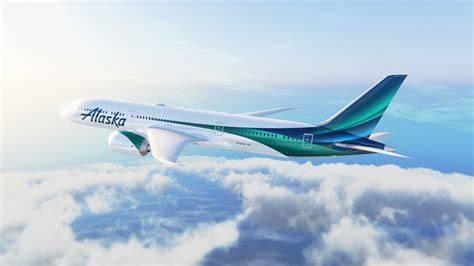
Alaska Airlines is facing a growing labor dispute over the way it staffs and operates its new Boeing 787-9 long-haul flights, with flight attendants arguing that the carrier’s expanded Main Cabin service cannot realistically be delivered with the number of crew members assigned to the economy cabin. The dispute comes at a critical moment for Alaska, which is rapidly transforming Seattle-Tacoma International Airport into a major international gateway following its acquisition of Hawaiian Airlines.
The Association of Flight Attendants-CWA (AFA-CWA) has formally challenged Alaska’s approach, saying management introduced additional food, beverage and premium-service elements without providing the staffing required to perform them properly. The union’s position is not simply that the workload is difficult. It argues that the current staffing model makes the promised service effectively impossible to deliver consistently.
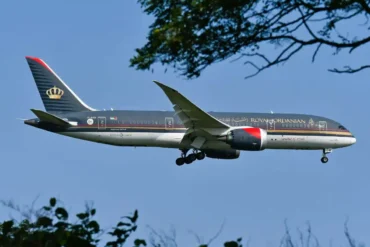
The timing is significant. Alaska launched its first Alaska-branded 787 international service in April 2026 with Seattle-Rome, followed by the carrier’s expanding network to destinations including London Heathrow, Seoul Incheon and Tokyo Narita. Alaska has publicly positioned these routes as the foundation of a much larger global operation, with plans to serve at least 12 intercontinental destinations from Seattle by 2030.
Alaska Airlines 787 Staffing Leaves Main Cabin Crews Under Pressure
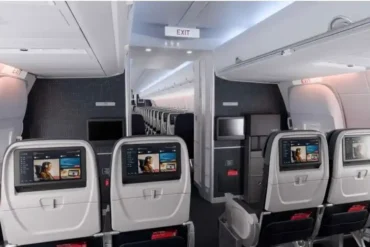
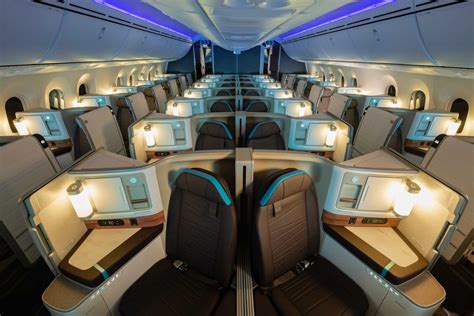
The fundamental issue is the number of flight attendants available to serve the Main Cabin once the premium cabin’s staffing requirements are taken into account. Alaska’s 787-9 features 34 enclosed Business Class suites and 266 Main Cabin seats, creating a substantial economy cabin for a relatively small number of flight attendants to serve.
According to AFA-CWA, four flight attendants are assigned to the Business Class operation, leaving only five or six crew members for the entire Main Cabin. That becomes especially challenging when the airline expects those employees to provide a more extensive service involving multiple beverage options, warm cookies, ice cream and other additions. The union says the workload does not match the staffing resources available.
The dispute is particularly important because the 787 is not simply another aircraft entering Alaska’s fleet. These aircraft and the crews operating them came through the 2024 Hawaiian Airlines acquisition, meaning the flight attendants remain under the former Hawaiian contract while Alaska and the union negotiate a new joint agreement. That contractual background has become central to the disagreement over how onboard service should be designed and implemented.
Why Alaska Airlines’ Train Service Is Causing Concern
One of the biggest operational questions involves the Main Cabin’s so-called train service. Instead of dividing the economy cabin into separate service zones, flight attendants push carts continuously from the front toward the rear. The concept was introduced at Hawaiian Airlines in 2025 as a response to staffing pressures and concerns that zone-based service could produce uneven workloads and inconsistent catering flows.
For a 787 carrying hundreds of passengers, however, a continuous cart operation can become demanding. Flight attendants must manage passenger requests, beverage service, food distribution, trash collection and other responsibilities while maintaining a steady movement through a long cabin.
AFA-CWA says the service model was developed and tested primarily around the Business Class product. The union maintains that the Main Cabin was not adequately tested before additional offerings were added. Its concern is therefore not simply about individual products such as cookies or ice cream, but about the cumulative effect of every additional task placed on a limited number of crew members.
Alaska’s New International Service Has Expanded Quickly
The staffing controversy arrives as Alaska Airlines accelerates its international ambitions. The airline began Seattle-Rome service on April 28, 2026, describing the route as its first-ever nonstop connection between Seattle and the Italian capital.
The carrier subsequently launched daily, year-round Seattle-London Heathrow service on May 21, while its 787 network also includes Seoul and Tokyo. Alaska has described Seattle as its global gateway, with as many as 17 Boeing 787 aircraft planned across its network and at least 12 intercontinental destinations targeted from Seattle by 2030.
That growth makes the current disagreement more consequential. A temporary service problem affecting a handful of new routes would be one thing. A staffing model that remains unresolved while the airline adds aircraft and destinations could become a much larger operational challenge.
Alaska has already announced plans to expand its 787 fleet substantially. The airline’s international strategy calls for a fleet of up to 17 Dreamliners, creating the possibility of a much broader long-haul network from Seattle. The carrier has also said its 787s will receive Starlink-powered connectivity, further emphasizing the premium global experience it wants passengers to associate with its new widebody operation.
Flight Attendants Want Staffing or Reduced Service
AFA-CWA’s position ultimately presents Alaska Airlines with two broad choices: increase staffing or reduce the amount of service offered in the Main Cabin. If the airline does not add crew, the union believes the onboard routine needs to be redesigned so that five or six flight attendants can realistically perform it without compromising professional standards.
That distinction matters for passengers. A service promise is only valuable when an airline can deliver it consistently throughout a long-haul flight. Adding attractive touches such as warm cookies, ice cream and expanded beverage choices may improve the passenger experience in theory, but each addition consumes time, equipment, movement and attention from the cabin crew.
The union has said it repeatedly asked management to reassess the service after a 30-day observation period ended in late May. AFA’s May update also stated that discussions about increasing 787 staffing had reached an impasse, while the union continued to address the issue through negotiations.
The Dispute Could Shape Alaska Airlines’ Global Expansion
For Alaska Airlines, the challenge is larger than one inflight-service disagreement. The company is attempting to establish a new identity as a serious long-haul international airline, building on Hawaiian’s aircraft, crews and operational experience while introducing an Alaska-branded premium product.
That ambition requires more than acquiring aircraft and announcing destinations. Long-haul operations depend on carefully balancing aircraft capacity, crew staffing, catering, turnaround requirements and the service standards promised to passengers. If those elements fall out of balance, the pressure eventually reaches the cabin.
Alaska’s international expansion remains one of the industry’s more interesting developments, but the 787 staffing dispute illustrates an important reality: global growth must be matched by operational resources. As the airline prepares for more Dreamliners and more international routes, resolving the disagreement with its flight attendants could become essential to ensuring that its ambitious new onboard experience is sustainable rather than simply impressive on paper.
A useful next step is to examine how Alaska’s 787 cabin staffing compares with other U.S. carriers operating similarly sized long-haul aircraft.