Premium economy has become one of the most important cabins in modern long-haul aviation. What was once a relatively unusual middle ground between economy and business class has developed into a sophisticated product category, with airlines competing through wider seats, greater recline, upgraded dining, better entertainment systems, and increasingly polished ground services. For passengers who want more comfort without paying the full price of a lie-flat business-class seat, the cabin has become an increasingly attractive proposition.
The concept itself dates back more than three decades. EVA Air introduced the world’s first premium economy product in 1992, calling it Evergreen Deluxe. The idea was straightforward: give passengers a meaningful improvement over standard economy while keeping the fare below business class. Since then, the concept has spread throughout the industry, particularly as airlines have added more long-haul routes and passengers have become increasingly sensitive to the comfort of spending 10, 12, or even 16 hours in an aircraft seat.
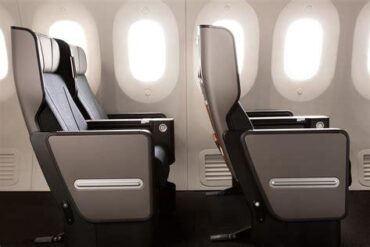
Today, the newest premium economy cabins are much more than economy seats with additional legroom. Airlines are designing dedicated seating areas with substantial pitch, improved cushioning, adjustable headrests and footrests, larger entertainment screens, charging ports, upgraded meals, and priority services. The result is a cabin that can feel like a separate travel experience rather than simply an enhanced version of economy. Five airlines in particular demonstrate how quickly the category is evolving, from the airline that invented premium economy to carriers that have only recently embraced it.
LATAM Airlines: A New Premium Comfort Cabin for Long-Haul Boeing 787 Flights
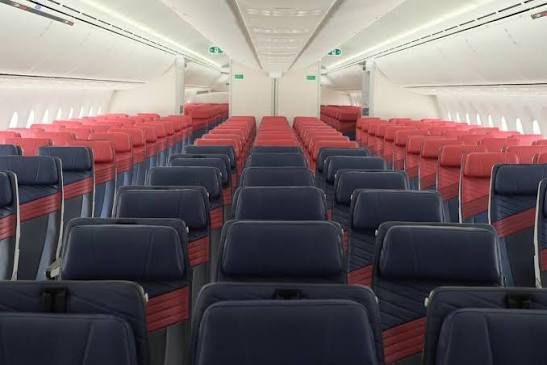
LATAM Airlines is preparing to introduce a new long-haul premium economy product called Premium Comfort, representing a significant expansion of its offering for international passengers. Although the airline has previously provided extra-legroom seating and enhanced products on some aircraft, this new cabin is intended to establish a more clearly defined premium economy experience across its long-haul network. The product is expected to debut later this decade on LATAM’s Boeing 787 fleet, putting it directly into competition with established premium economy cabins offered by major international airlines.
The timing is particularly significant because LATAM operates some exceptionally long routes from its Santiago hub. Boeing 787 services connect Santiago with destinations including Madrid, New York, Sydney, Miami, Auckland, Melbourne, and Los Angeles. On flights lasting many hours, even modest improvements in seat width, recline, entertainment, and personal space can make a substantial difference, particularly for passengers who are unwilling or unable to purchase business class.
LATAM’s upcoming Premium Comfort product is expected to feature wider seats and greater recline than standard economy, together with a substantially upgraded technological package. Early details point to 16-inch 4K entertainment displays, Bluetooth audio connectivity, and USB-C charging at every seat. The cabin is also expected to receive enhanced dining, upgraded amenities, and priority ground services. Dedicated check-in counters and priority boarding should make the cabin feel more independent from economy, while the refreshed visual design will align with LATAM’s broader fleet modernization.
EVA Air: The Pioneer Still Pushing Premium Economy Forward
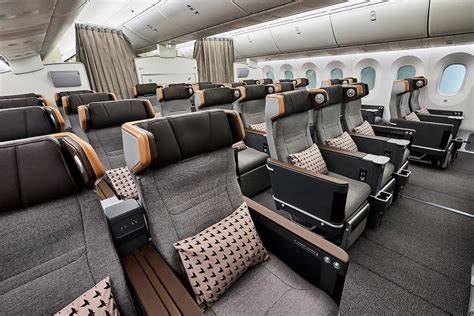
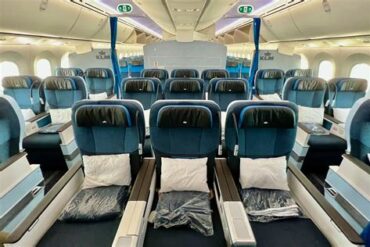
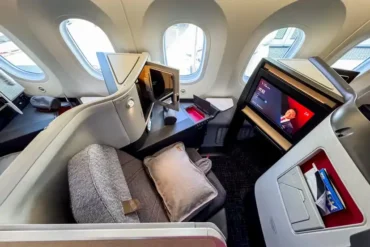
EVA Air occupies a unique position because it did not simply adopt premium economy; it created the modern concept in the first place. More than 30 years after launching Evergreen Deluxe, the Taiwanese carrier continues to invest heavily in the category. Its newest premium economy seats aboard the Boeing 787-9 show how far the original idea has developed, combining generous personal space with features intended specifically for long-haul comfort.
One of the most notable characteristics is the seat pitch, which can reach 42 inches, giving passengers considerably more room to stretch their legs than they would receive in conventional economy. The seats also use a cradle-style reclining mechanism. Instead of simply rotating backward into the space behind, the seat moves forward as it reclines, helping reduce the impact on the passenger sitting in the next row. With up to eight inches of recline, the design provides a more substantial resting position without making the cabin feel excessively intrusive.
EVA Air also surrounds the seat itself with a collection of details designed to reinforce the premium experience. Large high-definition entertainment displays provide a substantial screen for long flights, while adjustable headrests, footrests, privacy panels, and additional storage help passengers settle in. The airline complements the physical seat with dedicated premium economy meals, upgraded amenity kits, and enhanced cabin service. On long routes from Taipei Taoyuan International Airport to North America and Europe, these details become particularly relevant because the value of a premium economy seat is ultimately determined by the entire journey rather than seat dimensions alone.
Emirates: A Newcomer With a Luxury-Focused Premium Economy Cabin
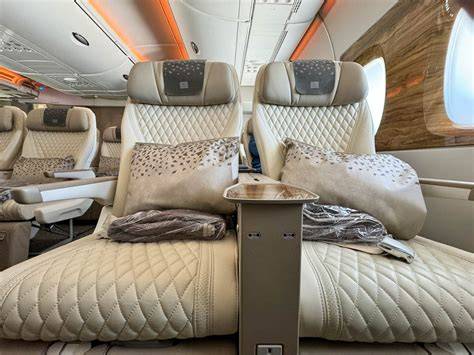
Emirates was remarkably late to premium economy compared with many of its global competitors. For years, the Dubai-based carrier maintained a three-class or four-class strategy without a dedicated premium economy cabin. That changed with the introduction of its new product on selected Airbus A380 aircraft, followed by expansion to Boeing 777-300ERs and Airbus A350-900s. The rollout has transformed premium economy into an increasingly important part of Emirates’ long-haul cabin strategy.
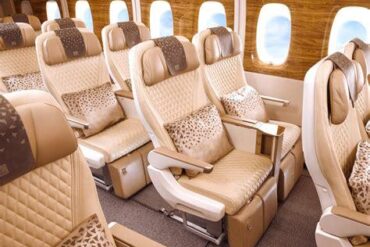
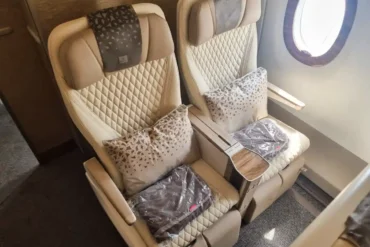
The airline has taken a distinctly Emirates approach to the product. On the A350-900, the seats are arranged in a spacious 2-3-2 configuration, while the A380 and Boeing 777-300ER use a 2-4-2 layout. Depending on the aircraft, passengers receive up to 40 inches of pitch and almost 20 inches of seat width, creating a substantial improvement over standard economy. Adjustable headrests, calf and footrests, generous recline, and a dedicated side cocktail table add functionality that is normally associated with higher cabin classes.
The visual presentation is equally important. Cream-colored leather upholstery and wood-grain accents give the cabin a more refined appearance, while large entertainment screens and individual charging options bring the technology up to current standards. Dining is also upgraded, with meals presented on china tableware rather than standard economy trays. Priority check-in and boarding are available in many markets, further separating the product from conventional economy. As Emirates continues installing the cabin on more A380s, 777s, and new A350s, passengers are encountering premium economy across an expanding portion of the airline’s global network.
American Airlines: Premium Economy Across More Long-Haul Aircraft
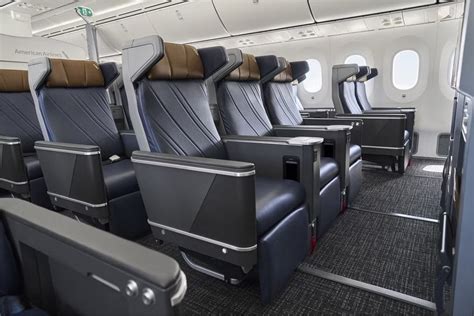
American Airlines has steadily developed its premium economy product since introducing the cabin on widebody aircraft in the mid-2010s. Today, the product is available on several important long-haul aircraft, including the Boeing 777-200ER, Boeing 777-300ER, Boeing 787-8, and Boeing 787-9. The airline has also brought premium economy to the Airbus A321XLR, an important development because the aircraft allows American to deploy an enhanced cabin on thinner long-haul routes where a larger widebody aircraft might not be appropriate.
The American Airlines premium economy seat focuses on the fundamentals that matter most during extended flights. Passengers receive greater seat width and legroom than economy travelers, together with adjustable headrests and footrests. A dedicated cabin creates a quieter and more separated environment, while seatback high-definition entertainment, power outlets, and USB charging address the practical needs of passengers traveling for both business and leisure.
The product also extends beyond the physical seat. Premium economy passengers receive priority check-in, security screening where available, and Group 4 boarding. On long-haul flights, the airline provides chef-inspired meals, complimentary beer, wine, and spirits, as well as amenity kits. American’s approach is particularly notable because its premium economy cabin exists across several aircraft types, allowing passengers to encounter a relatively consistent product while the exact cabin configuration varies from aircraft to aircraft.
The Airbus A321XLR is especially important in this strategy. Its 12 premium economy seats sit between 20 business-class seats and 123 economy seats, creating a compact premium cabin on a narrowbody aircraft. On larger aircraft, the number of premium economy seats rises, reaching 32 on one Boeing 787-9 configuration and 28 on the Boeing 777-300ER. This flexibility allows American to use premium economy across a much broader range of long-haul missions.
Air France: French Style Meets a New Premium Cabin
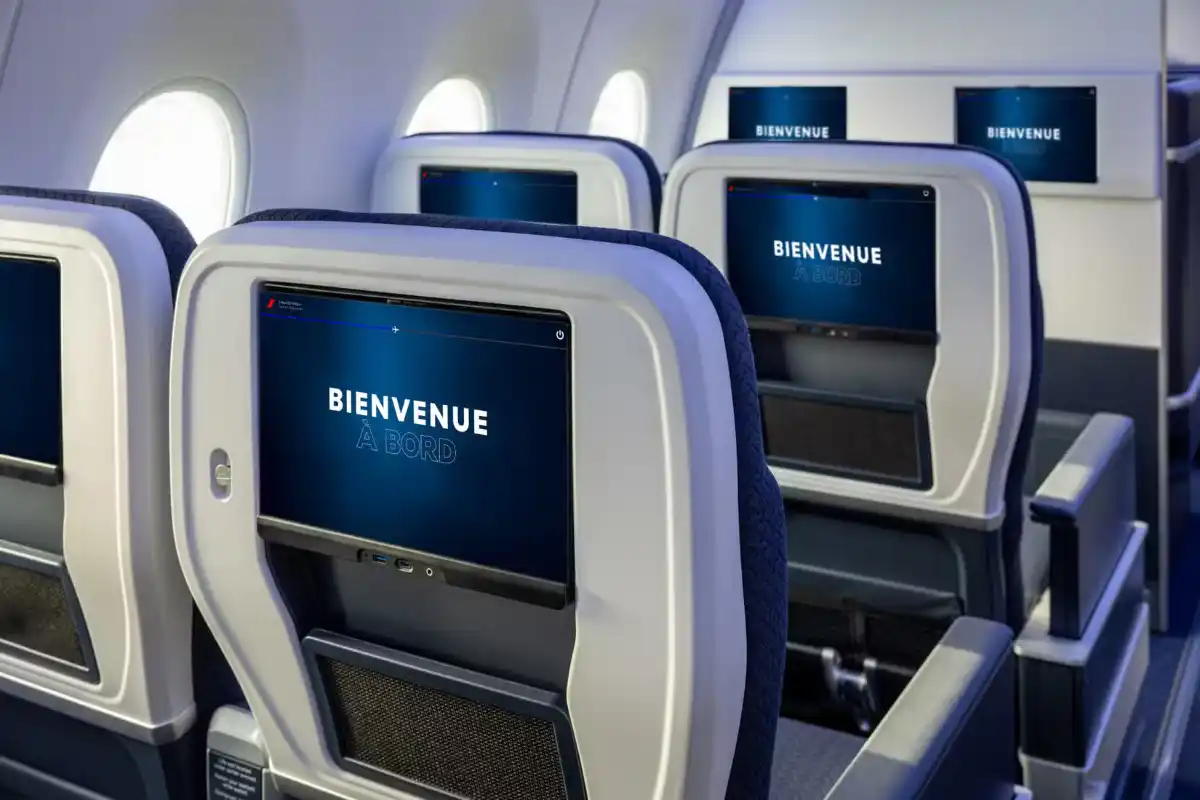
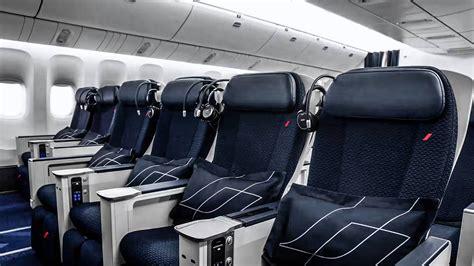
Air France has refreshed its premium economy offering under the simpler Premium name, giving the cabin a more contemporary identity as the airline progressively introduces its newest seats across the long-haul fleet. The updated product is appearing on aircraft including the Airbus A350-900 and Boeing 787-9, bringing a combination of improved ergonomics, distinctive styling, and enhanced onboard service to passengers traveling through Paris Charles de Gaulle Airport.
The redesigned seats provide approximately 37 to 38 inches of pitch and can recline to as much as 124 degrees. Adjustable footrests and multi-position headrests allow passengers to create a more comfortable position for sleeping or relaxing, while wider dimensions and improved cushioning address one of the most important weaknesses of conventional economy seating. The design is intended to provide meaningful additional comfort without crossing into the fundamentally different territory of a lie-flat business-class seat.
Air France places considerable emphasis on the experience surrounding the seat. On many routes, passengers are welcomed with Champagne, while multi-course meals draw on French culinary traditions. Amenity kits, noise-reducing headphones, and upgraded tableware contribute to a more polished onboard environment. This combination of physical improvements and service details reflects the way modern premium economy has evolved: passengers are no longer simply purchasing additional legroom but an integrated cabin experience.
The expansion of Air France Premium also demonstrates why premium economy has become strategically important to network airlines. Long-haul passengers increasingly expect a meaningful step above economy, yet the demand for business-class seats does not cover every traveler. A well-designed premium economy cabin gives airlines another way to differentiate fares while providing passengers with a more comfortable option for long international flights.
Across these five airlines, the evolution of premium economy is easy to see. LATAM is preparing a new product for its expanding intercontinental network, EVA Air continues refining the concept it pioneered, Emirates has entered the market with a distinctly upscale cabin, American Airlines is extending premium economy across both widebody and narrowbody long-haul aircraft, and Air France is combining a redesigned seat with a highly distinctive service style.
The most important change is that premium economy is no longer an afterthought. The newest seats increasingly incorporate sophisticated recline mechanisms, substantial pitch, larger screens, charging technology, improved dining, and dedicated airport services. As long-haul networks continue to expand and aircraft such as the Boeing 787, Airbus A350, and A321XLR open new possibilities for international travel, premium economy is likely to remain one of the industry’s most closely watched cabin products. For passengers facing another long overnight flight, that evolution could make the difference between merely enduring the journey and actually enjoying it.