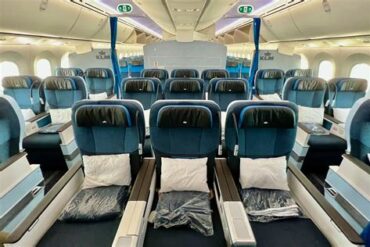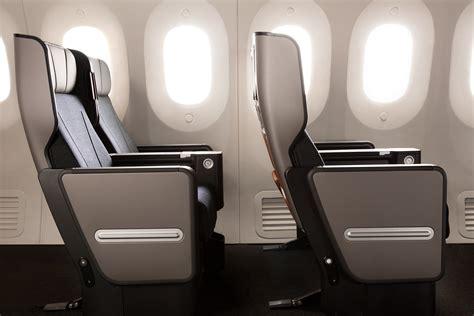
Premium economy is no longer an experiment. In 2026, it is the aviation industry’s most aggressively expanded cabin class, reshaping long-haul travel and redefining value between economy and business. What began as a cautious add-on has become a strategic revenue engine, embraced by global carriers that once resisted its very existence.
Airlines are not merely adding seats; they are engineering entirely new experiences. The newest premium economy cabins unveiled and expanded in 2026 reflect a clear shift in airline economics and passenger psychology. Travelers increasingly seek a middle ground: not the austerity of economy, and not the extravagance of business, but something thoughtfully elevated. The result is a class that blends comfort, technology, and yield optimization in remarkably precise proportions.
Across continents, the pattern is unmistakable. Airlines are delivering factory-fresh widebody aircraft with redesigned premium cabins, retrofitting legacy fleets during scheduled maintenance cycles, and in some cases retiring older aircraft rather than investing in upgrades. This three-tier transformation is accelerating the arrival of the world’s newest premium economy seats at a pace unmatched by any previous cabin evolution.
By 2026, the dam has fully burst.
The Evolution of Premium Economy: From Concept to Commercial Powerhouse
Commercial aviation once offered little differentiation. In the earliest days, every ticket effectively purchased first-class treatment. As flying democratized, economy class emerged, followed by business class in the 1970s as a corporate bridge between extremes.
Premium economy, however, is a child of modern airline economics. It emerged in response to two powerful forces: the relentless demand for cheaper fares and the simultaneous desire for incremental comfort. Airlines realized there was a profitable “sweet spot” — a cabin priced typically 1.3 to 1.8 times economy, yet delivering enough enhancements to feel meaningfully superior.
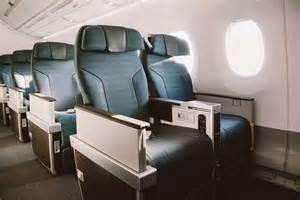
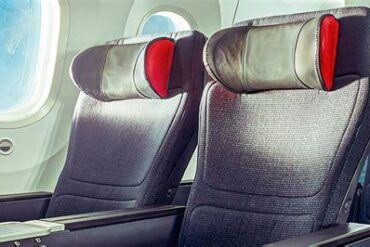
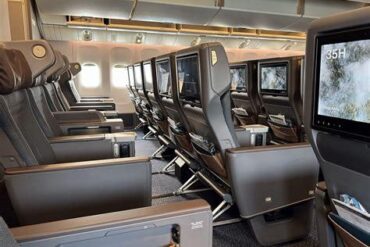
Standard metrics now define the category. Seat pitch ranges from 38 to 40 inches, significantly more generous than economy’s typical 31–33 inches. Seat width expands to 18.5 to 19.5 inches, recline deepens to 7–9 inches, and screens grow to 12–13 inches. Checked baggage allowances often mirror business class. The math is elegant: modest space increases generate disproportionate revenue gains.
Lufthansa has openly called premium economy a “money-generating machine,” claiming it produces 33% more revenue per square foot than economy and even outperforms business class by 6% in certain configurations. When airline accountants smile, fleets change.
Emirates: From Reluctant Holdout to Premium Economy Juggernaut
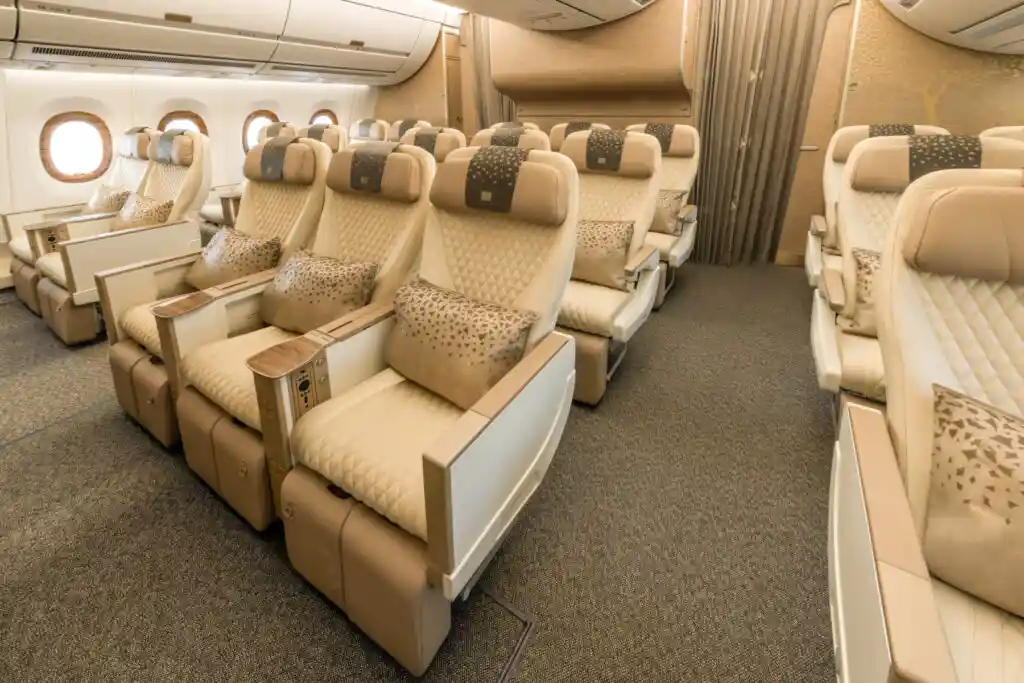
Emirates once resisted premium economy, concerned it might dilute its luxury positioning. In 2026, that hesitation feels distant. The airline is now one of the most visible champions of the class.
Rather than introducing an entirely new seat this year, Emirates is aggressively expanding deployment across its refreshed Boeing 777s and Airbus A380s, while its new Airbus A350-900s arrive configured with 32 business seats and up to 28 premium economy seats — but no first class. That omission is symbolic. The hierarchy is shifting.
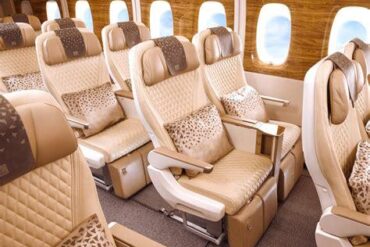
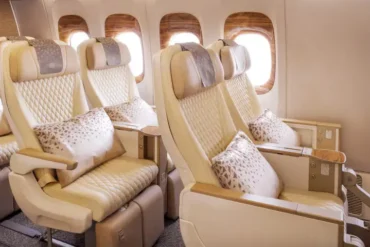
Demand has exceeded expectations to the point where executives have described the response as “tremendous” and “shocking.” Emirates’ premium economy is defined by elegant cream leather seats, wood-grain finishes, and a refined color palette that borrows cues from its business cabin. It is positioned not as a compromise, but as an intelligent luxury choice.
By the end of 2026, Emirates is expected to operate premium economy on more than 84 routes, making it one of the most expansive global deployments of the class.
United Airlines and American Airlines: The US Recalibration
In the United States, premium economy is now central to long-haul strategy.
United Airlines is introducing its refreshed cabin on Boeing 787-9 Dreamliners under its “Elevated Interior” program. The first aircraft enter international service in 2026 on flagship routes such as San Francisco to Singapore and London. The new seats integrate enhanced privacy wings, upgraded finishes, and larger entertainment displays designed to visually differentiate the cabin from economy.
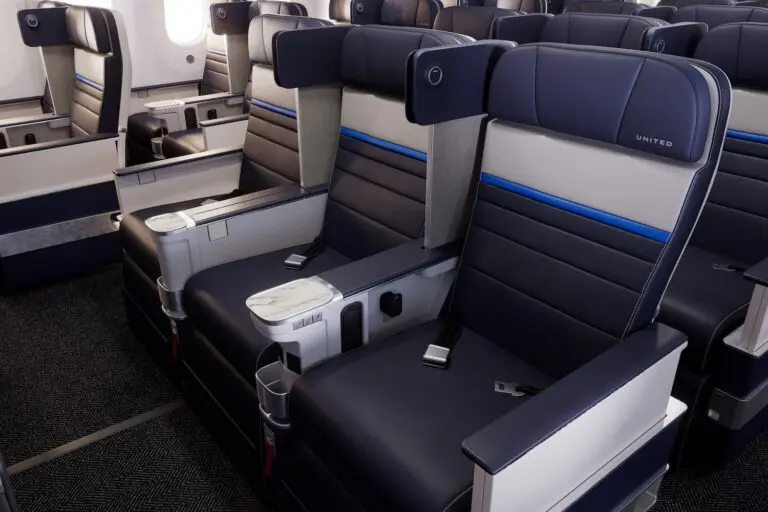
American Airlines, meanwhile, has completed a symbolic transformation. It is the last major US carrier to eliminate long-haul first class entirely, reallocating space to expanded premium economy sections. Its new Boeing 787-9s and Airbus A321XLR transcontinental aircraft feature redesigned seats with improved lumbar support, adjustable leg rests, and contemporary materials that bring visual cohesion to the entire cabin.
The shift is deliberate. Airlines have concluded that first class, once an aspirational symbol, delivers diminishing returns in an era where premium economy can attract both leisure upgraders and cost-conscious corporate travelers.
Delta Air Lines and JetBlue: Revenue Signals the Tipping Point
Delta’s financial results reveal why premium economy expansion is accelerating. In the fourth quarter of 2025, premium cabin revenue surpassed main cabin revenue for the first time in the airline’s history. Premium revenue climbed sharply while economy declined. That is not a subtle signal.
Delta continues to enhance its premium economy offering by reallocating space from economy rows. The airline is effectively betting that higher-yield passengers will offset reduced seat counts.
JetBlue enters 2026 with its “Junior Mint” product, a bridge between standard economy and its Mint business class. Though not a textbook premium economy, it occupies the same economic niche. The airline is experimenting with how much comfort customers are willing to pay for on routes that were once defined solely by price competition.
Alaska Airlines remains an exception. Its newly acquired Boeing 787s are configured only with business and economy. Whether this restraint persists will be a fascinating test case in cabin strategy.
Europe’s Premium Economy Renaissance
Europe is undergoing one of the most comprehensive premium economy refresh cycles in aviation.
Lufthansa’s delayed but ambitious “Allegris” cabin concept is finally taking flight on Boeing 787 Dreamliners and Airbus A350-900 aircraft. The airline is also retrofitting older 747-8s. The Allegris premium economy seats emphasize sculpted shells, enhanced privacy, and refined color schemes that align visually with Lufthansa’s business cabin.
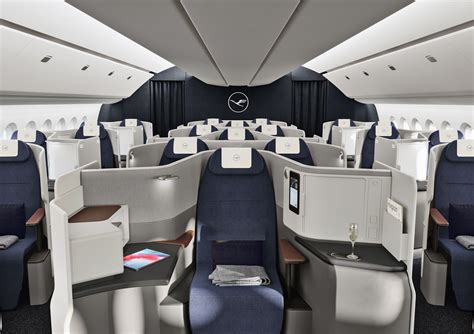
Virgin Atlantic is expanding premium capacity on its Airbus A330neo fleet, configuring up to 56 premium economy seats, signaling its belief in strong transatlantic demand.
TAP Air Portugal plans to introduce a new premium economy cabin on Airbus A330 and A321LR aircraft beginning summer 2026. Notably, even narrowbody long-haul aircraft are now incorporating the class, indicating that premium economy is no longer exclusive to large widebodies.
Turkish Airlines, after a 12-year hiatus, is relaunching premium economy on long-haul flights. When even former skeptics re-enter the market, the direction of travel is unmistakable.
Asia-Pacific Innovation: Where Premium Economy Was Born
EVA Air deserves historical recognition. In 1992, it launched what many consider the first true premium economy class, then branded as “Evergreen Deluxe.” In 2026, it continues innovating with fourth-generation premium economy seats featuring refined ergonomics, expanded storage, and enhanced privacy panels.
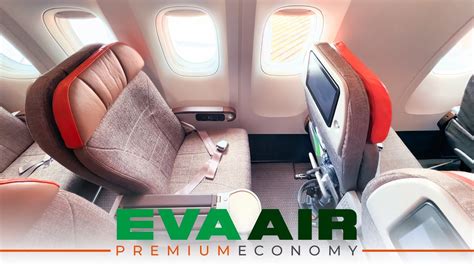
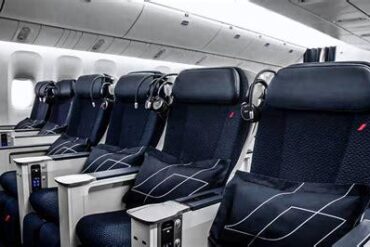
Singapore Airlines and Air France are rolling out refreshed cabins that blend modern design language with technical refinement. Philippine Airlines has introduced Airbus A350-1000 aircraft featuring premium economy cabins, with more deliveries scheduled through 2026.
Air New Zealand is doubling down, retrofitting Boeing 787 Dreamliners and adding tens of thousands of additional premium seats across its network. The airline has publicly committed to expanding availability on North American routes, acknowledging strong leisure and visiting-friends-and-relatives demand.
Premium economy’s strongest growth is occurring precisely in markets where long-haul flights exceed ten hours. On such journeys, marginal comfort upgrades become psychologically significant.
Cabin Economics: Why Premium Economy Works
Premium economy is not expanding because it is fashionable. It is expanding because it is mathematically persuasive.
Seat density adjustments create a delicate balancing act. Replacing a cluster of economy seats with fewer premium economy seats reduces total capacity but increases revenue per square foot. Business class remains expensive to install and can struggle with consistent demand outside major financial routes. Premium economy fills that volatility gap.
The cost differential is also revealing. Business class often costs 2.5 to 4 times premium economy fares. That gulf makes premium economy appear rational rather than indulgent.
From an operational standpoint, the cabin requires fewer bespoke service elements than business class, keeping staffing and catering costs manageable. Airlines gain yield without proportionally increasing overhead.
In 2026, premium economy is the fastest-growing cabin segment, expanding roughly 8% annually, outpacing economy growth. Meanwhile, first class capacity remains approximately 40% below 2019 levels.
Beyond 2026: The Future Trajectory
The story does not end in 2026. Hawaiian Airlines plans to introduce premium economy on its A330 fleet starting in 2028. Thai Airways intends to add the cabin to 777-300ERs and new 787-9 aircraft beginning around 2027. LATAM is preparing a “Premium Comfort” product for its Dreamliner fleet. Even low-cost carrier flydubai will introduce premium economy on its Boeing 787s.
Germany’s leisure-focused Discover Airlines plans an “Ocean Blue” premium economy concept on A330 aircraft in 2027, illustrating how the class now extends beyond traditional full-service carriers.
The trend lines converge toward a clear conclusion: premium economy is no longer transitional. It is foundational.
The Redefinition of Luxury in Commercial Aviation
Luxury in aviation once meant exclusivity and excess. In 2026, it increasingly means intelligent comfort at a rational price. Premium economy captures that ethos.
Passengers do not necessarily want caviar service and enclosed suites. They want space to stretch, an adjustable footrest, a large screen, priority boarding, and baggage allowances that avoid nickel-and-diming. They want value that feels proportional.
The airlines with the world’s newest premium economy seats in 2026 understand this shift. They are not merely installing seats. They are recalibrating the hierarchy of commercial flight.
First class is shrinking. Business class is consolidating. Economy remains vast. And in the middle, premium economy is expanding with quiet confidence, backed by data, embraced by travelers, and refined with each new delivery.
The golden age of aviation may have faded, but something more pragmatic — and perhaps more sustainable — is taking its place. Premium economy is not a compromise. It is the modern equilibrium of long-haul travel, engineered for a world that values comfort, efficiency, and reasoned indulgence.