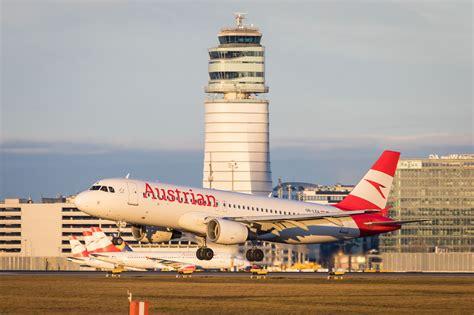
Late on Sunday night, an Austrian Airlines Airbus A320-200 operating flight OS82 from Tel Aviv Ben Gurion Airport (TLV) to Vienna International Airport (VIE) was forced to make an unplanned diversion to Vasil Levski Sofia Airport (SOF) in Bulgaria after an anonymous bomb threat was received against the aircraft. The response was immediate and heavy: the Bulgarian Air Force scrambled MiG-29 ‘Fulcrum’ fighter jets to intercept and escort the narrowbody airliner across Bulgarian airspace to a safe landing in the capital. What began as a routine two-hour evening hop between two of Europe’s most connected cities became a multi-hour security drama that ended without injury, without an explosive device, and with 57 people aboard quietly relieved — but only after a painful wait of more than five hours on a foreign tarmac.
The Flight Path That Turned Into a Diversion
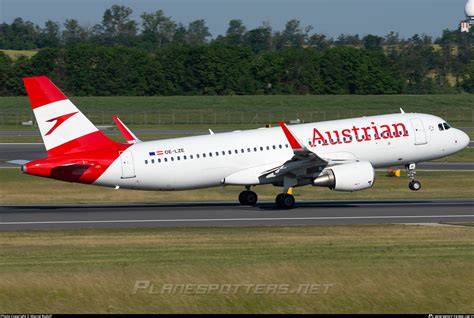
Austrian Airlines flight OS82 is a regularly scheduled service linking Tel Aviv and Vienna, one of the carrier’s most consistent links into Israel. According to Flightradar24, the route currently operates twice weekly, on Thursdays and Sundays, and October 18’s iteration was flown by a 13-year-old Airbus A320-200 bearing the registration OE-LZE. The leg pushed back slightly late, hitting the skies at 7:04 PM rather than the scheduled 6:40 PM, a minor delay that would soon be overshadowed by a far larger one. It quickly got later — much later. The flight was already cruising toward Austria, approaching the Romanian border, when the situation abruptly changed course.
An Anonymous Bomb Threat Mid-Cruise
According to NBC, the cockpit crew received an anonymous bomb threat concerning the aircraft mid-flight; Ynet characterized the warning as referencing a suspicious object on board. With little time to deliberate and no room for ambiguity in a threat of this nature, the crew made the decisive call to divert to nearby Sofia in neighboring Bulgaria rather than press on to Vienna. The seriousness of the claim prompted the Bulgarian military to dispatch MiG-29 fighters to escort the jet through national airspace, a standard interception protocol when an unverified security threat is raised. The A320 touched down in Sofia at 9:42 PM local time on Sunday, safely and without incident.
Search on the Ground and Austrian Airlines’ Response
Once on Bulgarian soil, the relevant authorities carried out a full search of the aircraft, its passengers, and its crew. Austrian Airlines subsequently issued a statement confirming the outcome: “During the search of the affected aircraft, the passengers, and the crew, no danger was identified.” The aircraft remained on the ground in Sofia for more than five hours while officials completed their security checks — a long, uncomfortable wait for the 51 travelers and six crew members on board, but an unavoidable one given what was at stake. The plane eventually took to the skies again at 2:54 AM local time in the early hours of Monday.
A Late Arrival in Vienna and Nearly Six Hours of Delay
Its onward journey to Vienna took just over an hour, with touchdown in the Austrian capital at 3:12 AM local time. Compared with its scheduled arrival of 9:25 PM on Sunday night, the flight arrived nearly six hours late. For a route that normally takes around three and a half hours, the delay was steep — yet wholly justified. With the recent attempted hijacking of an Israel-bound flydubai 737 by its own pilot still fresh in the public conscience, authorities on both sides of the incident had every reason to err on the side of caution. The flight was relatively lightly loaded, with just 51 passengers and six crew members reported on board, a detail that may prove telling for the airline’s future scheduling decisions on this corridor.
The Aircraft, the Fleet, and Its Quick Return to Service
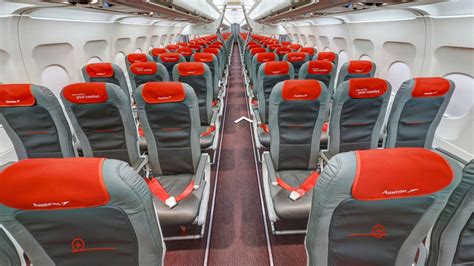
OE-LZE, the narrowbody twinjet at the center of Sunday’s diversion, is one of 29 A320-200s in the Austrian Airlines fleet, which also operates seven newer A320neo aircraft, according to ch-aviation. Despite the scare, the aircraft demonstrated its resilience operationally: it re-entered service on Monday morning with a flight to Geneva (GVA), a swift confirmation from the airline that no damage or threat was identified. That immediate return to duty is a reassuring signal, both for the carrier’s confidence in its aircraft and for passengers looking at future bookings on the type.
Austrian Airlines’ Fragile but Persisting Tel Aviv Link
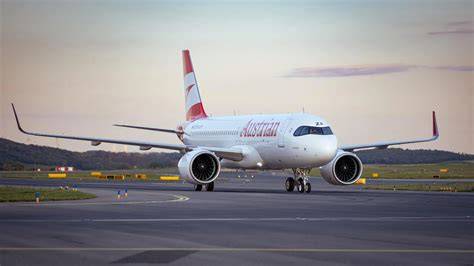
In recent years, airline schedules to and from Israel have been highly sensitive to the ebb and flow of geopolitical tensions in the region. Over the last 12 months, Austrian Airlines has managed to maintain a relatively consistent route from its main hub in Vienna to Tel Aviv, typically offering two or three round trips daily. It has not been a seamless run, however: Cirium schedule data shows the carrier paused the route in April and May 2026, with additional suspensions from November to December 2023, from October 2024 to January 2025, and again from June to July 2025.
Those repeated interruptions underline how fragile the Vienna–Tel Aviv corridor has become, and how strategically valuable it remains for Austrian Airlines as one of the few European carriers to keep operating consistently. That the airline returned to the skies within hours of a bomb scare shows the depth of its commitment to the route — and the seriousness with which it treats every security signal.
Why Fighter Escorts and Full Searches Remain the Standard Response
The dispatch of MiG-29s and the five-hour ground hold are not overreactions; they reflect the doctrine that governs every credible threat against a commercial airliner. Airlines and militaries cannot afford to weigh probabilities when lives are at stake, and Bulgarian authorities followed protocol precisely: intercept, escort, isolate, search, and only then clear the aircraft for onward travel. The outcome — no device, no injuries, a delayed but safe arrival shortly after 3 AM — is exactly what that protocol is designed to produce.
For the 51 passengers still on board at 2:54 AM, the experience was undoubtedly unsettling, but the alternative — a decision to continue toward Vienna on unverified information — would have been far worse. The incident at Sofia is a reminder that in modern aviation security, the cost of caution is measured in hours, while the cost of complacency is immeasurable.