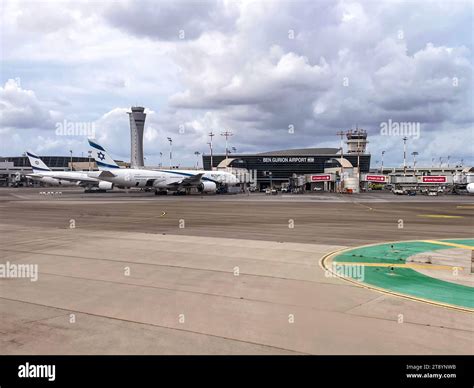
United Airlines has once again suspended flights to Tel Aviv’s Ben Gurion International Airport following a dramatic escalation in regional tensions marked by a missile attack launched by Yemen’s Houthi rebels. The airline announced that flights to Tel Aviv will remain paused until at least May 8, while return flights to the United States are suspended until May 9, underscoring a renewed focus on passenger and crew safety amid intensifying conflict.
A Renewed Threat Near Ben Gurion Airport
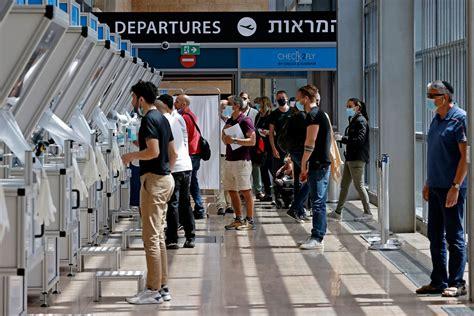
On May 4, 2025, a missile struck near Israel’s primary international gateway, causing panic and disruption inside the bustling terminal at Ben Gurion Airport. Yemen’s Iran-aligned Houthi movement swiftly claimed responsibility for the attack, declaring their actions as an expression of solidarity with Palestinians in Gaza. This bold offensive not only rattled the Israeli aviation sector but also prompted immediate security assessments across multiple international airlines.
In response, United Airlines issued a formal statement noting, “We have canceled our twice-daily service between Newark and Tel Aviv while we closely monitor the situation. We will make decisions on resuming service with a focus on the safety of our customers and crew.” All aircraft and crew members previously stationed in Israel have since departed the country, eliminating immediate exposure to further incidents.
Suspension Marks Another Interruption in Service
The latest halt in operations follows a fragile period of resumption. United Airlines had only reinstated its flights from Newark Liberty International Airport to Tel Aviv on March 15, 2025, after a ceasefire between Israel and Hamas paved the way for cautiously renewed travel. Prior to the latest disruption, the carrier had operated two daily flights on the route using Boeing 787-10 Dreamliners, bolstering capacity to meet recovering demand.
However, Saturday’s missile attack forced an abrupt cancellation of United’s scheduled flights, including UA84 and UA90, according to data from Flightradar24. Passengers stranded or affected by cancellations were offered flexible rebooking options: tickets purchased on or before May 3 could be rebooked at no additional cost for travel through May 31, provided itineraries remained on United-operated flights, within the same cabin class and route pairing.
Airline Industry Faces Ripple Effects
United’s operational pause is part of a broader pattern of flight disruptions affecting Ben Gurion Airport, which has been an aviation flashpoint since the Hamas-led assault on Israel in October 2023. On the day of the missile strike, Ben Gurion ranked second worldwide for flight cancellations, with 23 departing flights and 34 arriving flights canceled, alongside over 100 reported delays, as tracked by Flightaware.
Other major international carriers including Air France, the Lufthansa Group, Delta Air Lines, Ryanair, and Wizz Air similarly suspended flights to Tel Aviv in the immediate aftermath. These airlines are expected to reassess their service timelines as intelligence and security reports evolve, although none have yet provided firm dates for service restoration.
Implications for U.S.-Israel Connectivity
Ben Gurion Airport remains a critical hub for connecting Israel with the United States. In April 2025, according to Cirium data, the airport handled 1,225 scheduled weekly flights, representing a 43.3% increase over April 2024, yet still falling 10% below pre-conflict levels seen in April 2023. Among these, up to 75 weekly flights were scheduled between the U.S. and Tel Aviv, serviced by United Airlines, Delta Air Lines, El Al Israel Airlines, and Arkia.
Despite recent operational challenges, El Al, Israel’s flag carrier, has maintained an unbroken flight schedule to and from the United States, offering up to 51 weekly connections from cities such as New York, Boston, Newark, Los Angeles, Miami, and Fort Lauderdale. Delta Air Lines continues its daily New York-JFK to Tel Aviv route, while Arkia operates flights from JFK. American Airlines, by contrast, remains absent from the Israeli market since its suspension in October 2023, with no plans to resume until at least September.
A Longstanding Pattern of Suspensions
The suspension of flights by United Airlines adds yet another chapter to a protracted cycle of interruptions and resumptions characterizing U.S.-Israel air connectivity since late 2023. Each successive wave of conflict or security incident has forced airlines to rapidly recalibrate operations, balancing commercial pressures with safety imperatives. The missile strike on May 4 appears to have reignited caution among international carriers, reinforcing the volatility of air travel to Israel.
Passengers traveling to or from Israel are once again left navigating uncertainty, with flight rebookings, reroutings, and potential additional cancellations looming over itineraries. Airlines, meanwhile, continue to rely on intelligence reports and government advisories to inform day-by-day operational decisions. The aviation insurance market is also closely monitoring developments, as missile threats within close proximity to a major international airport could have implications for war risk premiums and future underwriting policies.
Looking Ahead: Safety and Service Restoration
The path toward normalized air service to Israel will hinge on stabilizing geopolitical conditions and assurances that Ben Gurion Airport’s airspace and perimeter can be securely defended against future missile attacks. While Israel’s Iron Dome missile defense system has historically intercepted numerous incoming projectiles, the fact that a missile landed near the airport perimeter raises serious concerns for aviation safety.
United Airlines, alongside other global carriers, will likely continue monitoring real-time intelligence while liaising with governmental agencies such as the Federal Aviation Administration (FAA) and the Israeli Civil Aviation Authority (CAA). Decisions regarding when to resume flights will be based not only on military assessments but also on airport readiness, passenger confidence, and logistical feasibility.
For now, passengers booked on flights to Tel Aviv are urged to stay in close contact with airlines and monitor travel advisories. United’s flexible rebooking policy offers short-term relief, but extended suspensions could compel customers to seek alternative carriers or routes via European hubs.
The latest attack underscores a stark reality for international aviation: airlines operating in politically volatile regions must remain agile, responsive, and committed to prioritizing safety over schedule reliability. As events continue to unfold, the global aviation community will be watching closely for signals of de-escalation—or further escalation—that will determine the fate of air travel to Israel in the weeks and months ahead.