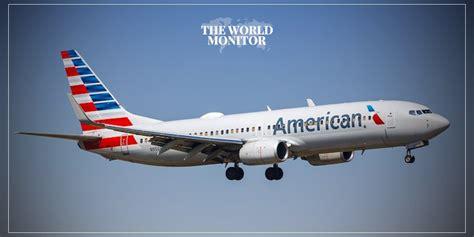
The crisis surrounding commercial aviation in Israel has entered a new and prolonged phase, with American Airlines officially delaying its return to Tel Aviv until January 2027. The decision marks one of the longest route suspensions by a major US carrier in modern aviation history and underscores the severe operational risks airlines continue to face across the Middle East.
While competitors Delta Air Lines and United Airlines are cautiously preparing to restore flights later in 2026, American Airlines has concluded that the security environment around Israeli airspace remains too unstable for a safe and commercially viable restart. The extension means nearly three full years will have passed since American last operated flights to Ben Gurion Airport (TLV).
The suspension highlights how the Israel-Iran conflict and broader regional instability have fundamentally reshaped international aviation networks, forcing airlines to continuously evaluate military threats, airspace restrictions, and rapidly changing geopolitical conditions.
After initially planning to resume service in March 2026, American Airlines reversed course following the escalation tied to Operation Epic Fury, the joint US-Israeli military campaign targeting Iranian infrastructure. The retaliation that followed unleashed waves of missile and drone attacks across the region, dramatically increasing the threat level for civilian aircraft.
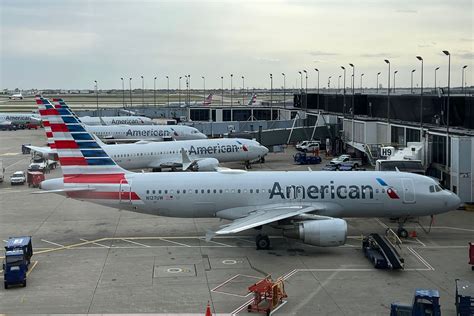
American Airlines Faces Prolonged Security Concerns Over Israeli Airspace
American Airlines’ extended suspension reflects a broader industry concern that the skies surrounding Israel remain highly unpredictable despite ongoing defensive measures and international coordination efforts.
Unlike temporary weather disruptions or isolated security incidents, the current situation involves overlapping military operations conducted by multiple actors across Israel, Iran, Lebanon, Iraq, and neighboring territories. Aviation analysts increasingly describe the region as one of the most complicated operational environments for civilian air traffic since the aftermath of the September 11 attacks in 2001.
The danger is not necessarily a direct attack against commercial aircraft, but rather the possibility of a civilian jet being mistakenly identified during active missile interceptions or drone engagements. Modern air defense systems operate under extreme pressure during high-volume attacks, creating conditions where split-second targeting decisions carry enormous consequences.
Several incidents since 2023 have demonstrated how rapidly conditions can deteriorate. Flights approaching Tel Aviv have repeatedly diverted mid-route after sudden missile launches triggered emergency airspace restrictions. Pilots operating near Israeli and Lebanese airspace have also reported persistent GPS spoofing and electronic interference capable of disrupting navigation systems and triggering false cockpit alerts.
These threats have forced airlines to redesign flight paths across the broader Middle East, adding costs, extending travel times, and reducing operational flexibility on routes connecting Europe, Asia, and Australia.
Delta And United Prepare Careful Return To Tel Aviv
Despite the elevated risks, both Delta Air Lines and United Airlines appear prepared to cautiously reenter the Israeli market later this year.
Delta plans to resume its New York JFK to Tel Aviv route beginning September 6, 2026. The carrier also intends to restart flights from Atlanta Hartsfield-Jackson International Airport on November 30. Meanwhile, United Airlines is targeting September 8 for the return of nonstop service between Newark and Tel Aviv.
Neither airline has guaranteed those dates remain fixed. Aviation observers note that schedules remain vulnerable to rapid changes depending on military developments in the region. Even minor escalations could force another round of cancellations or postponements.
Still, the planned return signals that some airlines believe demand for travel between the United States and Israel remains strong enough to justify measured operational risks. Tel Aviv has historically been one of the most strategically valuable long-haul destinations for US carriers due to its strong business travel market, tourism demand, and large diaspora connections.
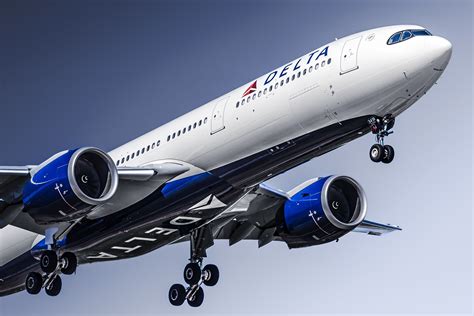
El Al Emerges As Dominant US-Israel Carrier
As American, Delta, and United suspended service for extended periods, Israeli airlines gained unprecedented control over nonstop flights linking Israel and the United States.
Flag carrier El Al became the dominant operator on many international routes after foreign competitors exited the market. Together with Israeli airline Arkia, El Al maintained direct transatlantic connections while most global airlines stayed away from Tel Aviv.
That near-monopoly significantly strengthened El Al’s market position. Fares on key US-Israel routes surged as passenger demand exceeded available capacity. Critics accused the airline of exploiting the reduced competition, leading to regulatory scrutiny and financial penalties.
Israeli authorities later fined El Al approximately $39 million over pricing practices deemed unfair during the prolonged crisis period.
Even with the controversy, El Al’s continued operations demonstrated how Israeli carriers developed specialized expertise operating under rapidly changing security conditions. International airlines, by contrast, often face stricter corporate risk assessments, insurance complications, and operational limitations tied to international regulators and labor policies.
FAA Restrictions And GPS Interference Complicate Operations
Although neither the Federal Aviation Administration (FAA) nor the European Union Aviation Safety Agency (EASA) currently imposes a complete ban on flights into Israel, both regulators maintain strict operational advisories and limitations.
Airlines operating in the region must constantly monitor military activity, review threat intelligence, and coordinate with air traffic authorities. Flight crews often face evolving route instructions with little notice.
One of the most serious modern threats involves electronic warfare interference. Aircraft traversing the Eastern Mediterranean have experienced severe GPS jamming and spoofing incidents capable of confusing onboard navigation systems. These disruptions can trigger false terrain warnings and force pilots to rely on backup procedures during critical phases of flight.
The operational burden created by these threats extends well beyond Israel itself. Airlines have increasingly avoided large sections of airspace over Iran, Iraq, Lebanon, and Syria, reshaping international traffic flows across Eurasia.

Tel Aviv Remains A Symbol Of Aviation’s New Geopolitical Reality
The prolonged withdrawal of American Airlines from Israel reflects a broader transformation taking place across global aviation. Airlines are no longer evaluating destinations solely through economic performance or passenger demand. Increasingly, geopolitical volatility has become one of the most decisive factors shaping route networks and long-haul planning.
For passengers, the consequences are visible through higher ticket prices, reduced route availability, and growing uncertainty surrounding international travel schedules. For airlines, the stakes are far larger, involving aircraft safety, insurance exposure, crew security, and corporate liability.
American Airlines’ decision to remain out of Tel Aviv until 2027 demonstrates how deeply those concerns now influence executive strategy. While Delta and United are preparing cautious returns, the reality is that commercial aviation in Israel continues operating under the shadow of a conflict with no clear endpoint.