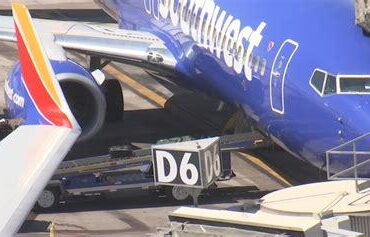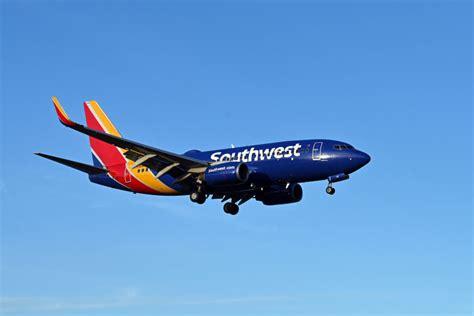
A routine domestic flight across the southeastern United States abruptly transformed into a tense security incident when Southwest Airlines Flight 2094 was forced to divert after a passenger allegedly made a bomb threat mid-flight. The aircraft, a Boeing 737 MAX 8, had departed Nashville International Airport on the evening of March 6 bound for Fort Lauderdale, but the journey was interrupted when the crew reported a potential onboard security risk.
Authorities later confirmed that the threat ultimately proved not credible, yet the incident triggered a full-scale emergency response involving airport police, federal agents, and a SWAT team that boarded the aircraft after landing. The dramatic intervention highlighted the strict safety procedures airlines must follow whenever a possible threat is raised, even if it later turns out to be a hoax.
Passengers aboard the flight experienced a frightening and highly controlled law-enforcement operation as the aircraft was secured and the suspected individual was taken into custody for questioning.
Security Threat Forces Sudden Diversion
Southwest Airlines Flight 2094 had originally been scheduled to depart Nashville International Airport (BNA) at approximately 7:00 p.m., traveling nonstop to Fort Lauderdale–Hollywood International Airport (FLL). The aircraft pushed back from the gate with a minor delay, departing at 7:24 p.m. and climbing normally toward its cruising altitude of 34,000 feet.
For the first portion of the flight, everything appeared routine. But roughly 24 minutes after takeoff, an alarming situation unfolded inside the cabin when a passenger allegedly made comments suggesting the presence of a bomb.
Cabin crew quickly alerted the flight deck, triggering aviation security procedures designed to handle exactly this type of scenario. Even a suspected or vague threat is treated with extreme seriousness in modern aviation. The pilot made the decision to divert immediately to the nearest major airport capable of handling the situation safely.
The aircraft altered course eastward just north of Birmingham, Alabama, redirecting toward Hartsfield-Jackson Atlanta International Airport, the world’s busiest airport and a major hub with extensive law-enforcement resources.
SWAT Team Boards Aircraft in Atlanta
The Boeing 737 MAX 8 touched down in Atlanta only 44 minutes after departing Nashville, but the dramatic moments were still ahead.
Waiting on the ground was a heavily coordinated response involving Atlanta Police Department officers, federal investigators, and a tactical SWAT unit. As the aircraft taxied to a secure area, authorities prepared to board and detain the suspected passenger.
Video footage later shared on social media by travelers onboard revealed a tense scene inside the cabin. Passengers were instructed to raise their hands and lower their heads while armed officers entered the aircraft and moved toward the suspect.
Within minutes, the individual believed to have made the threat was handcuffed and escorted off the plane by law enforcement personnel. The operation unfolded quickly but methodically, reflecting procedures designed to neutralize potential threats while minimizing risk to passengers and crew.
Southwest Airlines later released a statement emphasizing that the flight landed safely and thanking its crew for handling the situation professionally.
FBI Investigation Finds No Credible Bomb Threat
Following the suspect’s removal from the aircraft, federal authorities began an immediate investigation. Agents from the Federal Bureau of Investigation (FBI) and officials from the Department of Homeland Security interviewed the individual and assessed the reported threat.
According to a statement reported by NBC 15 News, investigators ultimately determined that no credible explosive threat existed on the aircraft. The passenger’s remarks were deemed non-actionable after questioning and investigation.
Despite the reassuring outcome, the emergency response demonstrated the aviation industry’s zero-tolerance approach to security threats. Even statements made jokingly or without serious intent can trigger massive disruptions, investigations, and potential legal consequences.
Passengers Rebooked After Late-Night Disruption
With the situation resolved and the aircraft secured, all passengers were required to disembark the diverted aircraft while authorities completed their investigation and security checks.
Rather than continue using the original aircraft, Southwest Airlines arranged for travelers to board a replacement plane for the remainder of the journey. The substitute aircraft, a Boeing 737-800, eventually departed Atlanta at approximately 2:00 a.m., hours after the original diversion.
Passengers finally arrived in Fort Lauderdale around 3:20 a.m., turning what should have been a straightforward evening flight into a long and stressful overnight travel experience.
The aircraft involved in the incident was registered N8837Q, a relatively new Boeing 737 MAX 8 delivered in January 2023 and configured with 175 economy seats. The replacement aircraft, registered N8572X, was an older 737-800 delivered in 2018 but with the same passenger configuration.
Why Airlines Take Every Threat Seriously
Modern commercial aviation operates under strict international security protocols developed over decades of safety reforms. Whenever a passenger makes a statement suggesting a bomb or security threat, crews must treat it as credible until proven otherwise.
This approach may appear extreme, but it follows a simple logic: the cost of ignoring a real threat would be catastrophic, while the cost of responding to a false alarm is primarily disruption and delay.
Airline procedures typically require pilots to:
- Notify air traffic control immediately
- Divert to the nearest suitable airport
- Coordinate with law-enforcement authorities on the ground
- Isolate and identify the suspected individual
These protocols ensure that trained security professionals can assess the situation quickly and safely.
Incidents like the one involving Southwest Flight 2094 remain relatively rare, but they serve as reminders that aviation safety systems are designed to respond rapidly and decisively. Even when the outcome turns out to be a false alarm, the response reflects the aviation industry’s unwavering commitment to protecting passengers, crews, and aircraft at every stage of flight.