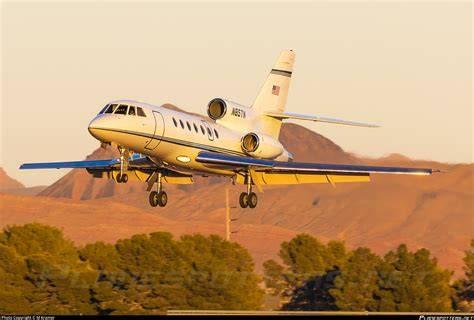
A Dassault Falcon 50 business jet aborted its takeoff at Harry Reid International Airport (LAS) in Las Vegas on Sunday, veered off the runway and came to a stop against the airport’s perimeter fence, forcing authorities to shut down two runways and trigger delays across a busy commercial schedule. The aircraft, registered N200SG, was departing when the crew rejected the takeoff at roughly 11 a.m., according to airport officials. No injuries were immediately reported, but the excursion turned a routine private departure into an operational emergency that rippled through one of the busiest gateways in the United States.
The airport confirmed the event in a statement that framed the morning in cautious, procedural language. “At approximately 11 a.m., upon departure, a general aviation aircraft skid off runway 1L at LAS and made contact with the perimeter fence,” officials said. “There are no known injuries at this time. Runways 1R and 1L will be closed for inspection, and travelers may experience some delays.” That brief advisory concealed the scale of the response unfolding on the airfield: emergency crews racing to secure a jet resting at the airfield boundary, inspectors waiting to examine pavement and lighting, and air traffic managers recalculating arrival rates in real time.
Both parallel runways on the airport’s western side — 1L and 1R — were taken out of service following the incident, a decision driven less by visible damage than by the need to protect responders and preserve evidentiary integrity. Until investigators and airport personnel could walk the runway surface and confirm that no debris, fluid or structural damage imperiled following aircraft, no traffic could be routed across either strip. The move immediately reduced the airport’s arrival capacity and set off a cascade of delays that passengers encountered on departure boards and airline apps throughout the afternoon.
Rejected Takeoff Sequencing and the Uncertain Cause of the Falcon 50 Excursion
The immediate question hanging over the investigation is why the crew of N200SG chose to reject the takeoff, and at what speed the decision was made. Aviation community reports on social media described the jet accelerating down the runway before decelerating and leaving the paved surface, but tracking data alone cannot explain the reason for the abort or whether a technical malfunction contributed. A rejected takeoff is a judgment call: pilots abandon the roll when a warning light, an engine anomaly, an unexpected obstruction or another safety concern makes continuation untenable, and the decision carries its own risk because stopping at high speed demands substantial runway distance.
The available stopping margin depends on runway length, aircraft weight, braking performance and surface conditions, and a three-engine jet committed to the takeoff roll at speed has little room for error. The fact that the Falcon 50 traveled far enough to reach the perimeter fence suggests the sequence unfolded at a late stage of the roll, though officials have not confirmed where the abort was initiated. Federal Aviation Administration investigators will be expected to establish the timing of the rejected takeoff, how the aircraft responded to braking or thrust reversal, and whether a mechanical or operational factor drove the excursion. Until that evidence is assembled, the cause should be treated as undetermined rather than presumed.
Flight-tracking information shows the jet had arrived in Las Vegas from Seattle-Tacoma International Airport (SEA) earlier that day, and its schedule called for a continuation to Toronto Pearson International Airport (YYZ) in Canada. Those records identify the aircraft and its routing but say nothing about ownership, the purpose of the flight or the jet’s technical condition before departure — the very details investigators will need to reconstruct the morning.
Operational Impact on Las Vegas Traffic and Priorities After the Runway Excursion
LAS functions as a major gateway to Las Vegas, absorbing scheduled passenger flights, cargo services, charter operations and private aviation in a single complex. That mixed traffic is precisely why a single general aviation aircraft can disrupt a commercial operation: when a jet leaves the runway, the response cannot be partial. Personnel must secure the scene, assess damage to the aircraft and airport infrastructure, and restore safe runway operations before normal service resumes, and each of those steps takes the affected pavement out of service.
The decision to close both 1R and 1L rather than one strip reflected the geometry of the event and the caution it warranted, and the resulting traffic-management restrictions affected flights bound for Las Vegas as well as departures waiting on the ground. Immediate priorities after the excursion were straightforward but time-consuming: securing the area, evaluating the Falcon 50 and the fence it struck, and confirming the runways were fit for use. The incident illustrates how an airport’s resilience depends on margins — spare runway capacity, flexible slot management and swift coordination between fire, rescue and air traffic control — that passengers rarely notice until they are needed.
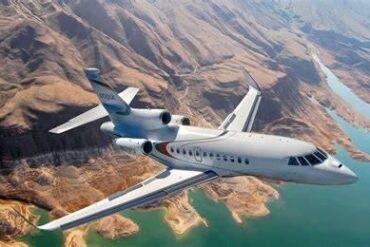
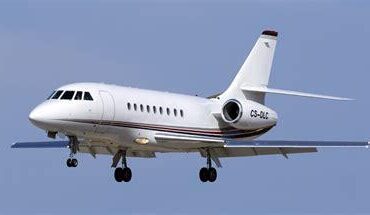
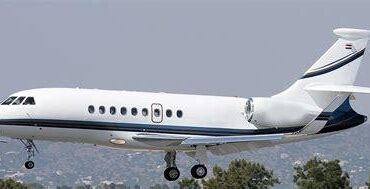
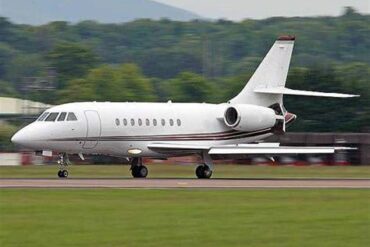
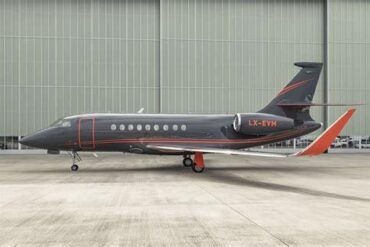
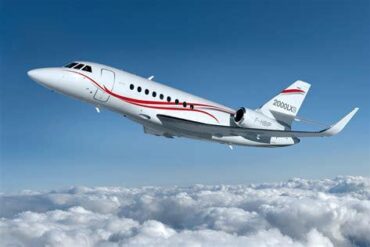
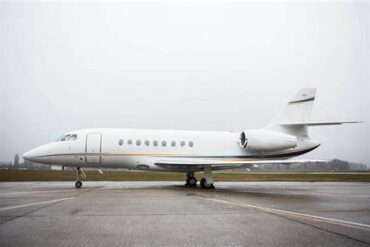
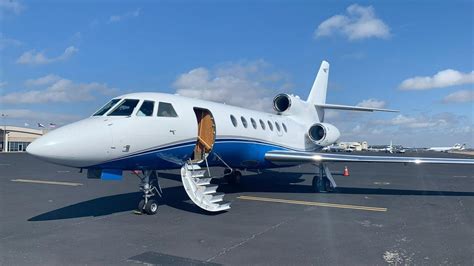
The Dassault Falcon 50 at the center of the event is a three-engine business jet developed by French manufacturer Dassault Aviation, a long-range design that helped establish the Falcon family as a force in corporate aviation. Production has ended, yet private owners and commercial operators still fly the type worldwide, which means the incident carries relevance beyond a single aircraft. As investigators work through the evidence, the lasting lesson is the one every runway excursion delivers: a private jet’s aborted takeoff is never a private inconvenience, and the morning’s fence contact at Harry Reid International left two runways closed, a schedule in disarray and a set of questions still waiting for answers.