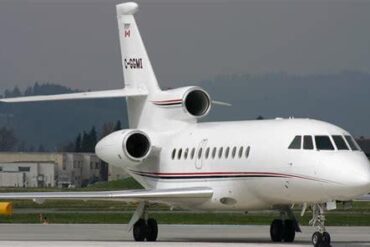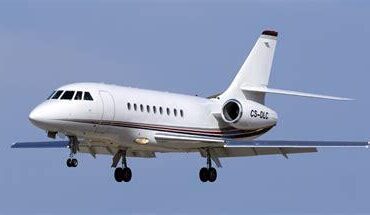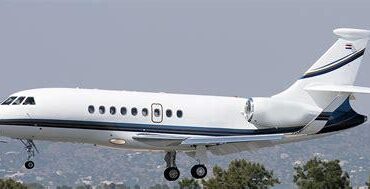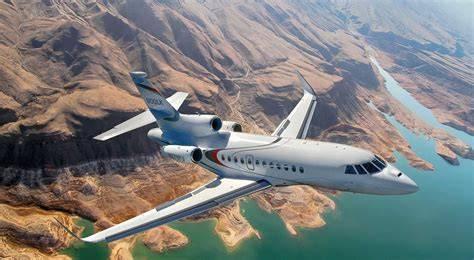
For nearly four decades, the Dassault Falcon 900 family has occupied a distinctive place in the business aviation market. Its three-engine configuration once offered a compelling combination of range, runway performance, climb capability, and operational flexibility. From the original Falcon 900 that entered service in 1986 to the extensively upgraded Falcon 900LX, Dassault repeatedly found ways to keep the platform relevant while newer aircraft arrived around it.
Yet the economics of business aviation have changed dramatically. The advantages that once justified three engines are no longer as decisive as they were, while modern twin-engine aircraft have become more capable, efficient, and operationally flexible. The result is an uncomfortable reality for one of Dassault Aviation’s most recognizable aircraft families: the Falcon 900LX appears to be approaching the end of its production life.
The signs are becoming increasingly difficult to ignore. Dassault’s delivery records indicate that only three new-build Falcon 900LX aircraft were delivered between January 2025 and July 2026, with most of those deliveries occurring by July 2025. Since then, there appears to have been no comparable stream of new deliveries. At the same time, the competing Bombardier Challenger 650 has continued to generate substantially more deliveries, while Gulfstream’s forthcoming G400 is preparing to enter essentially the same broad customer conversation with a modern twin-engine architecture.
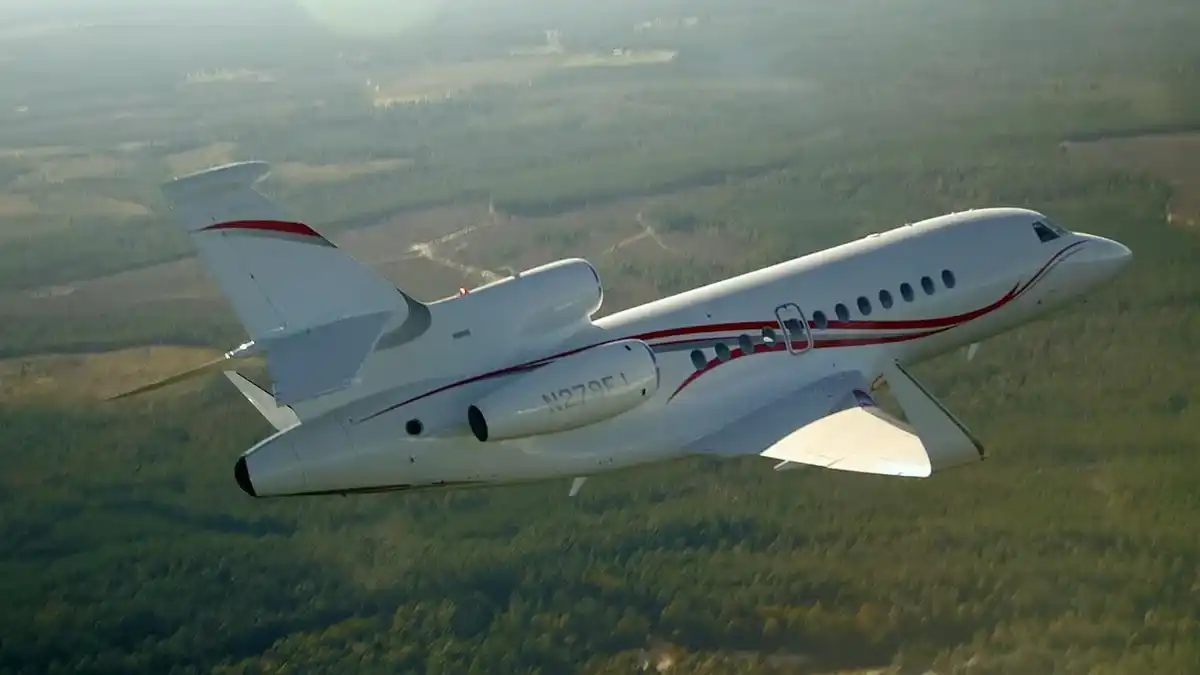
The disappearance of the 900LX from prominent parts of Dassault’s aircraft lineup provides another important clue. Although references to the aircraft have persisted, reports in 2026 indicate that Dassault’s primary marketing lineup no longer prominently features the Falcon 900LX, leaving behind what appears to be a broken or secondary link. Industry brokers have also increasingly described 2026 as the model’s final delivery year. None of this constitutes a formal announcement of an immediate termination, but collectively the evidence points toward a product that is being quietly phased out rather than aggressively developed for another generation.
The Falcon 900’s Four-Decade Legacy
The significance of the Falcon 900LX cannot be understood simply by looking at today’s sales numbers. The aircraft represents the culmination of one of Dassault’s longest-running business-jet programs.
The original Falcon 900 entered service in 1986, bringing a three-engine configuration into a market where operators valued capabilities that were difficult for early twin-engine business jets to replicate. Over subsequent decades, Dassault progressively refined the platform through the Falcon 900B, Falcon 900EX, Falcon 900EX EASy, and ultimately the 900LX.
Each iteration extended the usefulness of the underlying design. The 900EX introduced greater range, while later avionics and cabin improvements kept the aircraft competitive with newer products. The Falcon 900LX, launched in 2010, added blended winglets and achieved a published range of approximately 4,750 nautical miles. Dassault also highlighted improvements in climb performance, including the ability to reach FL390 in about 20 minutes.
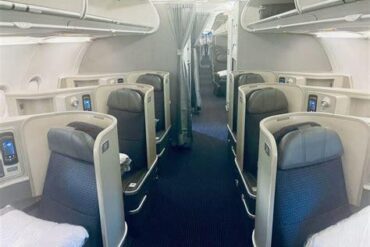
The aircraft received another modernization push in 2016, when Dassault presented an updated 900LX at the NBAA convention. The refreshed aircraft incorporated a more contemporary cabin, connectivity improvements, and FalconEye, Dassault’s combined vision system. These upgrades demonstrated the company’s determination to extend the life of a proven platform.
But modernization has limits. Avionics, interiors, winglets, connectivity, and other systems can transform the customer experience, yet they cannot completely change the fundamental architecture of an aircraft designed decades earlier.
That distinction has become increasingly important.
Why Three Engines No Longer Offer the Same Advantage
The Falcon 900’s three engines were not simply an aesthetic choice. They reflected the operational environment in which the aircraft was conceived.
A trijet could provide useful redundancy while offering strong performance from challenging airports. Business aviation operators also appreciated short-field capability, high-altitude performance, hot-and-high operation, and steep approach capability. Historically, three engines could also simplify certain long-distance missions before modern twin-engine operational rules became as permissive as they are today.
For decades, these characteristics gave the Falcon 900 family a meaningful identity.
The problem is that the industry has moved.
Modern twin-engine aircraft have become remarkably reliable, while engine technology has advanced to the point where two high-thrust powerplants can deliver performance that would once have required three engines. At the same time, improvements in certification standards and long-range twin-engine operations have reduced one of the traditional strategic arguments for carrying a third engine.
There is also a straightforward economic issue. Every additional engine represents another component requiring maintenance, inspections, parts, labor, and fuel. A three-engine aircraft does not automatically become inefficient simply because it has three engines, but a modern twin can often achieve similar mission results with fewer propulsion-system components.
That changes the purchasing equation.
For a customer deciding between an established trijet and a newer twin-engine aircraft, the question is no longer whether the trijet is capable. The Falcon 900LX unquestionably is. The question is whether its additional complexity produces enough operational value to justify choosing an older three-engine architecture.
Increasingly, the answer appears to be no.
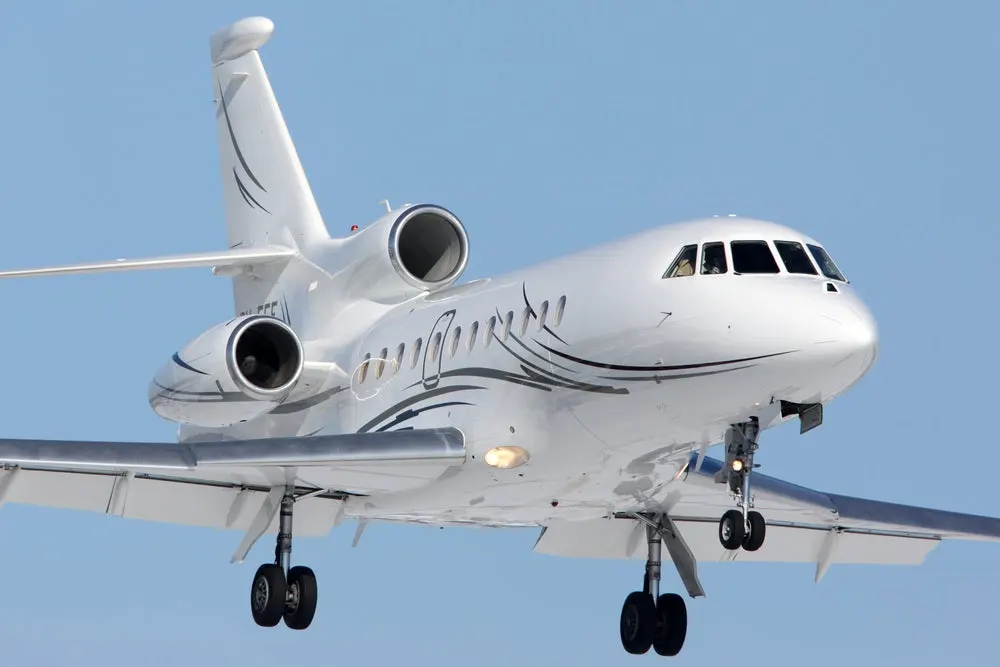
The Gulfstream G400 Changes the Equation
The arrival of the Gulfstream G400 makes the situation even more interesting.
The G400 is not an exact replacement for the Falcon 900LX, but it overlaps sufficiently in mission profile to become a credible alternative for customers who do not specifically require the Dassault’s additional range or passenger capacity.
The Falcon 900LX uses three Honeywell TFE731-60 engines, each producing approximately 5,000 pounds of thrust. The G400, by contrast, uses two Pratt & Whitney PW812GA engines, each rated at approximately 13,500 pounds of thrust.
On paper, the 900LX retains an advantage in published range, at roughly 4,750 nautical miles versus 4,200 nautical miles for the G400. It can also accommodate up to 14 passengers compared with approximately 12 for the Gulfstream. But the G400 has a higher projected long-range cruise speed, around Mach 0.85 compared with Mach 0.80 for the Falcon.
More importantly, the G400 is built around a much newer design philosophy.
Gulfstream has stated that its aerodynamic fuselage, clean wing, swept winglets, and advanced Pratt & Whitney engines are intended to provide a substantial fuel-efficiency improvement over the previous generation. Even if real-world results vary according to mission profile, the direction of development is unmistakable.
The G400 demonstrates what Dassault is up against: customers can now obtain similar mission flexibility from a clean-sheet twin without accepting the engineering compromises of an older trijet.
The Falcon 6X Is Not a Perfect Replacement
Dassault has already created its own problem—and potentially its own solution—with the Falcon 6X.
The 6X is a modern twin-engine business jet with a range of approximately 5,500 nautical miles and an exceptionally large cabin. Powered by two Pratt & Whitney PW812D engines, it represents a major technological step beyond the architecture underlying the 900LX.
For customers who want a large cabin and additional range, the 6X is an impressive successor in spirit. But it is not a straightforward 900LX replacement.
The aircraft occupies a larger category, and that matters.
A customer who previously selected a Falcon 900LX because its size and range were appropriate may not want to move into an ultra-widebody business jet. The 6X can offer more cabin space and more range, but those capabilities come with additional weight, fuel requirements, airport considerations, and acquisition costs.
In other words, Dassault has modernized the top and middle portions of its lineup without completely filling the precise space left by the 900LX.
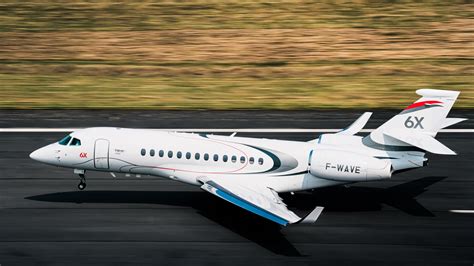
The Falcon 2000LXS Has the Same Problem
The Falcon 2000LXS creates another interesting piece of the puzzle.
The 2000 family was conceived as a twin-engine alternative and has developed a strong reputation for operating economics and airport performance. The current 2000LXS offers improvements in takeoff and landing performance, cabin comfort, emissions, and operating efficiency.
Yet the underlying aircraft traces its origins to a first flight in 1993.
That means Dassault is facing a broader portfolio problem rather than an isolated Falcon 900LX issue. Both the 900LX and 2000LXS have been repeatedly improved, but both are ultimately based on older architectures.
This creates a difficult strategic question. Should Dassault continue investing in two mature platforms, or should it develop a new twin-engine aircraft capable of replacing their roles with a single modern architecture?
The latter option increasingly makes more sense.
Why a Falcon 4X Could Be the Missing Piece
One potential answer is a smaller derivative of the Falcon 6X concept, sometimes described as a Falcon 4X.
Rather than placing customers directly into the considerably larger 6X, Dassault could theoretically develop a smaller, lighter clean-sheet twin using related aerodynamic, avionics, and propulsion technology. A range somewhere around 4,000 to 4,500 nautical miles would put such an aircraft directly into territory currently occupied by the 900LX and 2000LXS.
That could be strategically significant.
A hypothetical Falcon 4X would allow Dassault to eliminate the compromises of aging platforms while maintaining a more accessible aircraft size. It could offer two-engine efficiency, modern avionics, contemporary cabin technology, improved aerodynamics, and lower operating costs without forcing customers to purchase capabilities they do not need.
The resulting product family could become remarkably coherent: roughly 4,000 nautical miles for a Falcon 4X, 5,500 for the 6X, 6,450 for the 8X, and approximately 7,500 for the forthcoming 10X.
Such a lineup would also allow Dassault to gradually move away from trijets without abandoning customers who currently depend on the 900LX or 2000LXS mission profiles.
The Falcon 8X Shows Why the Transition Will Take Time
Dassault is not abandoning three-engine aircraft overnight.
The Falcon 8X remains an important part of the company’s portfolio and continues the lineage of the Falcon 7X. It retains three engines while extending the fuselage, refining the wing, and delivering greater range.
That aircraft illustrates why the Falcon 900LX could survive for so long. Dassault’s trijet architecture was not inherently obsolete. It could be continuously refined and adapted to changing customer expectations.
The problem is that the newer Falcon 6X and 10X point in a different direction.
Both were conceived as clean-sheet twin-engine aircraft, designed from the beginning around modern high-thrust engines and contemporary aerodynamic requirements. They do not represent incremental upgrades to old platforms. They represent Dassault’s answer to an entirely different era of business aviation.
The Falcon 900LX therefore finds itself caught between generations.
It is too mature to justify another major development cycle, yet too capable to become irrelevant overnight. That is precisely the kind of aircraft that manufacturers tend to phase out quietly.
The Challenger 650 Keeps Pressure On
The Bombardier Challenger 650 adds another layer to the competitive pressure.
With two GE CF34-3B engines, a published range around 4,000 nautical miles, and seating for approximately 12 passengers, the Challenger 650 does not duplicate every Falcon 900LX capability. However, it competes for customers who prioritize practical large-cabin missions rather than maximum range.
The difference in delivery activity is revealing. While only a handful of new Falcon 900LX aircraft appear to have been delivered across the relevant period, Bombardier delivered substantially more Challenger 650 aircraft.
That does not mean every Challenger delivery represents a customer who would otherwise have purchased a Falcon 900LX. Business-jet markets are more complicated than that. But it does demonstrate where sustained demand remains strongest.
Dassault cannot ignore those market signals.
The End Of An Era, Not The End Of Falcon
The Falcon 900LX’s likely retirement should not be interpreted as a failure of Dassault’s trijet philosophy. Quite the opposite: the aircraft succeeded for an extraordinary length of time.
Few business jets can claim a lineage stretching from 1986 into the 2020s while remaining commercially relevant. The Falcon 900 family survived because Dassault continually improved its engines, avionics, wing, cabin, and systems while preserving an aircraft architecture that operators understood and trusted.
But business aviation has reached a point where incremental improvement is no longer enough.
Modern customers increasingly expect lower fuel consumption, reduced operating costs, advanced connectivity, high-speed cruise, sophisticated avionics, and efficient twin-engine propulsion. The technology available today makes it possible to deliver those characteristics without relying on a three-engine platform designed in the early 1980s.
The Falcon 900LX therefore appears to be approaching its natural conclusion.
Its departure will be significant because it closes one of the longest chapters in modern business aviation. Yet it also clears the way for Dassault’s next generation. The Falcon 6X and 10X demonstrate the company’s commitment to clean-sheet twin-engine aircraft, while a potential smaller Falcon could eventually bridge the precise market space that the 900LX leaves behind.
The three-engine Falcon 900 once represented the cutting edge of long-range business aviation. Today, its greatest legacy may be proving just how far a well-designed aircraft can evolve.
The Falcon 900LX is not being pushed aside because it suddenly became incapable. It is being overtaken because the definition of an efficient, competitive business jet has changed around it. After four decades of trijet dominance, the economics, technology, and customer expectations now favor two engines.
For Dassault, ending the Falcon 900LX would therefore be less about closing a door than recognizing that the industry has already walked through the next one.