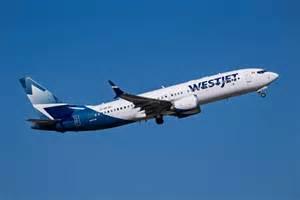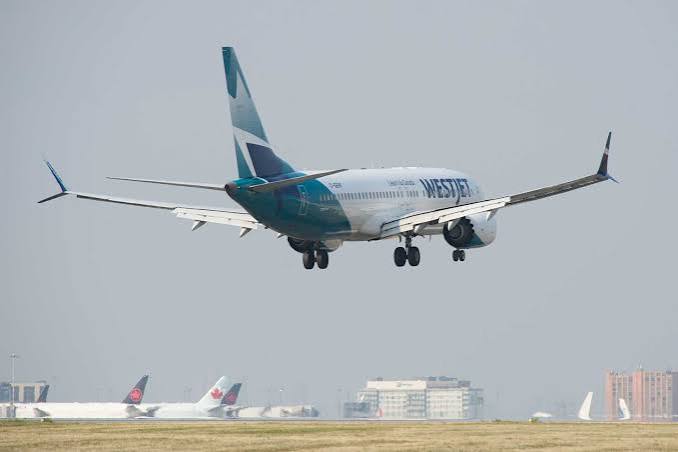
WestJet has quietly reshaped the western edge of its transatlantic map, cancelling four Boeing 737 MAX 8 routes between Canada and Europe over the past several years. The removals span Halifax to Glasgow, Halifax to Madrid, Halifax to Copenhagen, and the lone Toronto–Glasgow service, leaving a noticeably smaller UK footprint and a sharper focus on year-round, hub-fed flying from Calgary. Using schedule data compiled by Cirium, the cuts tell a story of seasonal experiments that failed to mature into durable demand.
Glasgow Bears the Brunt of the WestJet 737 MAX Retreat
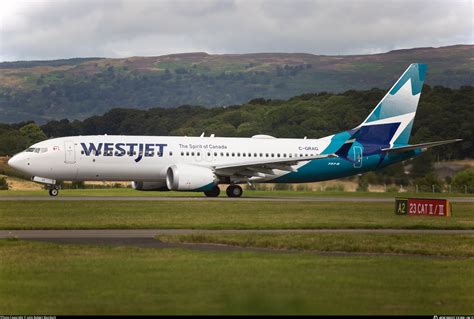
WestJet first connected Halifax Stanfield International Airport (YHZ) with Glasgow Airport (GLA) in 2015, running the link as a Northern Hemisphere summer seasonal rotation through 2019 before the COVID-19 pandemic suspended operations in 2020 and 2021. Service returned in 2022, but that revival proved the route’s final chapter, and the MAX 8 was quietly withdrawn from the market. Toronto Pearson International Airport (YYZ) gained its own nonstop Glasgow link later, operated across a single summer season before being cancelled after just one year. It stands as the only route in this analysis cut from Canada’s largest city, an outlier that underlines how thoroughly Scotland’s largest airport has been sidelined in WestJet’s planning.
Halifax Loses Madrid and Copenhagen After Single Seasons
The Spanish capital and the Danish capital both arrived as part of a Halifax-centred transatlantic expansion, with Madrid Barajas Airport (MAD) served on the MAX 8 through the summer season before WestJet pulled the plug after just a few months, with no published plan to restore the route the following year. Copenhagen Airport (CPH) followed an identical arc: WestJet’s first-ever Danish service, launched from Halifax, ran through one summer and was axed after a single season. Neither city now sees WestJet tails, though Air Canada, the country’s flag carrier, continues to link Madrid and Copenhagen from Toronto Pearson and Montréal-Trudeau International Airport (YUL), preserving connectivity that WestJet declined to sustain.
What Remains: Four UK Gateways and a Calgary-Centric Network
The cancellations leave WestJet with exactly four United Kingdom gateways: London Heathrow (LHR), London Gatwick (LGW), Edinburgh Airport (EDI), and Cardiff (CWL). Scotland traffic now funnels entirely through Edinburgh, served nonstop from Calgary International Airport (YYC), Toronto, and Halifax. Across the four cut routes, five airports and roughly 12,166 network miles disappeared from the airline’s European roster, a meaningful contraction for a carrier that once chased regional secondary markets in Britain and Scandinavia.
WestJet’s Transatlantic Growth Tells a Different Story
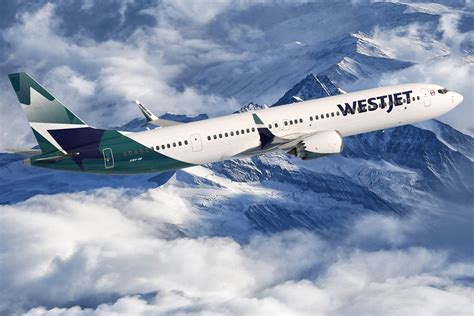
The route losses sit against a striking decade of expansion. WestJet operated 516 departures to Europe in 2016; that figure slipped to 435 in 2019 before the pandemic and MAX grounding erased two full years of flying. Departures then climbed to 577 in 2022, dipped during the hub consolidation that shifted European flying toward widebody operations from Calgary, and surged to 720 in 2024, 1,187 in 2025, and 1,643 in 2026. The share of transatlantic departures flown by the 737 family also rose sharply, from 47 percent in 2016 to 70 percent in 2026, reflecting how the MAX 8 has become a workhorse for thinner European markets even as specific cities fall away.
Why the Max 8 Routes Struggled
The pattern here is seasonal, narrowbody economics meeting uneven demand. The MAX 8 offers the range and efficiency to open secondary European cities without committing a widebody, which is precisely why Halifax, Glasgow, Madrid, and Copenhagen were trialled in the first place. But summer-only service from a non-hub airport depends on a short, fragile window of leisure bookings, and when load factors or yields disappoint, the aircraft is simply reassigned to stronger Calgary-based routes. Toronto–Glasgow is the most instructive case: even Canada’s biggest catchment area could not make a one-season seasonal link stick.

A Hybrid Carrier With Private Equity Backing
Founded in 1994 as a low-cost operator, WestJet has evolved into the country’s second-largest airline and a hybrid carrier, blending budget fundamentals with a modest premium product. Its MAX and 787 Dreamliner fleets deliver comfortable cabins across short- and long-haul networks, and the Dreamliner’s arrival alongside the retirement of the aging 767-300ER reshaped its transatlantic capability. WestJet is primarily owned by private equity firm Onex Corporation, with Delta Air Lines, Korean Air, and Air France-KLM holding minority stakes, an ownership structure that rewards disciplined capital allocation and punishes routes that fail to earn their keep.
The Bottom Line for Travellers
Halifax travellers bound for Glasgow, Madrid, or Copenhagen must now connect through Toronto, Montréal, or a European hub, while Scottish-bound passengers outside Edinburgh are steered toward the capital’s airport. Toronto–Glasgow flyers lose a direct option entirely. WestJet’s European map is smaller but more concentrated, anchored to Calgary, Toronto, and Halifax, and built around four UK airports, three London-area or regional English gateways and one in Wales. The four cancelled MAX 8 routes are less a retreat from Europe than a recalibration, and the departure numbers show a carrier flying more of the continent than ever, just from fewer doorways.