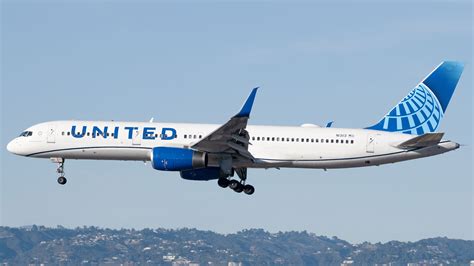
If you’re a traveler who craves long domestic routes, high-capacity jets, and a chance to ride an aircraft slowly fading into history, United Airlines has one last treat for you: the Boeing 757-300. Known as the longest narrowbody jet ever produced, this distinctive aircraft continues to crisscross the United States on some of the airline’s busiest routes. But if you want to catch a ride, you’ll need to plan carefully—these rare birds only appear at select United hubs, and time is running out.
With only 55 ever built and just 21 currently in operation with United, the Boeing 757-300 is nearing the end of its commercial lifespan. These planes are primarily stationed across six of United’s key U.S. hubs, linking high-demand markets with impressive range and capacity. Though the clock is ticking toward retirement in 2026, the aircraft continues to offer a compelling flying experience for those in the know.
Why the Boeing 757-300 Still Matters in 2025
While most headlines today focus on fuel-efficient newcomers like the Airbus A321XLR or United’s expanding Boeing 787 fleet, the 757-300 continues to quietly deliver on the routes that need it most. At 178 feet 7 inches, this aircraft is a single-aisle anomaly—nearly the length of a 777 but with the economics of a narrowbody. With 234 seats in United’s typical configuration and a range of around 3,400 nautical miles, it’s a bridge between regional jets and intercontinental giants.
The aircraft is especially well-suited for high-density, transcontinental routes where a widebody would be overkill, but a Boeing 737 wouldn’t carry enough passengers. Add in its capability to operate from shorter runways than many widebodies, and it becomes clear why this jet still has a place in the sky.
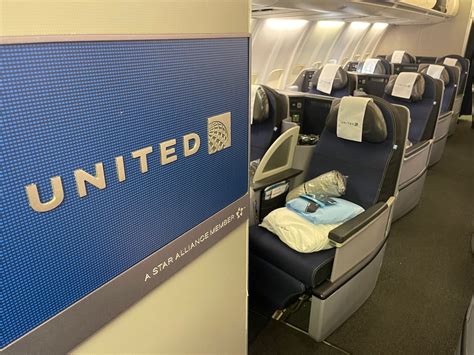
From the flight deck, the aircraft’s Rolls-Royce RB211 engines provide ample thrust, helping it perform reliably even under hot and high conditions. Inside the cabin, passengers find:
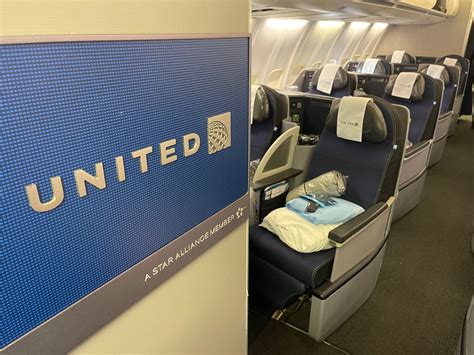
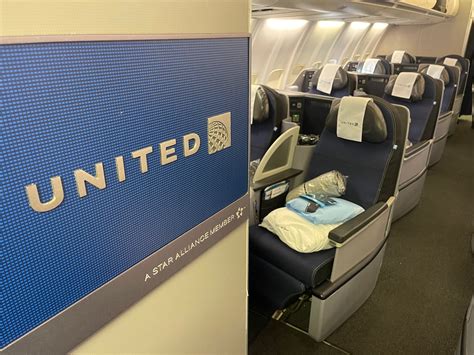
- United First: 24 seats in a 2-2 layout with enhanced legroom and amenities.
- Economy Plus: 54 seats with extra pitch.
- Standard Economy: 156 seats in a 3-3 layout.
WiFi is standard, and personal device entertainment is available—though passengers looking for USB ports will be out of luck. Still, it offers a solid, classic flying experience for those who want something a little different from today’s ultra-modern aircraft.
Where to Catch It: United’s Six Key 757-300 Hubs
The Boeing 757-300 isn’t scattered randomly across United’s network. Instead, the airline has concentrated these aircraft at six core hubs, chosen based on route length, demand, and strategic importance.
Denver International Airport (DEN)
United’s high-altitude Rocky Mountain fortress is a crucial piece in the 757-300 puzzle. From here, the aircraft flies long, transcontinental routes including DEN to Washington Dulles (IAD) and DEN to Orlando (MCO). These journeys, exceeding 1,400 nautical miles, benefit from the aircraft’s range and capacity.
Denver’s altitude helps the jet achieve better takeoff performance, especially important in summer. With routes extending both east and west, DEN acts as a central launchpad for the longest domestic narrowbody services in the U.S.

Chicago O’Hare International Airport (ORD)
United’s historic hub at O’Hare has long been a mainstay for 757-300 operations. As of 2025, United controls 95 gates at ORD, and the airport remains a busy staging ground for flights to the West Coast, notably ORD to Los Angeles (LAX) and ORD to San Francisco (SFO).
Chicago’s extreme winter weather proves the resilience of the aircraft, while the operational scale and demand levels ensure that the 757-300 remains in frequent use. Whether departing during the morning rush or arriving under the glimmer of the Chicago skyline, the aircraft remains a familiar sight for Midwest travelers.
West Coast Staples: SFO and LAX
San Francisco International Airport (SFO)
No hub is more closely associated with the Boeing 757-300 than SFO. Of United’s ten longest narrowbody routes, five begin or end here. These include regular service to Orlando (MCO), Fort Lauderdale (FLL), Houston (IAH), Washington Dulles (IAD), and Denver (DEN).
With United’s commitment to SFO as a tech and international hub, the 757-300 plays a vital role in funneling passengers from the West Coast to domestic destinations with high demand, particularly during peak seasons. It’s not just a workhorse; it’s a flagship narrowbody for coast-to-coast flying.
Los Angeles International Airport (LAX)
From Hollywood to Honolulu, the 757-300 links LAX with high-demand destinations like Washington Dulles and Chicago O’Hare. With its strong O&D traffic, business travelers, and leisure demand, LAX is a vital link in the aircraft’s operations.
As United continues to fight for relevance at one of the country’s most competitive airports, the 757-300 provides a sweet spot in terms of cost-per-seat and operational efficiency. Its ability to handle longer routes without stepping up to a widebody gives United more flexibility at a crowded airport like LAX.
East Coast Operations: Washington Dulles and Houston IAH
Washington Dulles International Airport (IAD)
Dulles serves as United’s East Coast gateway, and it’s a frequent origin and destination for 757-300 flights. From IAD, the aircraft connects to United’s most critical hubs—SFO, LAX, and DEN—often ferrying premium passengers on business or diplomatic travel.
IAD’s proximity to federal agencies, multinational corporations, and global institutions means consistent demand for premium service. The 757-300, with its First Class cabin and higher seat count, ensures United meets that demand efficiently.
George Bush Intercontinental Airport (IAH)
Often underrated, Houston’s IAH is a quiet backbone in the Boeing 757-300 network. As United’s primary southern hub, it connects Latin America with major U.S. destinations. Key routes include IAH to SFO, which spans nearly 1,500 nautical miles.
Given Houston’s deep ties to the energy sector, international trade, and corporate travel, the demand on these long domestic legs remains high year-round. For United, using a narrowbody with this much capacity keeps costs under control without compromising on reach or comfort.
The Flying Pencil’s Final Chapter
Nicknamed the flying pencil for its elongated shape, the Boeing 757-300 represents a unique moment in aviation history. It was a bold bet on capacity over range, prioritizing seat-mile efficiency for dense domestic routes. Although it never saw widespread adoption—the type was discontinued in 2004—it found a niche home at United, where it has worked hard ever since.
But that chapter is coming to a close. According to fleet plans, retirements will begin in December 2025, with the final aircraft phased out by June 2026. As Airbus A321XLRs and Boeing 737 MAX 10s enter the fleet, United will gradually replace these classics with quieter, more fuel-efficient jets.
That transition will mean the end of a one-of-a-kind flying experience. The 757-300’s commanding length, powerful engines, and distinctive ride quality are unlikely to be replicated in future aircraft.
Don’t Miss Your Chance
Whether you’re an aviation enthusiast, a frequent flyer, or someone who simply appreciates the thrill of flying on rare aircraft, this is your chance. The Boeing 757-300 may not dazzle with next-gen tech or whisper-quiet engines, but it offers something few planes can: an efficient, powerful, high-capacity ride on routes that span the continent.
If flying the world’s longest narrowbody is on your aviation bucket list, now is the time. Head to United’s six key hubs—Chicago O’Hare, Denver, San Francisco, Los Angeles, Washington Dulles, and Houston—and book that flight while you still can. The era of the 757-300 is ending. But if you’re lucky, there’s still time to catch one more ride on this remarkable machine before it disappears into history.