The global aviation landscape in 2025 is being reshaped by the rise of ultra-long-haul networks. As passenger demand shifts and aircraft capabilities expand, a select group of airlines is emerging as the undisputed leaders of intercontinental connectivity. Long-haul flying, once seen as a logistical challenge, is now a critical competitive advantage. From Singapore Airlines‘ industry-leading nonstop links to Qantas’ pioneering routes, we examine the world’s most dominant carriers in the long-haul arena.
Ultra-Long-Haul: The New Competitive Battleground
Ultra-long-haul flights—those spanning 8,320 miles (13,390 km) or more—are no longer novelties. They are strategic assets. In 2025, these flights represent not only prestige but also core profitability drivers, enabling airlines to capture high-yield passengers, reduce reliance on regional traffic, and enhance their global presence.
New-generation aircraft like the Airbus A350-900ULR and Boeing 787-9 Dreamliner have made these routes technically and commercially viable. Airlines now connect cities like Singapore–New York, Doha–Auckland, and Dallas–Melbourne nonstop, routes previously unthinkable without intermediate stops.
These extended range flights are changing hub dynamics and redefining global air travel. The geographic advantage of some carriers—paired with their fleet investments—has created a significant reshuffling in long-haul market leadership.
Singapore Airlines: Unrivaled Long-Haul Dominance
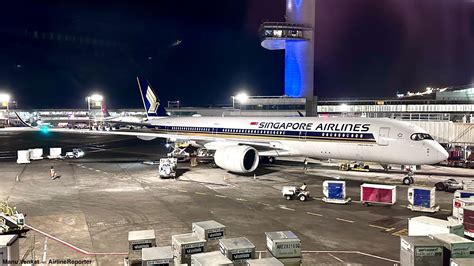
Singapore Airlines holds the title of the world’s largest ultra-long-haul operator in 2025. Its nonstop flights from Singapore to New York (JFK and Newark) top the global charts, generating over 45 million available seat miles (ASMs) per month per direction. But its dominance extends far beyond a few marquee routes.
The airline operates nonstop flights to Los Angeles, San Francisco, and soon Houston, using a blend of Airbus A350-900ULR and standard A350-900 aircraft. In total, over 200 monthly departures are logged on ultra-long-haul routes, with more than 200 million ASMs contributed by SIN–LAX and SIN–SFO alone.
Singapore Airlines’ secret lies in strategic geography, an advanced fleet, and high-value corporate traffic. Despite lacking a large domestic market, the airline thrives on connecting Southeast Asia and India to North America and Europe via its efficient Changi Airport hub.
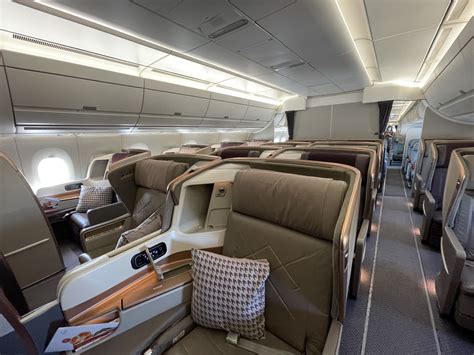
Fleet diversity further boosts the airline’s adaptability. The A350-900ULR enables fuel-efficient nonstop routes exceeding 8,400 miles, giving the airline unmatched reach. This approach sets the benchmark for long-haul excellence.
Qantas: Project Sunrise and the Australia–World Connection
Qantas has redefined long-haul ambition with its “Project Sunrise” initiative. Its current operations include some of the world’s most challenging routes: Perth–London, launched in 2018, and Dallas–Melbourne, both exceeding 8,800 miles and performing strongly in business and premium economy.
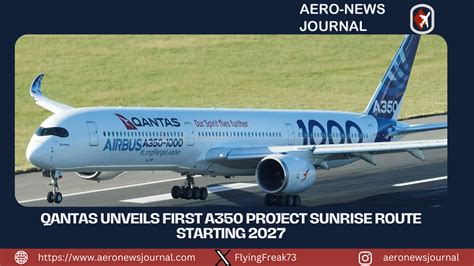
The upcoming A350-1000ULR fleet will allow Qantas to pioneer Sydney–New York and Sydney–London direct routes—transformational journeys that could exceed 20 hours of flight time. These flights aim to bypass traditional Asian stopovers and offer nonstop connections from Australia’s east coast to key western markets.
Qantas’ long-haul strategy is uniquely focused on nonstop endurance, targeting premium customers and high-yield passengers. Its ability to profit from previously impractical flights has shifted perceptions of demand elasticity in the ultra-long-haul segment.
Its Dallas–Melbourne route alone generates 31 million ASMs monthly, while load factors remain strong. By eliminating layovers and slashing total travel times, Qantas reinforces its role as a premium leader in intercontinental travel.
Emirates and Qatar Airways: Masters of the Global Crossroads
The Middle East continues to be a cornerstone of long-haul travel strategy, with Emirates and Qatar Airways leveraging their Dubai and Doha hubs to full effect. These cities are global junctions that facilitate East–West connectivity like no other.
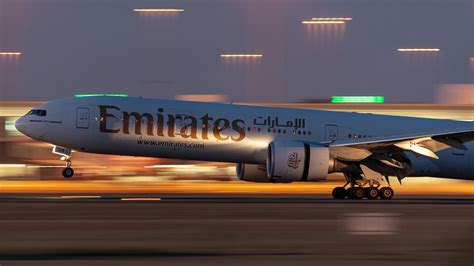
Qatar Airways’ Doha–Auckland and Emirates’ Dubai–Auckland routes stand out with each generating over 73 million ASMs monthly and carrying more than 8,000 passengers per direction. These flights, operated with Boeing 777s and Airbus A380s, are among the most capacity-rich ultra-long-haul services in existence.
Their success is enabled by high transfer volumes rather than large home markets. In fact, most passengers on these flights are connecting from other regions. This model allows both airlines to tap into markets that would otherwise be unreachable with direct flights alone.
Qatar Airways also excels in route efficiency and service quality, while Emirates leads in scale and brand dominance. Their continuous expansion into underserved continents ensures their long-haul supremacy remains unshaken.
United Airlines: America’s Long-Haul Powerhouse
Among U.S. carriers, United Airlines takes the crown for long-haul coverage. Its network includes extensive transpacific and transatlantic services, with particularly strong performance in routes to Australia, New Zealand, and Southeast Asia.
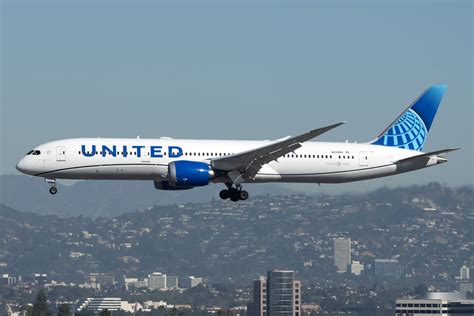
United’s Houston–Sydney and San Francisco–Singapore routes rank among the longest American-operated flights, generating 66 million and 130 million ASMs monthly, respectively. These figures reflect not only passenger demand but also corporate contracts and alliance-driven connectivity.
With a modern widebody fleet that includes Boeing 787-9, 787-10, and 777-300ER aircraft, United maintains one of the most ambitious global strategies. It has also built a strong presence through Star Alliance partnerships, enabling deeper reach and shared capacity benefits.
Its long-haul focus contributes significantly to its reputation as the world’s largest airline by available seat miles (ASMs). United’s roadmap includes further expansions, targeting strategic economic corridors and high-demand destinations.
What Drives Ultra-Long-Haul Viability in 2025?
The success of ultra-long-haul networks in 2025 is a product of multiple converging factors:
- Next-generation aircraft delivering extended range and improved fuel efficiency
- High-yield premium cabins with increasing demand from corporate and luxury travelers
- Strategic geographic hubs that minimize backtracking and optimize route performance
- Cargo demand supplementing passenger revenue
- Global economic shifts that create new travel patterns, especially between emerging markets
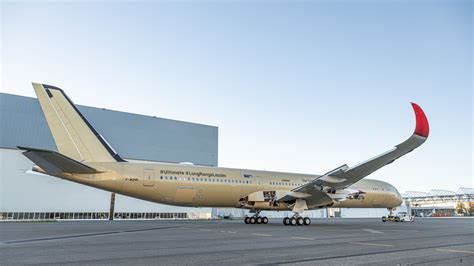
Airlines investing in ultra-long-haul capacity are playing a long game—one where market access, national connectivity, and brand prestige align.
The Future: Longer Routes, Broader Reach
Looking ahead, the long-haul arms race shows no sign of slowing. As aircraft range improves and new city pairs emerge as viable, the ultra-long-haul sector will expand even further.
Routes over 9,000 miles may become commonplace, and airlines that currently dominate this space will likely push boundaries even more. Singapore Airlines, Qantas, Emirates, Qatar Airways, and United are well-positioned, but challengers are emerging from markets like India, China, and Turkey.
Additionally, the introduction of Boeing 777X and further variants of the A350 will allow even thinner long-haul routes to be operated profitably, unlocking new direct city pairs.
The global aviation network in 2025 is being shaped by more than aircraft—it is shaped by ambition. And in this high-stakes battle for long-haul supremacy, the winners are writing the next chapter of air travel history.