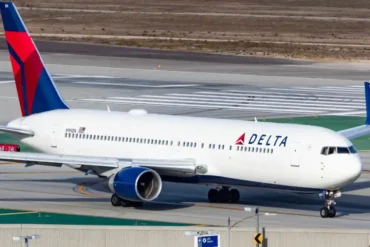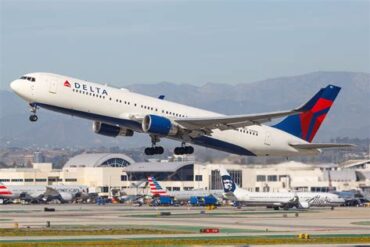
Delta Air Lines has removed eight destinations from its route map since 2025, a deliberate consolidation of weak-performing markets as the Atlanta-based carrier refocuses capacity on routes that earn their keep. With more than 1,000 aircraft and a position among North America’s largest airlines, Delta’s decisions carry weight far beyond a single flight number, and the eight withdrawals reveal a clear pattern: exotic long-haul experiments, a second-tier London gateway, and thin domestic and leisure markets have all fallen away. Cirium, the aviation analytics firm, tracks the exits, and together they tell a story about network discipline rather than retreat.
Long-Haul Exits: Papeete, Gatwick and Geneva Leave the Map
The most conspicuous casualty is Delta’s nonstop link between Los Angeles International Airport (LAX) and Faaʼa International Airport (PPT) in Papeete, the gateway to French Polynesia. Delta cut the service in July 2025, withdrawing entirely from the French archipelago and leaving Air France and Air Tahiti Nui as the operators on the city pair. For travelers, the loss eliminates a US carrier’s own metal to Tahiti; for the airline, it removes a long, fuel-hungry sector whose yields never matched the romance of the destination.
London’s second airport followed. Delta’s nonstop from John F. Kennedy International Airport (JFK) to London Gatwick (LGW) ended in September 2025, leaving Delta’s British capital service concentrated at Heathrow, where the carrier operates from most of its major hubs. Norse Atlantic Airways continues seasonal Gatwick flights, but Delta’s decision signals that a single daily Gatwick rotation could not compete with the premium traffic Heathrow commands.
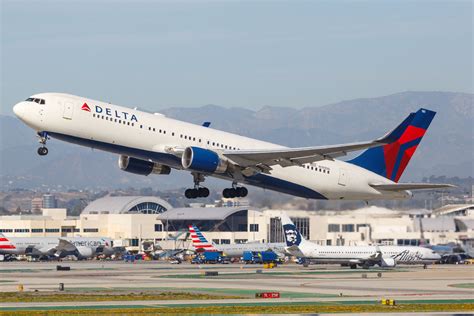
Geneva was cut twice over. Delta ended JFK–Geneva Airport (GVA) in October 2025, and its Newark Liberty (EWR)–Geneva service disappeared the same month, leaving United Airlines as the sole US operator to the Swiss city. SWISS International Air Lines still flies nonstop from Geneva to New York year-round, but Delta’s twin exits from two New York-area gateways underscore how crowded the transatlantic market has become — and how quickly a marginal Swiss route loses its economics when premium demand softens.
Domestic and Leisure Markets Absorb the Brunt of the Cuts
Closer to home, Delta’s domestic pruning has been equally decisive. The airline withdrew Austin-Bergstrom International Airport (AUS) to Midland International Air & Space Port (MAF) service in November 2025, leaving Southwest Airlines as the sole operator between the two Texas cities. Williston Basin International Airport (XWA) in North Dakota lost all Delta flying in September 2026, ending the Minneapolis-St. Paul (MSP) link and leaving the airport unserved. Yellowstone Airport (WYS) met the same fate, as Delta axed its seasonal Salt Lake City (SLC) nonstop in September 2026, with no return expected next year.
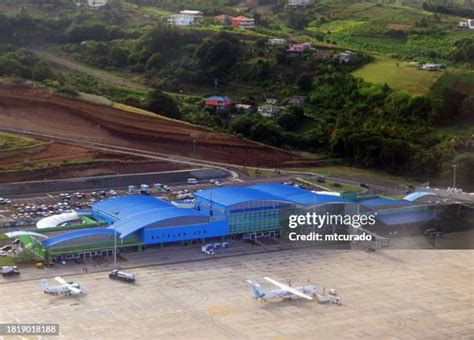
Mexico and the Caribbean complete the list. Delta stopped flying Minneapolis to Mazatlán International Airport (MZT) in April 2026, citing low passenger demand and heavy competition from hometown carrier Sun Country Airlines — a textbook case of a leisure market dominated by a lower-cost rival. Most striking is the withdrawal from Argyle International Airport (SVD) in Saint Vincent and the Grenadines, which ended Atlanta (ATL) service in September 2026 and now leaves no direct competitor on the route. American Airlines and JetBlue Airways still connect Saint Vincent to other US points, and Caribbean Airlines maintains year-round New York service, but the loss of nonstop Atlanta access is a genuine blow to a country where the airport is among its most important infrastructure assets.
What the Eight Cuts Say About Delta’s Network Strategy
Read together, the eight exits form a coherent thesis. Delta is protecting hub connectivity and premium transatlantic flying while surrendering routes where a single carrier, a seasonal window, or a discount competitor holds the advantage. Tahiti, Gatwick, Geneva, Mazatlán and Saint Vincent all share a profile: long or leisure-heavy sectors with limited corporate demand and no meaningful feed into Delta’s strongest hubs. Williston, Yellowstone and Midland share another: small catchments where a single daily flight cannot cover the cost of operating a mainline jet.
The timing matters as much as the destinations. Each withdrawal coincides with aircraft redeployment toward denser markets and premium cabins, and each reduces the complexity of a network that spans more than 1,000 aircraft. For passengers, the practical effect is fewer nonstop options and more connections through Atlanta, Detroit, Minneapolis or Salt Lake City. For Delta, the calculus is simpler: every route must earn its place, and these eight no longer did.