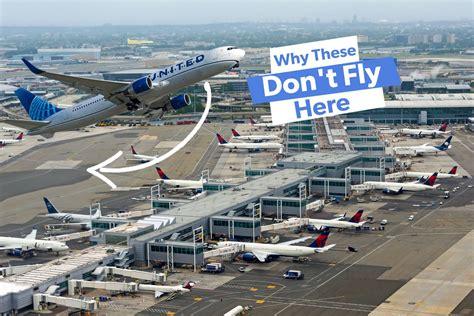
United Airlines has built one of the world’s largest long-haul networks, but even an airline famous for international expansion does not keep every destination permanently. Over the past two decades, the carrier has stopped serving 24 long-haul airports across Europe, Africa, Asia, and the Middle East. The changes offer a useful look at how United has adjusted its international network as demand, competition, geopolitical conditions, and aircraft availability have changed.
According to Cirium Diio data, United currently operates more long-haul flights than any other airline, averaging about 157 daily long-haul departures from US hubs between now and next summer. Its network continues to evolve, including through the introduction of the Airbus A321XLR, which gives United another option for serving markets that may not require a larger widebody aircraft.
The discontinued destinations are not simply a list of failed routes. Some markets were inherited from Continental Airlines, some were affected by the COVID-19 pandemic, and others became difficult to sustain as United reshaped its international schedule. In many cases, passengers can still reach the same cities through United’s Star Alliance partners, joint ventures, or codeshare agreements, meaning the end of a nonstop flight does not necessarily mean the end of United’s connectivity.
United Airlines Has Dropped 15 European Airports
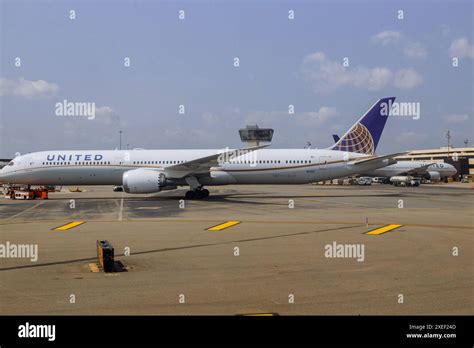
Europe accounts for the largest share of United’s discontinued long-haul destinations since 2006, with 15 airports no longer receiving the airline’s nonstop service. Every one of these routes was operated from either Newark Liberty International Airport or Washington Dulles International Airport, two of United’s most important international gateways.
The changes have occurred gradually rather than during one major network restructuring. Copenhagen and Moscow Domodedovo were discontinued in 2012, followed by Istanbul Atatürk in 2013. Stuttgart ended in 2014, while Newcastle and Oslo disappeared from the network in 2016.
The following year brought the end of service to Belfast International and Birmingham, while Hamburg was removed in 2018. Prague followed in 2019. The pandemic-era network changes were particularly significant, with Berlin Tegel and Manchester losing United service in 2020. Berlin later became part of United’s network again through the new Berlin Brandenburg Airport, illustrating why an airport disappearing from a historical list does not always mean the city itself has permanently lost service.
Bergen was discontinued in 2022, while Stockholm Arlanda and Tenerife South were among the latest European markets to leave the network in 2025. Some of these destinations remain accessible through partner airlines, reinforcing the importance of United’s broader international alliance structure.
Five African and Asian Destinations Also Disappeared
United’s changes outside Europe have been smaller in number but particularly interesting. The airline ended service to five African or Asian airports during the period covered by the data.
Hangzhou and Xi’an were both served from San Francisco International Airport and disappeared from United’s network in 2017. Xi’an received seasonal Boeing 787-8 service in 2016 and 2017, while Hangzhou was served year-round with the Boeing 787-9. Neither destination currently has nonstop US service from any carrier.
Chengdu was another important experiment in United’s China network. The carrier launched service from San Francisco in 2014, but the route ended in 2020 amid the pandemic. United subsequently scheduled the market on several occasions, but those services never actually resumed and were eventually removed.
Mumbai was another major change, with United ending its Newark service in 2022. More recently, Dakar became the shortest-lived destination on the list, with United operating Washington Dulles–Dakar flights from May 2025 until January 2026.
Four Middle East Destinations Are No Longer Served
United has also withdrawn from several Middle Eastern markets. The carrier operated Washington Dulles–Kuwait service from 2006 until 2016 and extended some flights to Bahrain between 2010 and 2016. Doha was served from Washington between 2012 and 2014, although the operation was structured through Dubai.
Amman, Jordan, also became part of United’s international network in May 2022. The airline operated the Washington route three times weekly with the Boeing 787-8, benefiting from visiting-friends-and-relatives traffic, tourism, government travel, and connecting demand to surrounding countries.
Despite an 86.7% load factor reported by the US Department of Transportation, United ultimately ended its Amman operation. Royal Jordanian now serves Washington Dulles, demonstrating how another carrier can take over demand after a major airline withdraws.
The Full List of 24 Discontinued Long-Haul Airports
The historical list includes 15 European airports, five African or Asian airports, and four Middle Eastern destinations. The European withdrawals include Copenhagen, Moscow Domodedovo, Istanbul Atatürk, Stuttgart, Newcastle, Oslo, Belfast International, Birmingham, Hamburg, Prague, Berlin Tegel, Manchester, Bergen, Stockholm Arlanda, and Tenerife South.
The African and Asian group consists of Hangzhou, Xi’an, Chengdu, Mumbai, and Dakar. The Middle Eastern destinations are Kuwait, Bahrain, Doha, and Amman.
This history also needs some context. The list covers destinations United has stopped serving since 2006, rather than every long-haul market the airline has ever abandoned. A longer historical period would produce a substantially different picture, particularly because United’s network has been shaped by its merger with Continental and decades of changing international demand.
United is also scheduled to return to Dubai in March 2027, so that market is excluded from the discontinued-destination count. The planned return illustrates the fluid nature of long-haul networks: an airport can disappear from an airline’s schedule for years and later become strategically attractive again.
For United, the broader lesson is that international network planning is rarely permanent. Aircraft technology, partnerships, geopolitical developments, passenger demand, and hub strategy can all reshape the map. The 24 airports that disappeared from United’s long-haul network therefore represent not only canceled routes, but also a record of how the airline has continually rebuilt its global footprint.