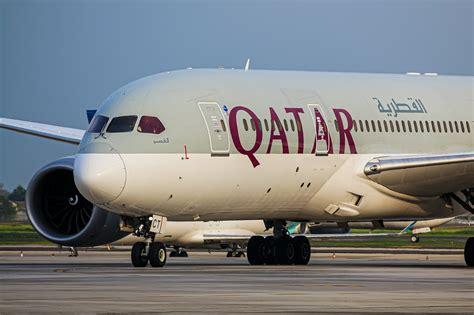
Qatar Airways has built one of the world’s most extensive long-haul networks, connecting Doha with destinations across six continents. Yet even an airline of its scale has repeatedly reshaped its network when market conditions, economics, geopolitics, or strategic priorities changed. Over the past decade, the carrier has ended passenger flights at 20 long-haul airports, providing an interesting look at how its global network has evolved since 2016.
The scale of Qatar Airways makes those changes particularly notable. The airline operates a passenger fleet of around 241 aircraft, including approximately 209 widebodies, and has no meaningful domestic market to support its network. Its international connecting model therefore depends heavily on the performance of long-haul routes through Doha Hamad International Airport. When a destination cannot generate sufficient demand or strategic value, maintaining a direct link can become difficult even for a carrier with such a powerful global hub.
The latest network changes also come against an unusually difficult backdrop. Qatar Airways’ chief executive has described the disruption caused by the ongoing conflict involving Iran as the worst crisis in the airline’s history, according to Inside Flyer. The statement placed the current operating environment above even the COVID-19 pandemic in terms of its impact on the airline. Looking back at routes that have disappeared over the past decade therefore offers useful context for understanding how Qatar Airways has historically responded to difficult conditions.

Qatar Airways’ 20 Long-Haul Airport Cuts Since 2016
An analysis of Qatar Airways’ schedule changes using Cirium Diio identifies 20 airports where the airline has ended long-haul passenger service during the period examined. The list spans Africa, the Americas, Asia, and Europe, although the timing of the cuts was heavily influenced by the extraordinary disruption surrounding the COVID-19 pandemic.
The African markets include Gaborone, Rabat, Windhoek, and Kano, while the Americas are represented by Buenos Aires. Asia accounts for a particularly large share of the changes, including Chiang Mai, Da Nang, Krabi, Langkawi, Yangon, St. Petersburg, Medan, and U-Tapao in Pattaya. In Europe, Qatar Airways has ended service to Cardiff, Gothenburg, Pisa, Toulouse, Lyon, Hamburg, and Venice.
The timing is revealing. Several routes disappeared during 2020, when international aviation demand collapsed and airlines around the world dramatically reduced their networks. Yangon, Chiang Mai, Da Nang, Krabi, Langkawi, Gaborone, Rabat, Buenos Aires, Cardiff, Gothenburg, and Pisa are among the destinations associated with that major period of network contraction. Other markets remained for longer before subsequently disappearing.
The Full List of Qatar Airways Route Cuts
The first recorded removal in the supplied ten-year analysis came in 2018, when Qatar Airways ended service at U-Tapao, the airport serving the Pattaya area in Thailand. The following year brought the extraordinary global aviation disruption that eventually resulted in numerous network changes.
In 2020, the airline removed a substantial group of destinations, including Gaborone, Rabat, Buenos Aires, Chiang Mai, Da Nang, Krabi, Langkawi, Yangon, Cardiff, Gothenburg, and Pisa. The subsequent cuts were more dispersed. St. Petersburg ended in 2022, while Windhoek followed in 2023. Medan was removed in 2024, and Toulouse also disappeared from the network. In 2025, Qatar Airways ended service to Lyon, while 2026 brought further changes involving Kano, Hamburg, and Venice.
Some destinations require additional context because the airport itself changed rather than the city disappearing from the Qatar Airways network. Beijing Capital was replaced by Beijing Daxing, Berlin Tegel was replaced by Berlin Brandenburg, Chengdu Shuangliu was replaced by Chengdu Tianfu, Luanda Quatro de Fevereiro was replaced by the newer airport, and Phnom Penh International was replaced by the new Phnom Penh facility. These airports were therefore excluded from the 20-airport total.
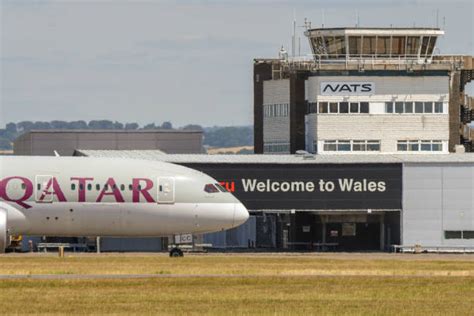
Qatar Airways Once Served Cardiff in Wales
One of the more surprising names on the list is Cardiff International Airport in Wales. Qatar Airways launched flights between Cardiff and Doha in May 2018, and the route operated until March 2020. At various points, the service was scheduled daily, with the Boeing 787-8 Dreamliner serving almost every operation. The Airbus A350-900 operated the inaugural flight.
The route relied significantly on connecting passengers through Doha rather than purely local demand. UK Civil Aviation Authority figures indicate that approximately 91,000 passengers traveled between Cardiff and Doha in 2019. When those passengers were considered alongside the seats offered, the route produced a reported load factor of only around 59%. Financial support associated with the launch helped reduce the airline’s exposure to the route’s commercial risk.
Yangon Shows How Qatar Airways’ Network Can Change
Yangon provides another revealing example. Qatar Airways had previously served Myanmar before suspending the route in 2008 amid deteriorating conditions, economic difficulties, and international sanctions. The airline returned in December 2016, initially using an Airbus A330-200.
The second chapter was considerably shorter. Qatar Airways’ final Yangon departure took place in March 2020, this time with the smaller Airbus A319. For much of its operation, Yangon was served as a standalone destination from Doha, although some services were temporarily linked with Chiang Mai or U-Tapao. The route’s disappearance illustrates how geopolitical conditions, local economics, aircraft deployment, and the broader global travel environment can all influence a long-haul network.
What the 20 Airport Cuts Reveal
The list should not be interpreted as a complete record of every Qatar Airways destination ever discontinued. The analysis covers the specified ten-year period and applies criteria including a minimum number of departures and the absence of scheduled flights through the following summer. Airport substitutions serving the same metropolitan area were also excluded.
That distinction matters because airline networks are constantly evolving. A destination can disappear because demand is weak, because economics change, because geopolitical circumstances deteriorate, or because an airline decides that aircraft can generate greater value elsewhere. Qatar Airways’ 20 long-haul airport cuts since 2016 therefore represent not simply a list of abandoned routes, but a snapshot of how one of the world’s major international airlines has repeatedly adjusted its global network.