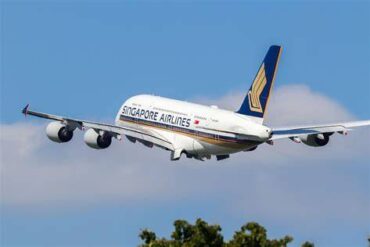
Singapore Airlines has built one of the world’s most extensive long-haul networks from Singapore Changi Airport, with more than 130 weekly flights to Europe. Yet the carrier’s European network today is considerably different from the map it operated in previous years. Four European destinations that once carried the Singapore Airlines name have disappeared from the airline’s current route network: Athens, Stockholm, Düsseldorf and Moscow.
The changes reflect a mixture of factors, including the COVID-19 pandemic, changing demand, network restructuring, geopolitical conditions and the different roles played by Singapore Airlines and its low-cost subsidiary, Scoot. Some routes disappeared permanently, while others were transferred to another airline within the group or were affected by circumstances that made their previous operating model difficult to sustain.
Singapore Changi is particularly important to Singapore Airlines’ European strategy because the airport functions as a major connecting hub. More than 40% of passengers traveling on the airline’s services through Changi are understood to transit between Asia or Oceania and another destination rather than beginning or ending their journey in Singapore. That makes European routes valuable not only for local Singaporean demand but also for connecting traffic across the airline’s wider network.
Singapore Airlines Stockholm Route Ended After 2020
One of the more unusual routes in Singapore Airlines’ European history was its service to Stockholm Arlanda Airport (ARN). The airline operated between Singapore and Stockholm from 2017, but the route was not simply a conventional nonstop Singapore-Europe service. It was connected with Moscow Domodedovo Airport (DME), creating a fifth-freedom operation that allowed passengers to travel between Moscow and Stockholm without traveling to Singapore.
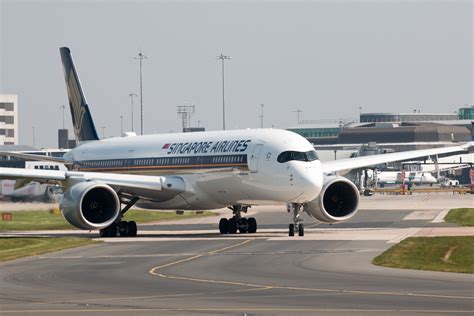
The service used the Airbus A350-900, giving Singapore Airlines an efficient aircraft for the long-distance operation while also allowing it to serve two European markets within the same broader route structure. The Stockholm-Moscow sector was particularly distinctive because fifth-freedom rights allowed Singapore Airlines to sell tickets between the two European cities.
The operation eventually ended in 2020 as the aviation industry was transformed by the pandemic and increasingly complicated international travel restrictions. Although Singapore Airlines has rebuilt much of its European network since then, Stockholm has not returned to the carrier’s route map.
Düsseldorf Disappeared From the Singapore Airlines Network
Germany has long been an important European market for Singapore Airlines, but Düsseldorf is no longer served by the carrier. The airline launched Singapore-Düsseldorf service in 2016 using the Airbus A350-900, initially operating three times per week.
The frequency later increased to four flights per week, reflecting the importance of the German market and the potential for both local and connecting passengers. However, the route was ultimately suspended during the pandemic and did not return when Singapore Airlines rebuilt its international schedule.
The disappearance of Düsseldorf illustrates how the post-pandemic recovery has not simply recreated every pre-2020 route. Airlines have had to reconsider aircraft deployment, connecting opportunities and the balance between local demand and transfer traffic. Singapore Airlines has instead concentrated its German presence around other gateways while continuing to develop its broader European network.
Moscow Had a Long and Complicated Singapore Airlines History
Singapore Airlines’ relationship with Moscow is considerably older and more complicated. The airline operated services to the Russian capital in several different forms over the years, including flights via Dubai before introducing additional nonstop operations.
Between 2008 and 2016, Singapore Airlines also operated services connecting Singapore and Moscow with onward flights to Houston, before the Houston routing was later shifted from Moscow to Manchester. The airline subsequently operated nonstop Singapore-Moscow services that continued onward to Stockholm, creating another distinctive fifth-freedom opportunity.
Several aircraft types appeared on Singapore Airlines’ Moscow services over the years, including the Boeing 777-200ER, Boeing 777-300, Boeing 777-300ER and Airbus A350-900. The route’s eventual disappearance was shaped by both the pandemic and the broader geopolitical situation following Russia’s invasion of Ukraine. Singapore Airlines has not restored its Moscow operation.
Athens Was Transferred From Singapore Airlines to Scoot
Athens is different from the other three destinations because the Singapore Airlines Group did not completely abandon the market. Singapore Airlines previously operated flights to Athens International Airport (ATH) with the Boeing 777-200ER, but the full-service carrier eventually stepped away from the route.
The Athens market was subsequently transferred to Scoot, Singapore Airlines’ low-cost subsidiary. Scoot took over the service in June 2017, reflecting a strategy focused more heavily on leisure demand and lower-cost travel. Athens is a major tourist destination, and a low-cost operating model can provide the group with a different way of serving price-sensitive travelers.
This means Athens remains connected to Singapore within the broader group network even though the flights are no longer operated under the Singapore Airlines brand.
Singapore Airlines Is Still Expanding Its Europe Network
The removal of four destinations does not mean Singapore Airlines is retreating from Europe. The carrier has continued to adjust its network, including the resumption of Brussels services in 2024 and the return of Madrid to its route map as an extension of existing Barcelona operations.
The contrast is important: airline networks are constantly changing rather than simply growing in one direction. Singapore Airlines has removed Stockholm, Düsseldorf and Moscow while transferring Athens to Scoot, but it has also restored other European destinations and maintained a substantial schedule across the continent.
For travelers, the current map therefore tells only part of the story. Singapore Airlines’ European network has been shaped by changing economics, aircraft availability, connecting demand and international conditions. The four former destinations show just how dramatically a major global airline’s route map can evolve over time.