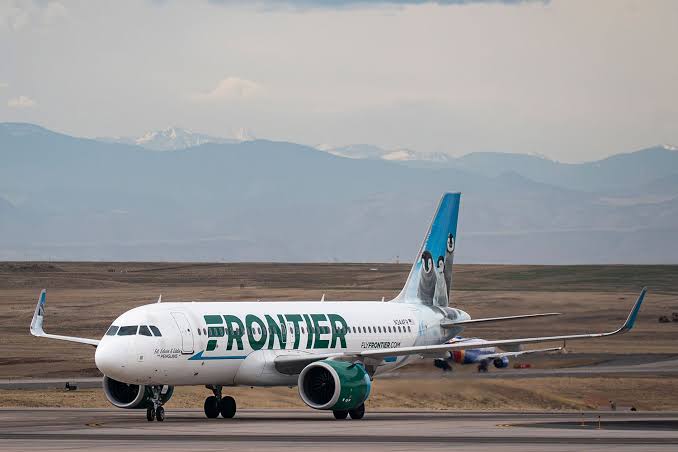
Frontier Airlines is cutting a substantial number of routes from Denver International Airport (DEN) in 2026, with 19 routes having already ended and no future flights currently scheduled. The changes mark another step in the airline’s evolving network strategy as it continues moving away from the Denver-heavy model that once defined its route map.
For years, Denver was effectively the center of Frontier’s network. The airline’s growth at DEN was so extensive that the airport accounted for an extraordinary 92% of Frontier’s capacity in 2010. That concentration has steadily declined as Frontier expanded its point-to-point operation across the United States and built larger presences in other markets.
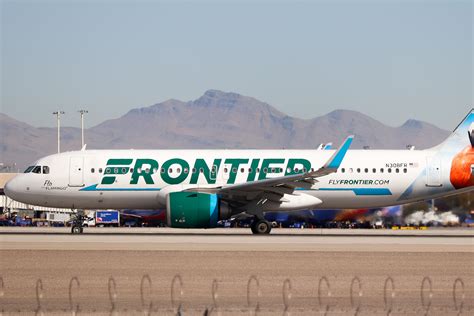
In 2026, Denver still remains an important Frontier base, but its share of the airline’s operation has reached a historic low. OAG data shows approximately 9.5 million round-trip seats available from Denver this year, representing about 19% of Frontier’s total capacity. That compares with 21% in 2025 and is dramatically below the 92% share recorded in 2010. For the first time, Denver has also been overtaken by Hartsfield-Jackson Atlanta International Airport (ATL) when measured by seats for sale.
Frontier Airlines’ 19 Denver Routes Ending in 2026
The 19 routes disappeared at different points throughout 2026. Schedule analysis shows that Frontier operated each of them from Denver during the year, but none currently has future service scheduled through the carrier’s booking window, which extends into early May 2027.
The first wave came in January, when Frontier ended service to Chicago Midway, New York JFK, New York LaGuardia, and Seattle Paine Field. March brought the end of Denver service to Los Cabos and Pittsburgh, followed by four more routes in April: Milwaukee, Puerto Vallarta, Tucson, and Tulsa.
The reductions continued through the summer. Spokane ended in July, while August saw Frontier discontinue service to Corpus Christi, Knoxville, Little Rock, and Richmond. The final changes came in September and October, with Boise and Cedar Rapids ending in September, followed by Madison and Sioux Falls in October.
The complete list of the 19 discontinued Denver routes is:
- Chicago Midway
- New York JFK
- New York LaGuardia
- Seattle Paine Field
- Los Cabos
- Pittsburgh
- Milwaukee
- Puerto Vallarta
- Tucson
- Tulsa
- Spokane
- Corpus Christi
- Knoxville
- Little Rock
- Richmond
- Boise
- Cedar Rapids
- Madison
- Sioux Falls
Together, these destinations represented roughly 18,860 network miles from Denver.
13 Airports Also Leave Frontier’s Network
The significance of the Denver cuts becomes clearer because many of these destinations are not simply being removed from one airport. Thirteen of the 19 airports have been removed from Frontier’s entire network, meaning the airline no longer serves them anywhere.
Those airports are Cedar Rapids, Corpus Christi, Knoxville, Little Rock, Los Cabos, Madison, New York JFK, Puerto Vallarta, Seattle Paine Field, Sioux Falls, Tucson, Tulsa, and Spokane. New York JFK is a particularly notable case because Frontier’s final service there is scheduled from Atlanta in October.
This means the Denver cuts are part of a broader network adjustment rather than simply a reshuffling of aircraft between Denver and another Frontier station. The airline is eliminating some markets altogether while continuing to concentrate capacity where it sees stronger demand opportunities.
Most of the Lost Denver Routes Still Have Nonstop Alternatives
Despite the size of the list, passengers losing Frontier service from Denver are not necessarily losing nonstop access to most of these destinations. 17 of the 19 discontinued markets remain connected to DEN by other airlines.
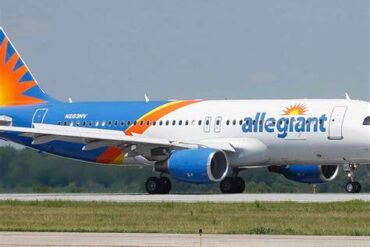
United Airlines covers 15 of the discontinued destinations, while Southwest Airlines serves 13. Other carriers also fill specific gaps. Allegiant operates Denver–Knoxville, Delta serves New York JFK and LaGuardia, and JetBlue also serves JFK.
New York LaGuardia and Knoxville each have three airlines serving Denver. LaGuardia is covered by Delta, Southwest, and United, while Knoxville has service from Allegiant, Southwest, and United.
The two exceptions are Corpus Christi and Seattle Paine Field, which no longer have nonstop service from Denver after Frontier’s withdrawal.
Why the Corpus Christi Route Stands Out
The Denver–Corpus Christi route was particularly notable because Frontier’s launch represented a major change for the Texas airport. The airline began twice-weekly service in October 2025, giving Corpus Christi its first new destination in 27 years.
The route ultimately lasted less than a year. Frontier received a $1.2 million revenue guarantee, but the service ended in August 2026 after relatively weak performance.
U.S. Department of Transportation data covering October 2025 through June 2026 shows that Frontier carried 13,307 passengers on the route. When the number of passengers is compared with seats offered, the calculated load factor was only 47.7%, illustrating the difficulty of sustaining the market despite the financial support attached to its launch.
What the Denver Cuts Mean for Frontier’s Network
The 19 cancellations do not mean Frontier is abandoning Denver. The airport remains one of the carrier’s largest markets, with millions of seats scheduled in 2026. Instead, the changes demonstrate how dramatically Frontier’s network has evolved from its earlier Denver-centric model.
The airline now has a much broader national footprint, allowing it to distribute aircraft and capacity across multiple bases and focus on routes that fit its evolving demand patterns. Denver remains important, but its position within Frontier’s overall network is no longer as dominant as it once was.
For Denver passengers, the practical impact varies by destination. Travelers to most of the discontinued cities still have nonstop alternatives, although schedules, fares, frequencies, and aircraft can differ considerably. Corpus Christi and Seattle Paine Field face a more significant change because Frontier’s exit leaves those destinations without a current nonstop option from DEN.
With no future Frontier flights currently scheduled for any of these 19 routes, the 2026 cancellations represent a meaningful reshaping of the airline’s Denver operation—and another clear sign that the carrier’s network is becoming far less dependent on its historic Colorado stronghold.