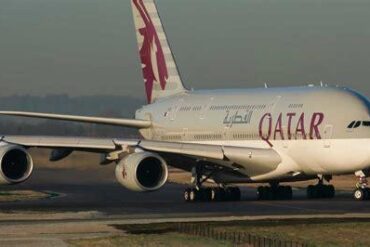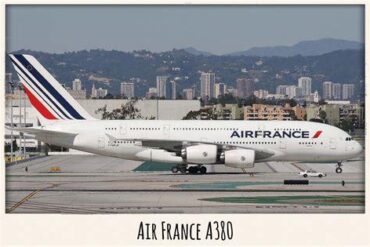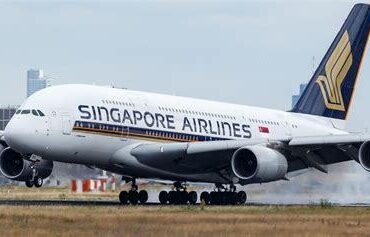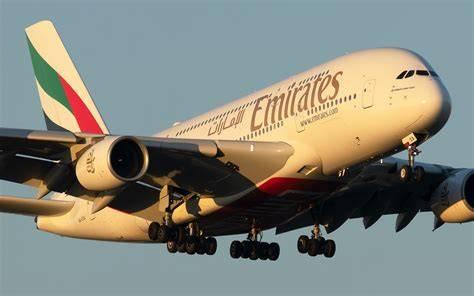
The Northern Hemisphere winter season begins Sunday, October 25, when airlines shift to IATA slot-season schedules, bringing a wave of new routes alongside a long list of seasonal and permanent cuts. Few aircraft illustrate that churn as sharply as the Airbus A380. OAG data shows 18 routes losing the double-decker in winter 2026/2027, touching eight of the ten carriers that fly the superjumbo — including Emirates, which is removing three of its own.
The Dubai-based giant, which ch-aviation lists with 116 A380s in multiple cabin configurations, will scale back the type on a short-haul Saudi staple, a long-haul US flagship, and an occasional pilgrimage booster. Each cut tells a different story about how demand, geopolitics, and fleet planning collide when the clocks change.
Emirates Ends Dubai–Jeddah A380 Service As The 777-300ER Takes Over
Of the three losses, Dubai–Jeddah stings the most on paper. The 919-nautical-mile (1,702 km) hop to King Abdulaziz International Airport currently ranks among Emirates’ most-served superjumbo markets, with the A380 operating three times daily. It is also the carrier’s shortest A380 service anywhere, and the removal arrived with only a few weeks of notice — a tight turnaround even by airline standards.
The daily pattern is dense: EK801 departs DXB at 12:15 AM and lands at 2:30 AM, while EK802 returns at 4:20 AM and reaches Dubai at 8:10 AM. EK805 follows at 7:05 AM, arriving 9:20 AM, with EK806 back at 11:15 AM for a 3:00 PM arrival. EK803 leaves at 3:45 PM and touches down at 6:05 PM, and EK804 returns at 8:35 PM, reaching Dubai at 12:30 AM the next day.
From winter 2026/2027, the route will be entirely operated by the Boeing 777-300ER. The equipment swap strips out roughly 102,000 round-trip seats this winter, a 22% capacity reduction. By percentage, first class absorbs the deepest blow at -63%, followed by business at -48% and economy at -16%. The A380 is scheduled to return on March 28, 2027, when Emirates switches back to summer schedules.
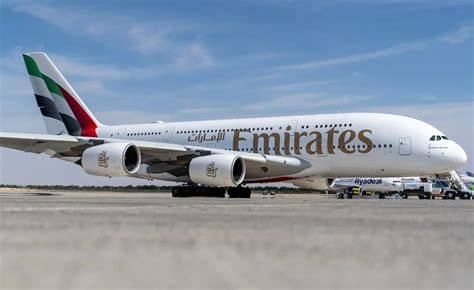
Dubai–Washington Dulles: The A380’s Absence Stretches Into 2027
Emirates normally treats Washington Dulles International Airport (IAD) as a year-round A380 destination, and the superjumbo is typically the only one of its kind operating into the DC-area gateway during winter. That distinction disappears this season. Flightradar24 data shows the aircraft did not serve IAD in March, April, May, June, or July 2026 amid the ongoing war in Iran, returned briefly in August for peak-season demand, and has not been deployed since. The 777-300ER has stepped in on the daily EK231, departing DXB at 2:20 AM and arriving 8:40 AM, with EK232 returning at 10:55 AM and landing 8:05 AM the following day.
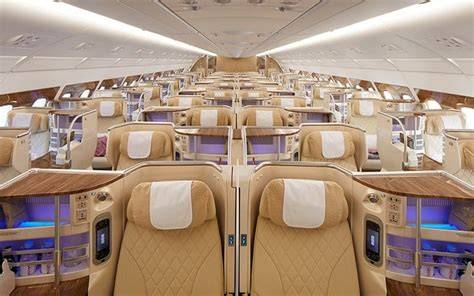
The A380’s comeback has slipped repeatedly, and the latest schedule now points to March 28, 2027. Houston, by contrast, regains the type on November 1, 2026. When Dulles finally rejoins the network, Emirates will deploy its 489-seat layout: 14 first-class suites, 76 business seats, no premium economy, and 399 economy seats.
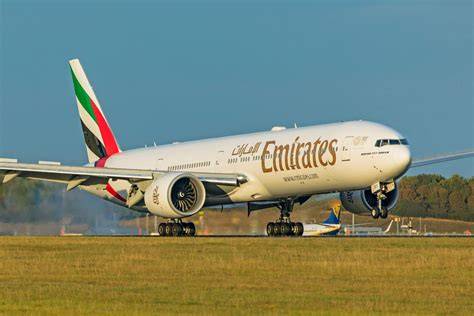
Medina Loses Its Occasional A380 Pilgrimage Booster
Medina (Madinah) never held a scheduled A380 service, but Emirates has used the jet to absorb surges tied to large Umrah tour bookings. The airline flew the superjumbo there three times in winter 2025/2026 — on November 20 and December 25, 2025, plus January 8, 2026 — each time using the two-class, 615-seat configuration now being retired. No A380 rotations are currently filed for the coming winter.
Emirates will still serve DXB–Medina alongside flydubai and Saudia, with the trio offering up to five daily flights combined. Given the pilgrimage-driven traffic, it comes as little surprise that Emirates’ top five transit markets to and from Medina are Pakistan, India, Malaysia, Indonesia, and Bangladesh — demand profiles that favor frequency and connectivity over sheer seat capacity on the superjumbo.
What The Three Cuts Signal For Emirates’ Winter Network
Read together, the removals show Emirates right-sizing capacity rather than retreating from the A380. Jeddah’s dense shuttle loses a flagship product precisely because the 777-300ER closes the gap at lower cost on a sub-two-hour sector. Dulles reflects geopolitical disruption that has kept the aircraft away for most of 2026, while Medina was never more than opportunistic deployment. The A380 remains central to Dubai’s identity — but winter 2026/2027 confirms that the double-decker now flies where demand and economics justify it, not simply where it once did.