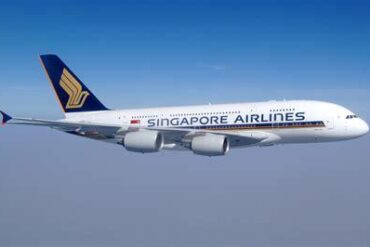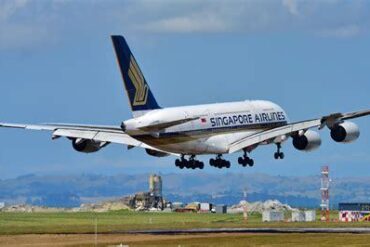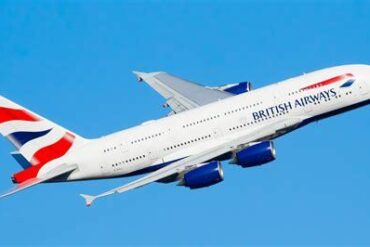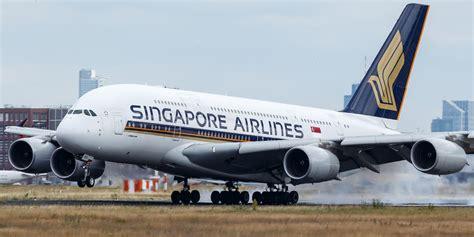
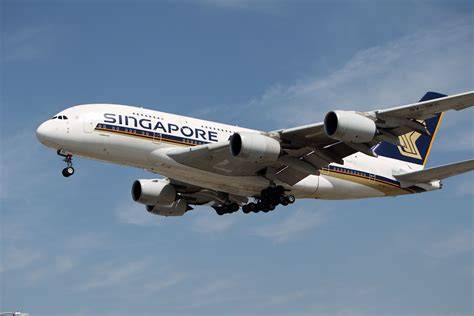
Singapore Airlines is reshaping its long-haul strategy, announcing the temporary suspension of Airbus A380 services to Frankfurt Airport (FRA) for the upcoming winter season, marking a significant shift in the carrier’s European operations. This change, revealed through the airline’s latest schedule submissions to Cirium Diio, ends a decade-long chapter of deploying the 471-seat superjumbo on the Singapore–Frankfurt corridor, a route served daily since 2012. Originally, the A380 connected Singapore Changi Airport (SIN) to FRA and even extended to New York JFK until 2023, after which it became a direct European service. The winter suspension signals a strategic reallocation of resources as the carrier adapts to shifting demand patterns and operational priorities.
The final A380 departure from Singapore to Frankfurt is set for October 24, 2026, coinciding with the closing days of the Northern Hemisphere’s summer IATA slot season. Following this, the Airbus A380 will be replaced by the Boeing 777-300ER, which offers 264 seats. While this represents a 44% reduction in passenger capacity on the SIN–FRA route, the 777-300ER compensates with greater freight capabilities. Considering Singapore Airlines’ full suite of Frankfurt services, overall capacity drops by only 14%, reflecting a calibrated approach to maintaining market presence while optimizing aircraft utilization. The move also comes as travelers increasingly weigh alternative routing options, with the ongoing geopolitical tensions in the Middle East prompting some to prefer Southeast Asia as a transit hub.
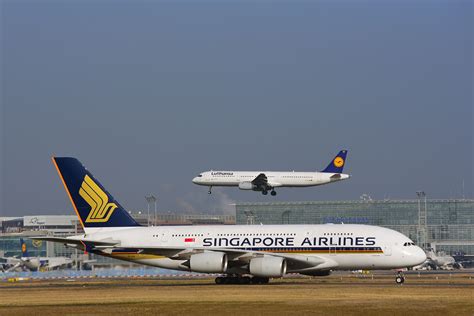
Strategic Reallocation to Melbourne Strengthens Asia-Pacific Presence
While the A380 temporarily bows out from Frankfurt, the aircraft’s redeployment to Melbourne Airport (MEL) marks another calculated adjustment in Singapore Airlines’ global network. Historically, the carrier operated the superjumbo to Melbourne between 2009 and 2020, returning briefly in 2023. After a two-year hiatus, the A380 will resume operations on the SIN–MEL route from late March 2026. The decision to pivot the aircraft from Dubai to Melbourne highlights the airline’s flexible approach to fleet management, optimizing aircraft where high-capacity demand persists during the northern winter.
The new winter schedule ensures daily A380 services between Singapore and Melbourne, departing SIN at 1:45 AM and returning from MEL at 4:40 PM local times. This deployment is not merely a substitution; it reflects broader market intelligence indicating strong seasonal traffic in the Asia-Pacific corridor, especially for premium cabins. With flights to Dubai still maintained for the A380, the extension to Melbourne underscores a nuanced balancing act, distributing the superjumbo across routes where it maximizes revenue and meets passenger expectations.
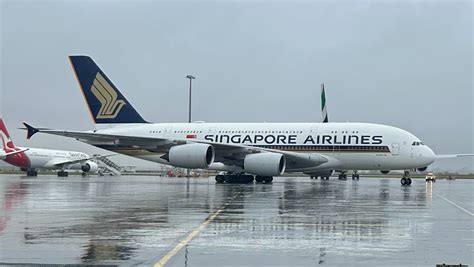
Winter 2026/2027: A380 Operations Across Multiple Key Hubs
From October 25, 2026, to March 27, 2027, Singapore Airlines plans an expansive 1,456 departures on the A380 from its SIN hub, averaging nine to ten daily outbound services. This represents a significant 29% increase from the 1,131 departures in the 2025/2026 northern winter, reflecting the airline’s commitment to leveraging its largest aircraft on routes where demand and stage length justify its use. Although average stage lengths will decrease from 3,899 nautical miles (7,221 km) to 3,536 nautical miles (6,549 km), routes including Dubai, Melbourne, Auckland, Delhi, London Heathrow, Mumbai, Shanghai Pudong, and Sydney will continue to benefit from the superjumbo’s capacity and luxury offerings.
This strategic deployment highlights Singapore Airlines’ dual objectives: maintaining strong connectivity on high-volume long-haul routes while adjusting capacity to match seasonal and market-specific demand. The winter reassignment of A380 services is not simply a temporary measure; it demonstrates the airline’s adaptability in the face of changing travel patterns and ongoing global uncertainties, particularly in regions where geopolitical factors influence passenger routing choices.
Passenger Impact and Market Implications
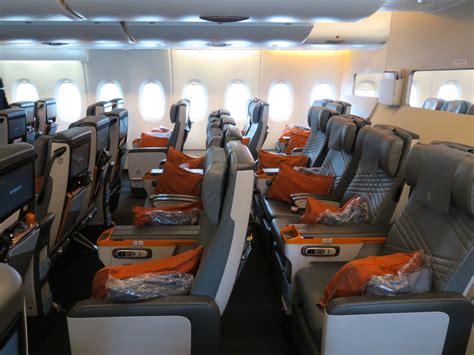
The temporary removal of the A380 from Frankfurt means passengers will experience fewer seats on this premier European route, although the airline mitigates this through additional services on alternate flights. The Boeing 777-300ER, while smaller, offers enhanced cargo capabilities, signaling Singapore Airlines’ intent to balance passenger revenue with freight demand—a vital component of profitability on long-haul flights. Meanwhile, the continued A380 presence in Melbourne ensures that premium travelers in the Asia-Pacific region retain access to the airline’s flagship aircraft and its associated luxury experience, including suites and business-class enhancements that have become hallmarks of Singapore Airlines’ brand.
As the aviation landscape evolves, carriers like Singapore Airlines must constantly refine fleet allocations, a process influenced by slot availability, route profitability, and customer expectations. The winter A380 schedule revision represents a strategic pivot, underscoring the airline’s commitment to operational excellence and market responsiveness. With Frankfurt temporarily downgauged and Melbourne elevated, Singapore Airlines demonstrates a sophisticated balancing act between European and Asia-Pacific priorities, leveraging its fleet’s versatility to maximize both efficiency and passenger satisfaction.
In conclusion, the temporary suspension of Airbus A380 services to Frankfurt and redeployment to Melbourne illustrates Singapore Airlines’ nimble fleet strategy. By adjusting its superjumbo operations to reflect seasonal demand and strategic priorities, the airline not only safeguards capacity on key routes but also reinforces its market-leading presence in both Europe and the Asia-Pacific region. Passengers and aviation enthusiasts alike will be closely watching the return of the A380 to Frankfurt in March 2027, a move that signals the resumption of high-capacity, luxury-driven services as global travel rebounds and seasonal demand patterns normalize.