Aer Lingus, the flag carrier of Ireland, is stepping back from five destinations as part of a wider effort to repair its finances. The airline, a member of the International Airlines Group (IAG), has confirmed that it will exit Las Vegas, Denver, Minneapolis, Barbados, and Split, with some routes already closed and others set to end in the coming months. The decision marks a sharp reversal for an airline that spent much of the past decade expanding across the Atlantic, and it signals that the carrier’s next phase will be defined by discipline rather than growth. For travelers, the consequences are immediate and practical: fewer booking options on transatlantic leisure routes, the need to rebook or seek refunds, and fewer direct connections from Dublin to popular US and Croatian holiday markets.
Aer Lingus Flight Cancellations by Destination and Date
The timings of these withdrawals vary by route, and the airline has not presented them as a single package, which has left some passengers confused about exactly when service ends. Las Vegas will lose its Aer Lingus link on December 3, 2026, when the last scheduled service departs. Denver’s final flight is set for September 2026, and Minneapolis will see its last Aer Lingus departure in October 2026. Split is scheduled to fall away in September 2026, ending a summer service that has faced heavy direct competition. Barbados has already disappeared from the network altogether, with the last Dublin-bound flight operating in May 2026. Use the following list if you’re checking whether your booking is affected:
- Las Vegas (LAS) – final Aer Lingus flight on December 3, 2026
- Denver (DEN) – service ends in September 2026
- Minneapolis (MSP) – service ends in October 2026
- Split (SPU) – service ends in September 2026
- Barbados (BGI) – route already closed in May 2026
Why Aer Lingus Is Exiting Three US Markets
The United States has been the most visible casualty of Aer Lingus’s network rethink. All three American cities on the exit list—Denver, Las Vegas, and Minneapolis—were added to the airline’s network in 2024, a period when transatlantic demand appeared strong and Dublin’s position as a US gateway looked unassailable. Las Vegas launched as a winter seasonal service operating three times per week, while Denver arrived as a summer seasonal route with four weekly flights. Minneapolis was more ambitious still, initially running four weekly flights from Dublin on the Airbus A330 before scaling to a daily service and switching to the longer-range Airbus A321XLR to keep the route alive. The scale of that investment makes the retreat more striking, because Aer Lingus did not simply try these routes and walk away; it adjusted aircraft, frequency, and seasonality in an attempt to make them work.
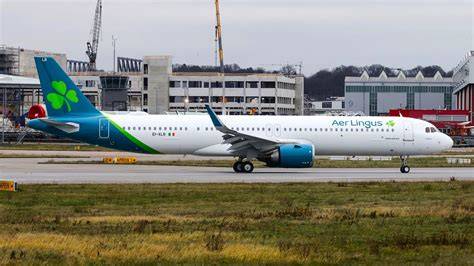
Passenger figures help explain the U-turn. US Department of Transportation data for the 12 months through March 2026 showed that Aer Lingus filled just 61.8% of its seats on flights to Minneapolis, 64.1% on Denver services, and 71.3% on Las Vegas flights. Those load factors are far below what a carrier needs to justify long-haul capacity, particularly when operating costs are rising and the airline is trying to demonstrate margin discipline to its parent group. The pattern suggests that these three US routes attracted interest but not enough sustained demand to cover the cost of flying them year-round or even seasonally. Earlier this year, Aer Lingus also closed its Manchester base and dropped several UK departures, including services from Manchester to New York JFK and Orlando, though it continues to serve both cities from Ireland.
Barbados and Split: Two Very Different Withdrawals
Barbados followed a more convoluted path than the US routes. Aer Lingus first began serving the Caribbean island in 2021 with three weekly winter seasonal flights from Manchester. When the Manchester base closed earlier this year because of poor performance, the Barbados route went with it. The airline then introduced a replacement from Dublin, launching three weekly flights to Bridgetown on March 31 using the A321XLR. Covering roughly 3,485 nautical miles (6,454 km) each way, it ranked among the carrier’s longest scheduled XLR services and its second-longest single-aisle operation, with the westbound leg scheduled for nine hours and ten minutes. But the Dublin service was never intended to be permanent; it ran for an eight-week spring schedule from March 31 to May 31, designed mainly to accommodate passengers displaced by the Manchester closure. British Airways, Aer Lingus’s IAG sister airline, already dominates the UK–Barbados market with daily flights from London Heathrow and London Gatwick, leaving little room for a niche Irish service.
Split tells a different story. The Croatian coastal city is one of Europe’s most competitive summer markets, and Aer Lingus found itself squeezed by Ryanair and Croatia Airlines, both of which run heavy, direct competition on the route. With two aggressive low-cost and flag carriers contesting the same seasonal demand, Aer Lingus’s presence became difficult to defend, and the September 2026 exit reflects a straightforward commercial calculation rather than a strategic retreat from the region.
The Financial Pressure Behind the Aer Lingus Cuts
The route exits sit inside a broader cost-cutting program that Aer Lingus announced in July. The airline reported a net loss of around $38.1 million (€34 million) in the first half of 2026, and its operating margin turned negative, reaching minus 2.9% in that period. That follows an operating margin of 11.1% in 2025, below the 12% to 15% range the carrier says it needs to sustain over the medium term, and well behind IAG stablemates British Airways and Iberia, both of which exceeded 15%. The plan includes cutting up to 500 jobs and reducing capacity by 6%, with network adjustments designed to remove underperforming routes rather than trim service across the board.

The carrier’s fleet plans reinforce that message. Aer Lingus intends to reduce its use of two A330s during the winter season and four Airbus A320s during the peak summer period in 2027, allowing it to match capacity to demand while bringing costs under control. That flexibility matters because improved financial performance could position the airline to benefit from future IAG widebody investment, including 21 A330-900 aircraft due for delivery between 2028 and 2033. For now, though, the airline’s priority is margin recovery, and the five destination exits are the clearest expression of that intent.
What the Aer Lingus Cancellations Mean for Travelers
Passengers holding bookings on affected routes should expect proactive contact from Aer Lingus, with rebooking options through Dublin’s remaining US gateways or full refunds where alternatives aren’t suitable. Travelers planning trips to Las Vegas, Denver, or Minneapolis beyond the final flight dates will need to explore connections via other European hubs or US carriers, while those eyeing Barbados should look to British Airways from London or alternative Caribbean routings. Split-bound holidaymakers still have Ryanair and Croatia Airlines serving the route, which may soften the blow but could also push fares higher as competition thins. The bigger picture is that Aer Lingus’s transatlantic map is shrinking, and anyone relying on Dublin as a convenient US gateway should confirm schedules carefully before booking.