Allegiant Air has built its reputation around connecting smaller and leisure-focused markets with popular vacation destinations, but its network has never been static. Between 2016 and 2026, the ultra-low-cost carrier stopped serving 35 U.S. airports, reshaping where passengers could find its low-fare flights. Some of the changes involved major airports that once handled thousands of Allegiant departures, while others disappeared after only a handful of seasonal services.
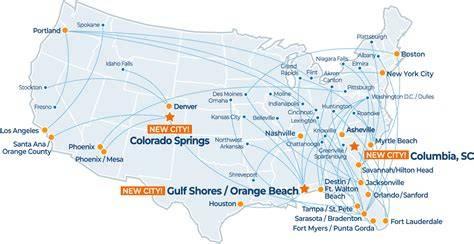
The scale of those changes becomes clearer when Allegiant’s historical schedule is examined alongside its current network. Cirium Diio data indicates that the airline has scheduled flights to 123 airports between now and May 2027, with its largest departure bases including Orlando Sanford International Airport, Tampa St. Petersburg, Punta Gorda, Phoenix Mesa, and Las Vegas. Yet the list of airports no longer served reveals an equally important side of Allegiant’s strategy: routes can disappear when demand, costs, aircraft availability, or competitive conditions change.
The 35 discontinued airports collectively accounted for more than 51,400 Allegiant departures since 2016. However, activity was heavily concentrated among a small group of airports. The ten most-served airports that have now disappeared from Allegiant’s network generated more than three-quarters of those departures, demonstrating that the carrier’s withdrawals were not simply a collection of tiny experiments.
Allegiant Air’s Biggest Airport Withdrawals
Los Angeles International Airport (LAX) stands out by a substantial margin. Allegiant operated there from 2009 through 2026 and recorded approximately 13,391 departures since 2016. Oakland International Airport (OAK) followed with 5,922 departures, while Cleveland Hopkins International Airport (CLE) accounted for 3,655. San Diego International Airport (SAN), Baltimore, and Norfolk also ranked among the most heavily served airports that Allegiant subsequently left.
These withdrawals are particularly significant because several were relatively recent. Six of the ten largest airports on the discontinued list last received Allegiant service in either 2025 or 2026. That means the carrier’s network transformation is not simply a historical footnote; passengers have been losing access to established Allegiant markets quite recently.
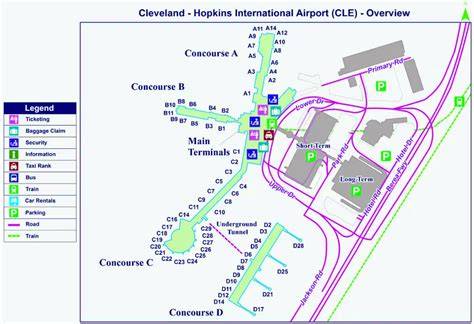
Cleveland provides an interesting example of how Allegiant can abandon a major airport without completely abandoning a surrounding market. The airline ended service at CLE in 2022, but it continues to operate from Akron-Canton Airport (CAK), approximately an hour away by car. Nine of the 15 routes Allegiant once operated from Cleveland are available from Akron-Canton, illustrating how airport selection can change while the underlying regional market remains strategically important.
The Full List of Allegiant’s 35 Discontinued Airports
The ten largest airports by historical departures include Los Angeles, Oakland, Cleveland, San Diego, Baltimore, Norfolk, Reno, Raleigh-Durham, Palm Springs, and Grand Junction. Together, these airports represent the overwhelming majority of Allegiant’s discontinued departures since 2016.
The next group includes Minneapolis-St. Paul International Airport (MSP), El Paso International Airport (ELP), Albuquerque International Sunport, San Antonio International Airport, Owensboro, Ogden-Hinckley, Youngstown-Warren, Luis Muñoz Marín International Airport in San Juan, Milwaukee Mitchell International Airport, and Ogdensburg International Airport.
Allegiant ended MSP service in 2025 after operating eight routes, including flights to Asheville, Destin-Fort Walton Beach, Knoxville, Los Angeles, Phoenix Mesa, Punta Gorda, Sarasota, and West Palm Beach. The airport’s importance to Allegiant is changing again, however, following the carrier’s acquisition of Sun Country Airlines. As the operations are eventually integrated, MSP is expected to become a significantly more important airport within the broader airline group.
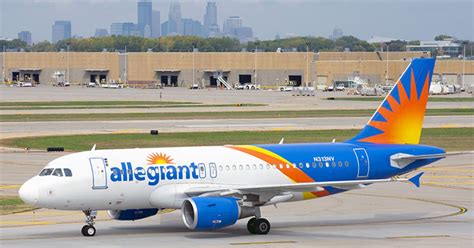
Allegiant’s Smaller and Short-Lived Airport Markets
The final 15 airports demonstrate another side of Allegiant’s network strategy. These airports collectively produced only around 3,600 departures, roughly 73% fewer than Los Angeles alone. Several markets were served for only a short period, while others supported limited seasonal flying.
The group includes Tucson, Gulfport-Biloxi, State College, Honolulu, Wilkes-Barre/Scranton, Redmond, Casper, Montrose, Santa Rosa, Columbia, Amarillo, Burlington, Jackson Hole, St. George, and Anchorage.
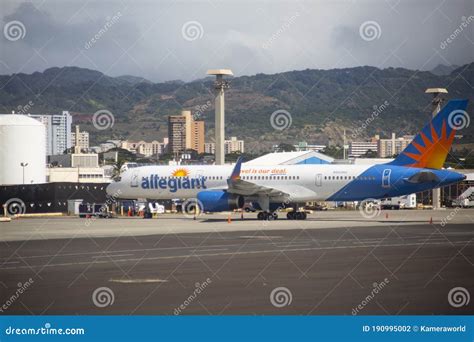
Honolulu International Airport is particularly notable because Allegiant once used Boeing 757-200 aircraft to connect Hawaii with several mainland airports. The carrier’s Hawaii experiment ultimately disappeared from the network, showing how even distinctive long-haul leisure markets can prove difficult to sustain.
Anchorage was an even shorter experiment. Allegiant served Anchorage International Airport in 2019, recording only 31 departures. Data from the U.S. Department of Transportation indicated that the relevant service filled just 67.2% of available seats, a weak result for a leisure-oriented airline that depends heavily on strong demand during limited operating periods.
Why Allegiant Air Cancels Airport Service
Airport withdrawals do not necessarily mean that Allegiant has failed in a particular city. The airline’s business model depends on carefully balancing route demand, aircraft utilization, airport costs, seasonal travel patterns, and competitive pressure. A route can appear attractive on paper but become difficult to sustain if passengers do not consistently fill enough seats or if operating economics deteriorate.
The figures from San Juan illustrate this point. Allegiant served Luis Muñoz Marín International Airport from 2016 to 2020, connecting it with Cincinnati, Pittsburgh, Raleigh-Durham, and Orlando Sanford. The Pittsburgh market was particularly weak, with DOT data showing flights only 70% full.
Meanwhile, Allegiant’s overall network load factor from 2021 through 2025 was substantially higher, at 82.1%. The contrast helps explain why airlines continually reassess individual routes rather than treating an entire airport as permanently successful or unsuccessful.
What the 35 Airport Cancellations Mean for Travelers
For travelers, Allegiant’s discontinued-airport list is a reminder that low-cost airline networks can change quickly. A route that has operated for several years may still disappear when the carrier decides its aircraft can generate better returns elsewhere.
The current network remains extensive, with 123 scheduled airports through May 2027, so these cancellations should not be interpreted as a broad retreat from U.S. flying. Instead, they show Allegiant concentrating its operation around markets where its leisure-focused, point-to-point model can work most effectively.
For passengers, the most important lesson is simple: an Allegiant route should never be assumed to be permanent. Airports such as LAX, OAK, CLE, SAN, MSP, and SJU demonstrate how dramatically the airline’s network can evolve. The full list of 35 discontinued airports provides a revealing snapshot of where Allegiant has been—and where it has decided its future flying is better positioned elsewhere.