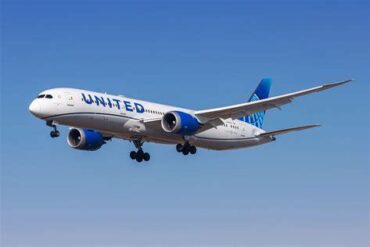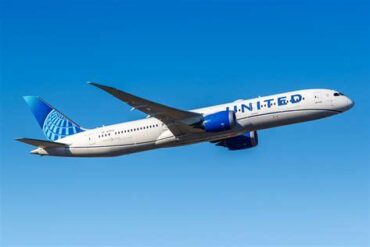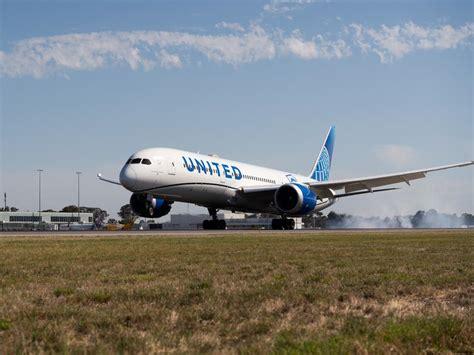
United Airlines has trimmed its second season on the San Francisco–Adelaide Boeing 787-9 route from 49 planned round trips to just 23, cutting roughly two weeks from the front of the schedule and about seven weeks from the back. The service will now run from December 17, 2026, to February 8, 2027, three days a week on Mondays, Thursdays, and Saturdays. For a route that made South Australia’s first-ever nonstop connection to North America when it launched in December 2025, the revision is a sobering signal that prestige and projected economic benefit do not fill seats on a 15-hour Dreamliner mission.
The Open Skies Backdrop That Made SFO–ADL Possible
For decades, flights between the United States and Australia were governed by capacity and frequency restrictions that funneled nearly every service across the South Pacific, with a handful of carriers threading the North Pacific instead. The 2008 US–Australia Open Skies agreement dismantled most of those constraints, freeing airlines to add frequencies, open new city pairs, and deploy widebody capacity wherever they believed demand justified it. The market has since grown substantially. Cirium schedule data shows carriers have filed around 11,295 flights between the two countries in 2026, representing approximately 3.3 million seats — a scale that would have been unthinkable under the old bilateral regime.
Only five airlines currently operate nonstop US–Australia services: United, American, Delta, Alaska, and Qantas. United ranks among the largest, with roughly 3,700 flights and 960,507 seats scheduled this year. Yet the volume is deceptive. Australia remains a thin, seasonally lopsided market relative to the transatlantic or the dense US–Asia corridors, and every new nonstop must fight for a share of a passenger pool that is far smaller than the seat counts suggest.
Four Decades of United in Australia
United’s Australian presence dates to February 1986, when the Chicago-based carrier inherited Pan Am’s Pacific division and with it a web of routes stretching across the ocean. Its first service, Los Angeles to Sydney, departed on February 12, 1986, with Melbourne added at the same time. Early operations relied on Boeing 747s flying routings that often included intermediate stops at Honolulu or Auckland. For a period, United’s LAX–Sydney link was the only nonstop connection between the US mainland and Australia — or New Zealand, for that matter.
The network broadened through the 1990s with Brisbane and San Francisco–Sydney, and for a time United even reached Cairns via Guam, a legacy of Continental Micronesia’s Pacific operation that passed to United after the 2010 merger. That Guam–Cairns service ended on September 26, 2015, a victim of weak financial performance. Today United serves four Australian cities: Sydney from San Francisco, Los Angeles, and Houston; Melbourne from San Francisco and Los Angeles; Brisbane from San Francisco; and Adelaide from San Francisco.
Adelaide Finally Gets Its Nonstop — and Its First Full-Season Test
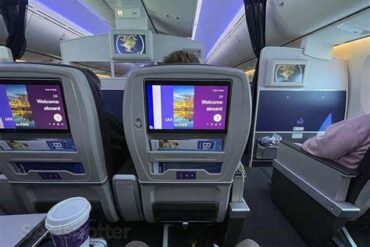
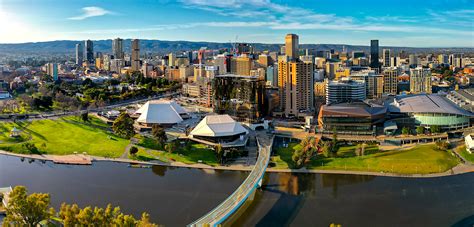
When United launched San Francisco–Adelaide in December 2025, it delivered something South Australia had never had: a scheduled nonstop to North America. Previously, Adelaide passengers bound for the US had to connect through Brisbane, Melbourne, or Sydney. The new service, flown by a Boeing 787-9 configured with 48 United Polaris business seats and 21 Premium Plus seats, covers the distance in nearly 15 hours and instantly became the flagship of the state’s international connectivity. The first season ran from December 11, 2025, to March 26, 2026.
Originally, United planned a longer second season spanning December 3, 2026, to March 25, 2027, still at three weekly frequencies. The latest schedule filing, however, compresses that window to the December 17–February 8 span — a 53.1% reduction that prunes the route precisely where demand is weakest: the post-holiday weeks when South Australia’s summer traffic ebbs and Northern Hemisphere bookings thin out.
Why the Route Wasn’t Filling Up
The economics tell the story clearly. US Department of Transportation data shows United carried 11,778 round-trip passengers across the first season at an average seat load factor of just 52.7% — meaning nearly half of every 787-9 cabin flew empty. Performance peaked at 68.5% during the launch and holiday period, then collapsed to 33.7% in February 2026. Load factor is not the whole picture, since it ignores fare levels, cargo yield, and operating costs, but a month at one-third occupancy on a widebody burning fuel across the Pacific is a loss-making proposition under almost any pricing scenario.
The demand-side story is equally instructive. South Australia welcomed roughly 44,000 visitors from the US in the 2024 financial year, contributing about $81 million to the state economy. The South Australian Tourism Commission projected the route could add $22 million in tourism and freight activity, and then-Tourism Minister Zoe Bettison called the link a “game changer.” Demand for a destination, though, does not automatically convert into enough year-round passengers to sustain a dedicated ultra-long-haul service, particularly when the market is overwhelmingly directional and seasonal.
There is also the matter of public support. Reports indicate the route received financial backing from the South Australian Government, though the full terms of the arrangement have not been made public. Such incentives can bridge the launch gap on a new city pair, absorbing some of the risk of committing a $150 million-plus widebody to a market with no established nonstop. They cannot, however, manufacture passenger demand where the underlying traffic base is insufficient.
What United Says — and What the Schedule Implies
United has not framed the change as a withdrawal. A spokesperson told Aero South Pacific that the airline “regularly make[s] changes to [its] schedule due to aircraft availability, market dynamics and other factors.” That language is standard, and aircraft availability is a genuine constraint: the 787-9s assigned to Adelaide are also the assets United needs for seasonal redeployment, and trimming a struggling winter route frees capacity for markets with firmer bookings. The route remains on sale; it has simply been narrowed to the window where it performs best.
That distinction matters for South Australia. The service has not been cancelled, and the direct connection to the US persists. But a schedule that now ends in early February means the state loses its nonstop precisely during the shoulder months when business travel, university traffic, and inbound visitation would normally build.
The Wider Winter 2026/27 Australian Network
Adelaide is not the only place where United has trimmed. On San Francisco–Brisbane, the carrier is operating five weekly flights in October and November, down from seven during the same period last year, before returning to daily service from December. Overall, United has scheduled around 989 flights from the US to Australia for the northern winter, offering approximately 248,640 one-way seats.
The fuller picture shows a network optimized around proven demand: San Francisco–Sydney running daily with up to twelve weekly in December, February, and March; San Francisco–Melbourne daily; Los Angeles–Sydney daily; Los Angeles–Melbourne moving to daily from December after a three-weekly start; and Houston–Sydney returning daily from October 24. Combined with American, Delta, Alaska, and Qantas, carriers have scheduled more than 5,200 flights and over 1.4 million seats between the two countries this winter, with Qantas and United accounting for most of the capacity.
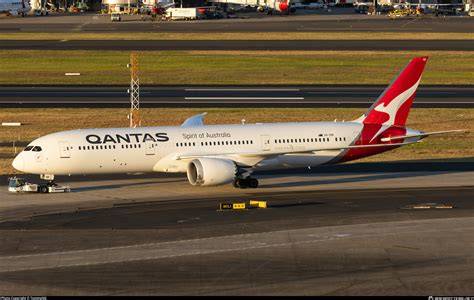
Qantas, meanwhile, is pushing in the opposite direction. On December 29, 2026, it launches Sydney–Las Vegas at three weekly frequencies through March 12, 2027 — targeting a city that was the largest unserved US destination from Sydney, with roughly 51,000 passengers traveling between the two in the twelve months to May 2026, most connecting through Los Angeles or San Francisco. Whether that route outperforms Adelaide’s first season remains an open question, but it illustrates how carriers are probing the same thin market from different angles.
The Structural Risk of New Ultra-Long-Haul Routes
United’s own history offers the cautionary precedent. Its Los Angeles–Brisbane service launched on November 29, 2023, with three weekly flights on a 257-seat 787-9, and was gone within a year. The Adelaide case is gentler — a shortened season rather than a cancellation — but the underlying dynamic is identical: launching a nonstop into a market with no established direct demand means betting expensive widebody capacity on projections that may not materialize.
Ultra-long-haul flying is unforgiving. Aircraft are tied up for the better part of an operating day, crew requirements are demanding, fuel burn is enormous, and the revenue needed to break even demands high yields across both cabins. A 52.7% average load factor with a February trough of 33.7% leaves little room for optimism, particularly when the alternative is redeploying that 787-9 to a route with demonstrable year-round demand.
What the 23-Flight Season Means for South Australia
For Adelaide, the practical consequences are measurable. Travelers planning US trips in late February and March 2027 will need to route through Sydney, Melbourne, or Brisbane again — the exact connecting pattern the nonstop was designed to eliminate. Inbound American visitors, a segment worth roughly $81 million annually before the route launched, lose the convenience that was meant to accelerate growth. Freight capacity, a component of that projected $22 million uplift, shrinks in step.
The strategic question is whether a concentrated December-to-early-February schedule can generate the load factors needed to justify a third season at all. If the shortened window produces strong occupancy, United gains a defensible seasonal product and a template for deploying capacity only when demand supports it. If it does not, the route joins Los Angeles–Brisbane in the airline’s file of experiments that did not survive contact with the market.
For now, the San Francisco–Adelaide 787 route endures as South Australia’s only nonstop to North America — a direct link, a 15-hour journey, and a live case study in how quickly an airline will reshape an ultra-long-haul schedule when the seats refuse to fill.