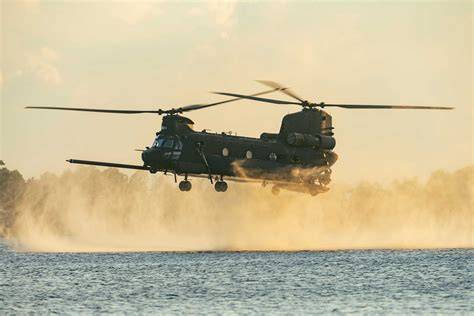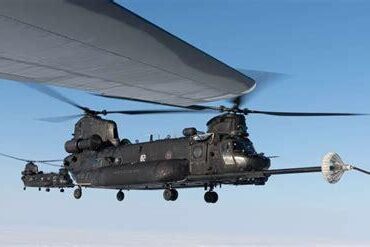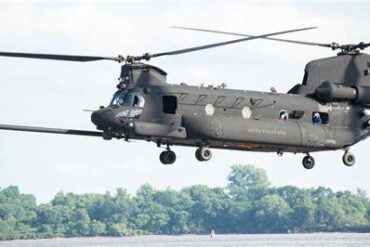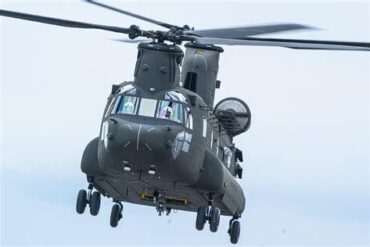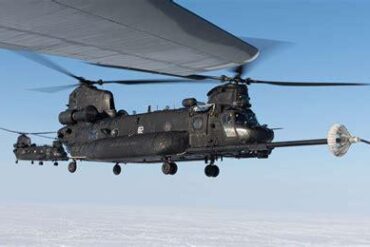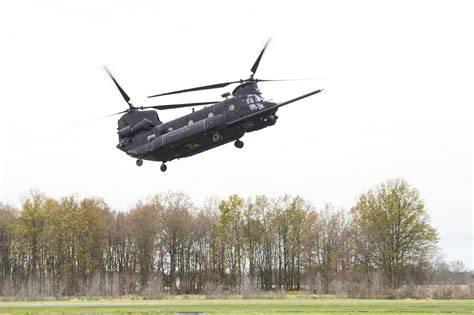
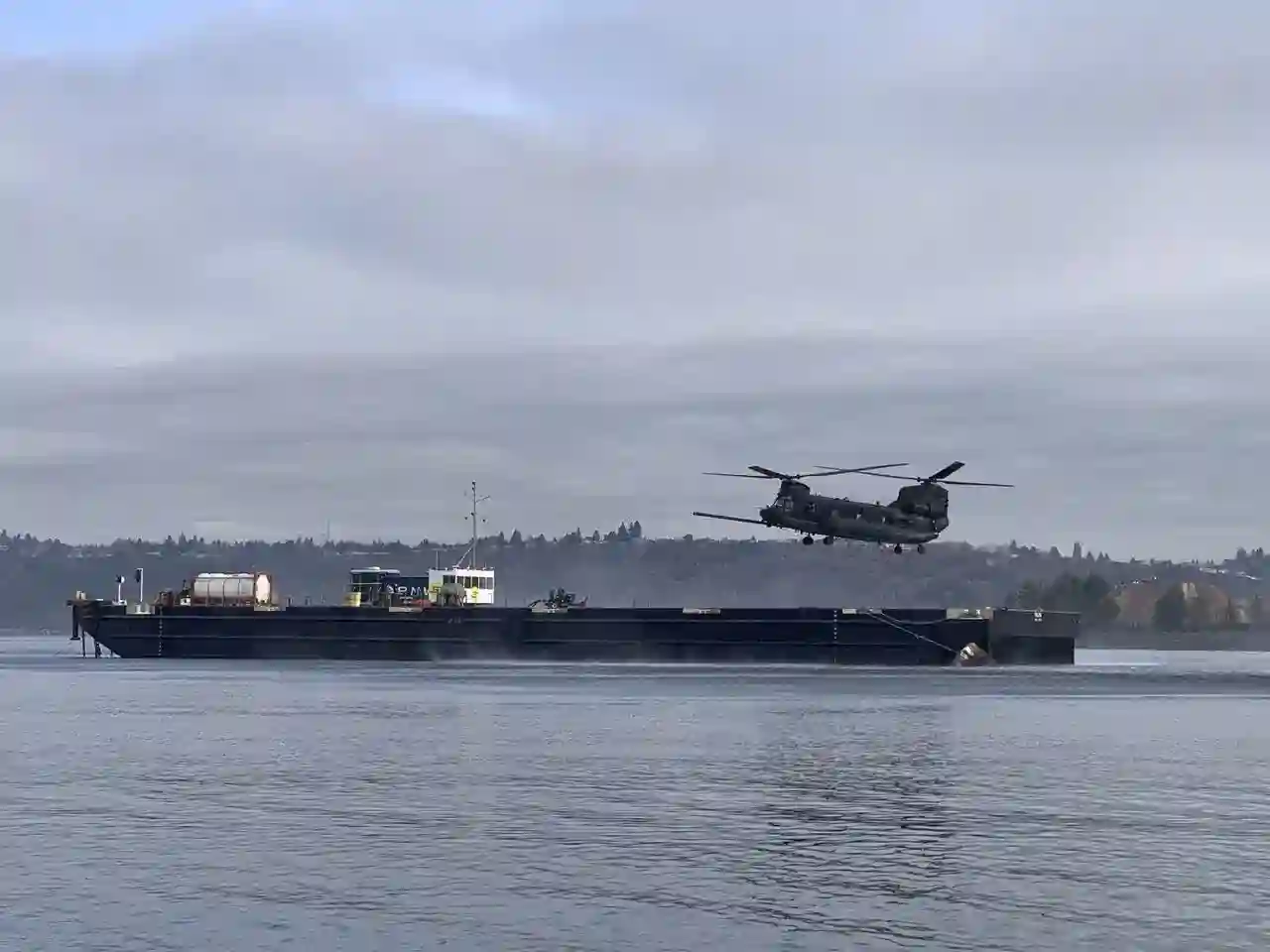
The U.S. military has moved beyond concept slides and simulation decks. In a landmark trial, an Army MH-47G Chinook descended onto an unmanned barge and replenished its supplies without a single sailor standing on the deck, converting autonomous maritime resupply from a white paper idea into demonstrated capability. The receiving platform is an uncrewed vessel fitted with Sea Machines’ SM300 autonomous technology, and the significance lies less in the touchdown itself than in what it removes. Rotorcraft operating far from shore have historically depended on large naval vessels or expensive aerial refueling orbits to extend their reach, and a self-navigating barge parked nearer the fight collapses that dependency in a single stroke.
For planners, the real prize is dispersed logistics. Smaller autonomous barges can be positioned in advance close to the action, holding fuel and matériel that lift aircraft collect on demand, so an MH-47 or CH-47 is no longer chained to the range of a nearby carrier or a vulnerable forward base. Chinooks carry outsized loads and move soldiers at the tactical edge, and freeing those aircraft from distance constraints changes the tempo of an operation as much as the arithmetic of fuel. Flight crews that would otherwise trade payload for fuel could arrive heavier, return later, and revisit a moving supply node they never have to build from scratch.
Sea Machines sells the SM300 as a commercial product in a modular configuration, which means the military build may differ considerably in detail from what commercial operators buy off the shelf. The baseline system pairs an array of sensors, including radar, GPS, and an automatic identification system, with AI algorithms and a camera-driven Computer Vision stack to detect and avoid obstacles. That sensor fusion is what turns a barge into a pier that keeps station and routes itself.
The test also lands amid growing scrutiny of where intelligent machines belong. Public unease about AI in the military has sharpened into legislation, with a proposed AI Guardrails Act in 2026 seeking to define how the technology is used, and the concern is not abstract: coupling automation to weapons or logistics chains demands clear rules, auditable behavior, and humans who can override a misjudgment. Autonomy has an uncomfortable dependency, too. These vessels lean on GPS and datalinks, both of which an adversary can attack with jamming or spoofing, and software that has never failed is rare. A crewless hull carrying fuel is a high-value target if it drifts or goes silent.
Whether the Army scales this into doctrine is a decision about warfighter trust as much as technology. A crew must land on a platform that bobs, shifts, and holds itself steady by machine logic, and any hesitation on a deck is costly. The larger trajectory is visible: in 2026 the Army also landed a Chinook with no human behind the controls using Boeing’s pilotless software. Put the pieces together and an autonomous Chinook meeting an autonomous barge is no longer speculation but an engineering schedule.