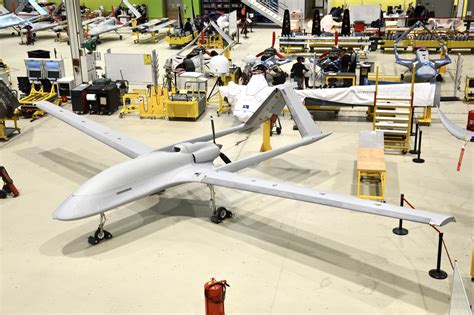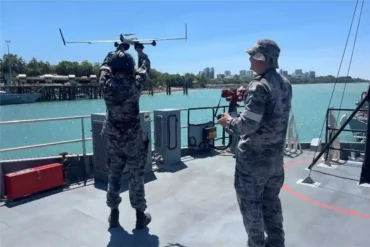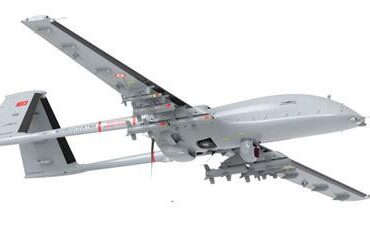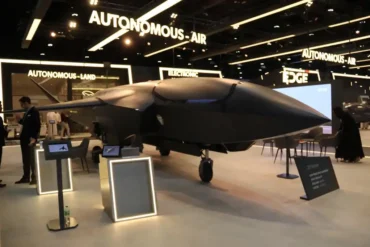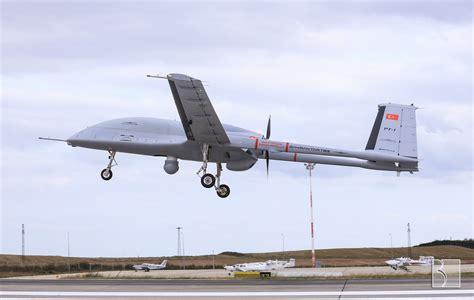
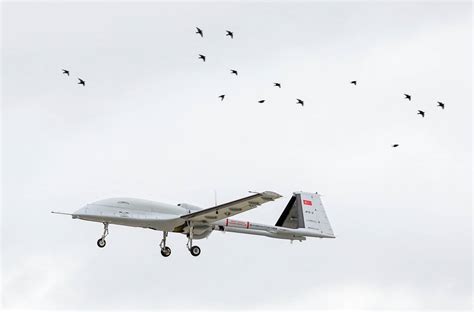
On April 22, 2025, the Turkish defense technology company Baykar marked a monumental achievement with its Bayraktar TB3 Unmanned Combat Aerial Vehicle (UCAV) completing four fully autonomous sorties aboard the TCG Anadolu, the Turkish Navy’s flagship amphibious assault vessel. The flight tests, carried out in the Gulf of Saros, were part of the initiative titled “Fully Autonomous Takeoff and Landing Tests from Short-Runway Vessel.” This successful sequence of sorties underscores a transformative leap in naval aviation and drone warfare capability.
Bayraktar TB3: Redefining Naval Air Operations
Designed to operate from short-runway vessels, the Bayraktar TB3 represents a paradigm shift in drone deployment and maritime defense strategy. Its successful autonomous operations from the moving deck of TCG Anadolu reaffirm its strategic potential in beyond-horizon reconnaissance and strike missions. The aircraft executed all four sorties without any landing assistance equipment, a feat that emphasizes both technological maturity and software robustness.
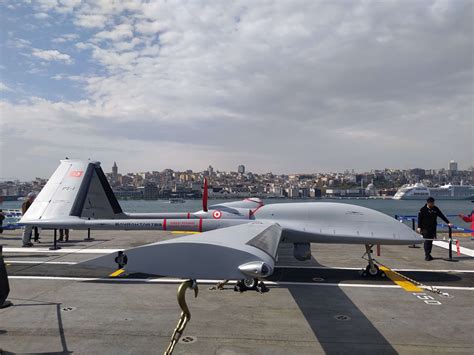
These tests included a sunset sortie, further validating the system’s capability to perform under varying environmental conditions. According to Baykar, the artificial intelligence algorithms embedded within the TB3’s flight control systems were pivotal in achieving full autonomy during the takeoff and landing phases. The real-time decision-making, spatial awareness, and motion prediction provided by the AI allowed precise maneuvering on a dynamic platform.
Advanced Flight Capabilities and Endurance
The Bayraktar TB3 is not only pushing boundaries in terms of autonomy but also in flight endurance and altitude performance. As of the latest data, the TB3 has logged 1,016 hours and 42 minutes of flight time. This includes a record-setting flight on December 20, 2023, where the drone remained airborne for 32 continuous hours, covering 5,700 kilometers — an extraordinary demonstration of endurance that places it among the top tier of long-range UCAVs globally.
This kind of extended air time translates into prolonged surveillance, persistent target tracking, and strategic operational coverage over vast maritime zones, all while being launched from a mobile naval platform.
Pioneering Naval Drone Integration with TCG Anadolu
The historic collaboration between Bayraktar TB3 and TCG Anadolu is revolutionizing naval operations. The TB3’s first-ever flight from the ship took place on November 19, 2024, off the coast of Aksaz, Muğla. Follow-up tests on November 26, 2024, further cemented the reliability of drone-to-ship integration. With these missions, the TB3 became the first UCAV in the world capable of autonomous takeoff and landing from a short-runway vessel, a capability traditionally limited to manned fighter jets with complex catapult and arrestor systems.
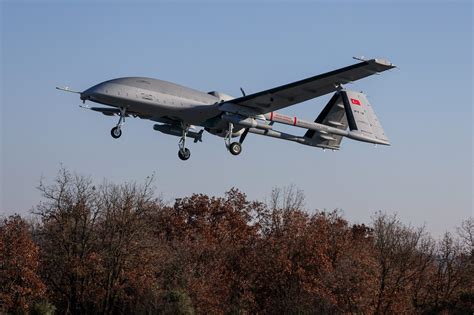
The strategic implications of this innovation are profound. With TCG Anadolu’s capability to carry multiple TB3s, the Turkish Navy gains unmatched operational flexibility, transforming the vessel into a mobile drone carrier capable of conducting ISR (Intelligence, Surveillance, Reconnaissance) and strike missions across regional and international waters.
Precision Strike Capability with Supersonic Missiles
Further solidifying its combat-readiness, the Bayraktar TB3 demonstrated lethal strike capability in live-fire tests conducted on March 25 and March 27, 2025. Equipped with the UAV-122 supersonic missile developed by Roketsan, the UCAV successfully destroyed naval targets, including a 6×6 meter camouflaged platform with a low-altitude strike executed below line-of-sight. The attack was guided by laser designation from a Bayraktar TB2, showcasing cross-platform coordination and network-centric warfare capabilities.
These successful joint strikes between TB2 and TB3 signal a cohesive UCAV ecosystem that allows for distributed, real-time targeting and threat neutralization. The operational flexibility gained through the integration of high-speed, precision-guided munitions significantly boosts Turkey’s defensive and offensive maritime doctrine.
Climbing the Skies with Indigenous Power
The Bayraktar TB3 is powered by the PD-170 turbodiesel engine, an indigenously developed propulsion system by TEI (TUSAŞ Engine Industries). On June 25, 2024, the aircraft completed the High-Altitude System Performance Test, reaching a remarkable 36,310 feet. Although this altitude falls short of the record 45,118 feet set by Bayraktar AKINCI, it nonetheless demonstrates the TB3’s suitability for high-altitude operations.
Such altitude performance enhances its radar horizon, expands its sensor range, and provides a tactical edge in contested airspace. More importantly, the reliance on an indigenous engine mitigates foreign dependency, ensuring strategic autonomy in both production and operational deployment.
ASELFLIR-500: Eyes That Never Blink
On March 26, 2024, Bayraktar TB3 achieved another technological milestone by completing its first flight with the ASELFLIR-500, a next-generation electro-optical reconnaissance and targeting system developed by ASELSAN. This sensor system rivals and, in many aspects, surpasses Western analogs in clarity, target discrimination, and low-light functionality.
The integration of ASELFLIR-500 means the TB3 can engage in multi-spectral imaging, laser designation, and persistent surveillance with unparalleled precision. Such sensor capabilities are crucial for operations in complex, littoral environments where visual confirmation and target acquisition must be both rapid and accurate.
This sensor suite cements the TB3’s role not just as a strike drone but as a multi-role surveillance platform, equally effective in peacetime ISR roles and high-intensity combat situations. The synergy between flight performance, sensor fidelity, and weapon accuracy gives the TB3 unmatched versatility.
A New Maritime Warfare Doctrine
The successful sorties of the Bayraktar TB3 aboard TCG Anadolu signal the emergence of a new doctrine in maritime warfare: drone-centric naval power projection. Unlike traditional aircraft carriers that require expensive, crew-intensive jets and catapult systems, a drone carrier like TCG Anadolu — loaded with autonomous UCAVs like the TB3 — can perform long-range surveillance, deep-strike operations, and maritime interdiction with minimal human presence onboard.
Moreover, the deployment of autonomous drones minimizes risk to human pilots, reduces costs, and enhances operational tempo. The Turkish Navy’s ability to launch a swarm of TB3s from TCG Anadolu means it can blanket vast maritime zones with surveillance and strike coverage, effectively deterring and responding to threats in real time.
Conclusion: A Strategic Leap into the Future
The successful completion of four autonomous sorties by Bayraktar TB3 aboard TCG Anadolu is far more than a technological demonstration; it is a strategic revelation. It showcases Türkiye’s rapidly maturing defense ecosystem, one capable of end-to-end development — from engines and sensors to weapons and software.
In a global defense landscape increasingly defined by unmanned systems, autonomy, and indigenous capability, Baykar’s TB3 stands at the confluence of these transformative trends. As maritime conflicts evolve and peer-to-peer threats loom on the horizon, the ability to project drone power from the sea will no longer be a luxury — it will be a necessity. And in that future, the Bayraktar TB3 and TCG Anadolu will undoubtedly be among the forerunners.