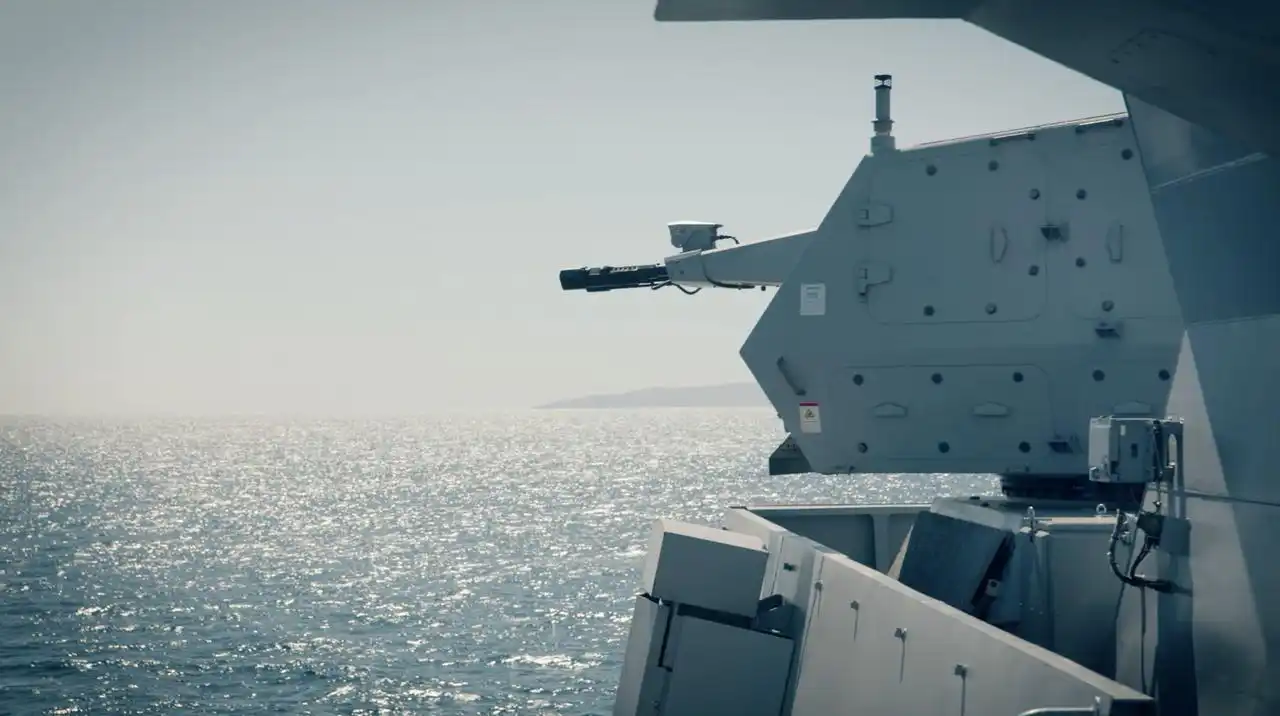
Türkiye’s defense sector has reached a defining moment with the successful live-fire demonstration of the GÖKDENİZ Close-In Weapon System (CIWS) aboard the TCG Istanbul, marking a pivotal advancement in the nation’s naval defense architecture. Conducted on January 9, 2026, the test, publicly announced by Prof. Dr. Haluk Görgün, President of the Defence Industry Agency (SSB), signals a leap forward in Türkiye’s ability to secure its maritime assets against fast-evolving aerial threats.
GÖKDENİZ: Türkiye’s Shield Against Terminal Threats
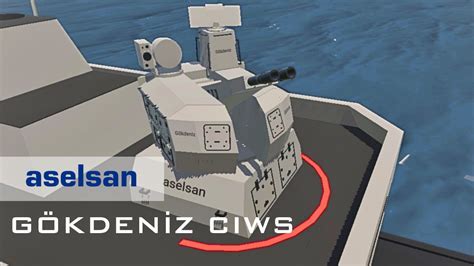
At sea, time is a luxury warships rarely afford. Sea-skimming missiles, unmanned aerial vehicles (UAVs), and low-flying aircraft pose severe, high-velocity threats that leave only seconds for interception. The GÖKDENİZ CIWS, developed by ASELSAN, is Türkiye’s decisive answer to this challenge—an autonomous, radar-guided twin-barrel gun system that forms the last hard-kill layer of naval defense.
The test aboard TCG Istanbul did more than prove firepower; it validated the system’s integration, mechanical stability, and combat readiness aboard an operational platform. Such validation affirms that GÖKDENİZ is not merely a prototype, but a mission-ready platform defense mechanism capable of engaging threats under the dynamic and chaotic conditions of naval warfare.
Strategic Implications of the TCG Istanbul Test
What differentiates this milestone is not just its occurrence, but what it reveals about the broader trajectory of Türkiye’s naval doctrine. The GÖKDENİZ’s live fire was not a lab test—it was a shipboard validation that demonstrates:
- Seamless compatibility with existing ship systems
- Operational stability under real maritime conditions
- Ability to track, engage, and neutralize threats in seconds
While most nations measure capability in theoretical terms, Türkiye now wields operational proof that its warships can protect themselves with an indigenous CIWS capable of functioning even when outer layers of defense are overwhelmed.
System Capabilities: Beyond the Basics
According to ASELSAN’s published data, GÖKDENİZ’s performance metrics are anything but ordinary:
- Effective range: Up to 4 km
- Rate of fire: 1,100 rounds per minute via twin 35 mm automatic cannons
- Targeting: Advanced tracking radar and electro-optical sensors
- Operational modes: Autonomous, manual, and standalone for degraded environments
These specifications elevate GÖKDENİZ from a gun platform to a multi-sensor, reactive defense system designed to function in the most electromagnetically cluttered and tactically compressed conditions modern warships endure.
The Ammunition Edge: ASELSAN’s ATOM 35 ABM
At the heart of GÖKDENİZ’s destructive capability is the ATOM 35 airburst ammunition—a sophisticated munition that revolutionizes naval close-in defense. Unlike conventional rounds, ATOM 35 is:
- Rotationally stabilized
- Time-programmable
- Base-fuzed, enabling precise detonation at optimal proximity
With a muzzle velocity of 1,020 m/s, these rounds can project lethal fragment patterns at pinpoint locations. Against sea-skimming threats—where impact probabilities are low due to erratic motion and low radar visibility—the ATOM 35’s near-miss lethality becomes essential.
This level of control means that even without direct hits, fragments can penetrate missile skin, disrupt guidance, and cause detonation—effectively neutralizing threats that would otherwise breach traditional defenses.
Live Fire Geometry: The 22-Second Kill Window
Consider this: At a closing speed of 180 m/s, a missile entering the 4 km range of GÖKDENİZ gives the system about 22 seconds to detect, track, classify, and destroy the threat. In this ultra-compressed timeline, human response is no longer viable. The system must act autonomously.
This is where GÖKDENİZ’s sensor fusion, automated fire control, and autonomous kill chain become essential. The live-fire test proves this chain is not theoretical—it’s operational.
Strengthening Türkiye’s Strategic Autonomy
The importance of an indigenous CIWS cannot be overstated. Many NATO and allied navies still rely on foreign-supplied systems like Phalanx or Goalkeeper. Türkiye’s GÖKDENİZ CIWS, however, was developed, tested, and validated domestically—cementing Türkiye’s position as one of the few nations capable of delivering such advanced naval defense systems independently.
Prof. Dr. Görgün’s description of the event as ushering in a “new period” in naval air defense reflects Türkiye’s ambitions: no longer a consumer of defense technology, but a producer and exporter. The system’s reported deployment across multiple Turkish platforms and its presence in the inventories of three foreign nations further confirms its export viability and industrial maturity.
NATO Alignment and Regional Deterrence
The broader implication lies in the geopolitical theater. With growing maritime tensions across the Eastern Mediterranean, Black Sea, and Aegean, Türkiye’s CIWS capability becomes more than a technical win—it is a strategic asset.
By integrating GÖKDENİZ aboard frontline vessels like the Istanbul-class frigates, Türkiye enhances its ability to:
- Protect maritime trade routes
- Enforce exclusive economic zones (EEZs)
- Deter hostile force projection in contested waters
In NATO terms, this means increased fleet survivability, mission assurance, and interoperable defense capabilities that bolster allied formations during joint operations.
Export Prospects and Industrial Diplomacy
The confirmation that three other countries have adopted GÖKDENİZ opens another dimension: defense-industrial diplomacy. As nations seek plug-and-play solutions for naval survivability, Türkiye now positions itself as a CIWS supplier—offering not just platforms, but combat-proven solutions with global applicability.
This export potential supports:
- Allied fleet modernization
- Enhanced regional partnerships
- A diversified Turkish defense economy
The system’s modularity and compatibility with varied combat management systems make it a viable choice for mid-tier navies aiming to leapfrog into the high-end defense domain without dependency on US or European suppliers.
GÖKDENİZ in the Blue Homeland Doctrine
The successful deployment and validation of GÖKDENİZ must also be understood through the lens of Türkiye’s “Mavi Vatan” (Blue Homeland) strategy—a maritime doctrine that emphasizes active defense of national interests across Türkiye’s adjacent seas.
GÖKDENİZ’s role in this framework is both tactical and symbolic. It provides:
- Tactical capability to defend high-value assets in littoral and open-sea environments
- Strategic narrative of self-reliance, projecting Türkiye’s emergence as a regional maritime power
Conclusion: Seconds Matter, and GÖKDENİZ Delivers
In an era where maritime threats evolve faster than treaties, Türkiye has demonstrated that its defense industry can field and deploy systems that operate in real-world conditions, not just simulations.
The GÖKDENİZ CIWS, with its:
- 4 km effective range
- 1,100 rounds/minute firepower
- Autonomous kill-chain execution
- Smart programmable ammunition
…represents a decisive capability for warships operating in high-threat environments. The live fire test aboard TCG Istanbul isn’t just a technical demonstration—it’s a strategic inflection point.
By closing the final seconds of vulnerability with domestic precision and operational maturity, Türkiye reinforces its role as a credible naval power and a resilient partner within NATO’s evolving maritime security architecture.