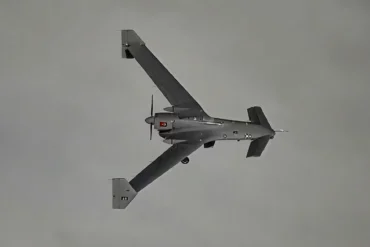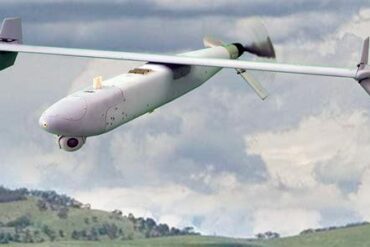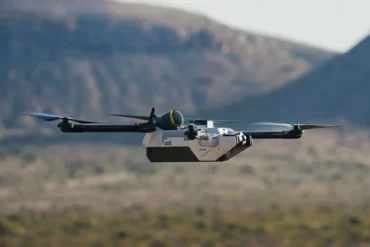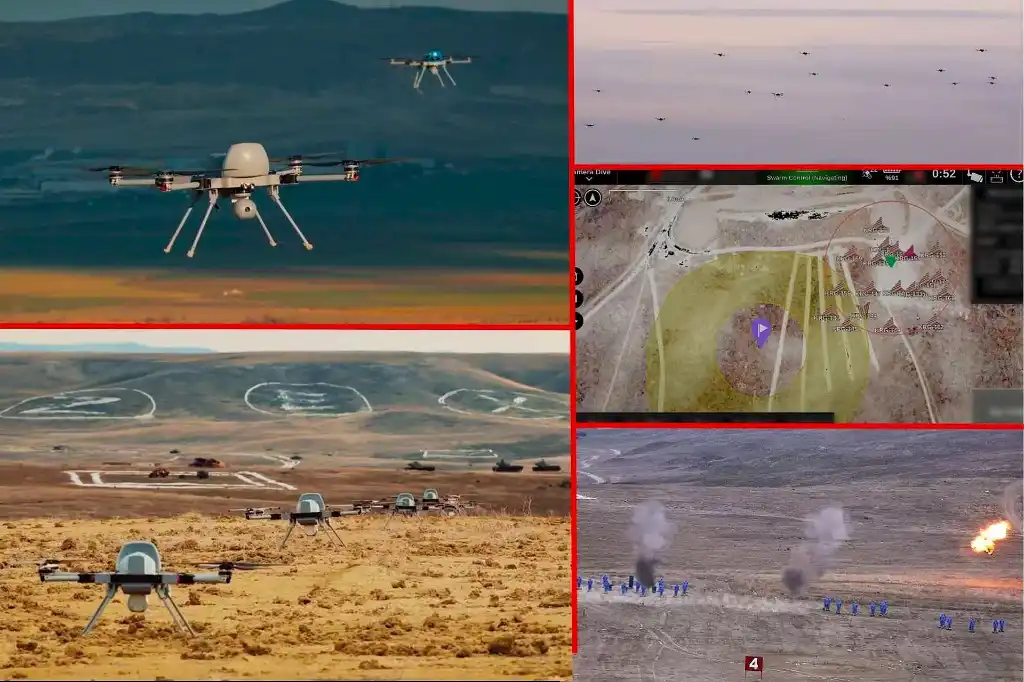
Türkiye has crossed a decisive threshold in autonomous warfare after STM successfully executed the country’s first live-fire drone swarm attack, deploying 20 KARGU loitering munitions in a single coordinated engagement. Conducted under real detonation conditions rather than simulation, the trial validated domestically developed swarm intelligence and confirmed that multiple autonomous strike systems can operate as a single, lethal formation. For modern battlefields increasingly shaped by massed drones, this event marks the moment when swarm warfare in Türkiye moved from theory into proven operational reality.
Announced on January 27, 2026, the test demonstrated that swarm-enabled loitering munitions are no longer confined to laboratory environments or scripted demonstrations. STM confirmed that all 20 KARGU systems achieved direct hits on designated targets, showcasing synchronized lethality under combat-realistic conditions. The achievement places Türkiye among a small group of nations that have successfully conducted live-ammunition swarm attacks, a distinction that carries strategic weight in an era defined by autonomy, artificial intelligence, and contested electromagnetic environments.
Beyond the headline, the trial illustrates how rapidly unmanned warfare is evolving. Individually, loitering munitions have already altered tactics from Ukraine to the Middle East. When networked into intelligent swarms capable of autonomous decision-making, they represent a qualitatively different threat: faster, harder to disrupt, and designed to overwhelm defensive systems through coordination rather than sheer numbers.
Live-Fire Validation Under Combat-Realistic Conditions
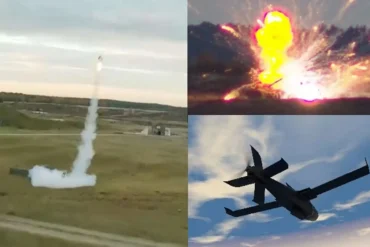
The live-fire swarm exercise was conducted at the General Nahit Şenoğul Firing and Training Area in Polatlı, Ankara, a range typically reserved for high-intensity weapons trials. STM emphasized that the event involved actual warhead detonations, not simulated effects or proxy targets. Visual material released afterward showed multiple impact points struck nearly simultaneously, underscoring that the swarm was executing a genuine attack sequence rather than a choreographed flyover.
The test environment matters. Swarm concepts often falter when exposed to real-world variables such as blast effects, debris, timing drift, and signal degradation. By validating swarm performance during live detonations, STM demonstrated that its algorithms can maintain coordination even as the battlespace changes in milliseconds. This ability to preserve synchronization under stress is essential if swarm systems are to function in contested environments rather than controlled demonstrations.
Single-Operator Control and Autonomous Mission Execution
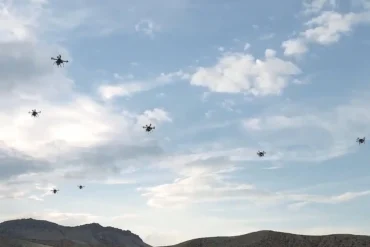
One of the most striking elements of the trial was the command structure. STM stated that all 20 KARGU loitering munitions were deployed and controlled by a single operator, relying on fully indigenous swarm intelligence software. After launch, the swarm autonomously navigated to the mission area, executed formation management, and divided itself into multiple sub-swarms without further manual intervention.
Once in the target zone, the swarm reportedly split into three distinct attack elements, each assigned to a separate objective. On a single operator command, these sub-swarms conducted a synchronized strike, hitting their respective targets nearly simultaneously. This compression of the decision cycle is critical. Instead of managing each platform individually, the operator authorizes intent, while the swarm handles execution, timing, and deconfliction.
Such an approach mirrors broader trends in autonomous warfare, where human oversight remains decisive but tactical execution is increasingly delegated to machines capable of reacting faster than human operators. In practical terms, this reduces manpower requirements while increasing strike tempo, a combination that is highly attractive to modern armed forces.
Distributed Swarm Intelligence and Survivability by Design
At the core of the demonstration was STM’s distributed swarm architecture, a design choice that prioritizes resilience over centralized control. According to STM, the KARGU swarm does not rely on a single command node. Each loitering munition can make mission-level decisions while contributing to the collective objective through inter-UAV communication.
This matters because centralized systems tend to fail catastrophically when links are jammed or nodes are destroyed. Distributed swarms, by contrast, are built to degrade gracefully. STM explicitly states that the swarm can continue its mission even if individual drones become inoperative, a feature that directly addresses the realities of modern air defenses and electronic warfare.
The company highlighted a range of autonomous capabilities exercised during the trial, including real-time communication between UAVs, collision avoidance, dynamic formation control, target detection and classification, in-swarm task sharing, and autonomous target prioritization. These functions allow the swarm to adapt to changing conditions without waiting for operator input, a prerequisite for operating inside heavily contested airspace.
Electronic Warfare Resilience and GNSS-Denied Navigation
Electronic warfare is often the Achilles’ heel of unmanned systems, and STM appears keenly aware of that vulnerability. The company emphasized that the swarm architecture incorporates CRPA-enhanced anti-jam navigation alongside GNSS-denied navigation supported by KERKES integration. This suggests a design philosophy focused on operating in environments where satellite navigation is unreliable or actively disrupted.
For defenders, this is an uncomfortable development. Many counter-UAS strategies rely on jamming or spoofing navigation signals to neutralize drones without expending kinetic interceptors. A swarm that can maintain cohesion and mission effectiveness under such conditions significantly raises the bar for defensive systems. It forces adversaries to invest in layered defenses, faster detection, and more robust interception methods, all of which carry substantial cost.
Tactical Implications of Sub-Swarm Attacks
The operational logic demonstrated during the test has immediate tactical relevance. By dividing into sub-swarms and striking multiple targets simultaneously, the KARGU swarm imposes a saturation dilemma on defenders. Short-range air defenses, small-arms fire, and electronic warfare assets all have finite capacity. When threats arrive from multiple axes at once, those limits are quickly exposed.
With anti-personnel warheads fitted for the trial, the demonstrated configuration is well suited for suppressing exposed positions, disrupting troop concentrations, or denying movement corridors. In complex terrain such as urban areas or trench networks, simultaneous strikes can collapse defensive cohesion before units have time to react or reposition.
STM’s description of payload-aware tasking hints at future evolution. If mixed warhead types are integrated into a single swarm, autonomous systems could allocate drones to targets based on suitability, engaging personnel, light vehicles, or fortified positions in a single coordinated wave. This kind of adaptability would further blur the line between traditional fire support and autonomous strike packages.
Strategic Significance for Türkiye’s Defense Industry
The presence of Prof. Dr. Haluk Görgün, Secretary of Defence Industries of the Republic of Türkiye, alongside senior Turkish Land Forces commanders, underscores the strategic importance attached to the trial. STM reported that the swarm capability received full marks from observing authorities, a signal that the system is being evaluated not merely as a technology demonstrator but as a potential operational asset.
STM General Manager Özgür Güleryüz described the achievement as a turning point, framing swarm UAVs as a game-changing element of modern warfare. His remarks emphasized that conducting a live-fire swarm attack elevates Türkiye’s standing in autonomous systems, artificial intelligence, and future combat concepts. In a global defense market increasingly focused on unmanned solutions, such demonstrations carry significant export and deterrence value.
By demonstrating a working swarm under real combat conditions, Türkiye strengthens its position as a leading developer of unmanned combat technologies. This is not merely about prestige. It signals to partners and rivals alike that Türkiye is investing in capabilities designed to shape future battlefields rather than react to them.
A Marker for the Future of Autonomous Warfare
The broader implications extend well beyond the test range in Polatlı. Swarm-enabled loitering munitions compress warning times, multiply aimpoints, and complicate defensive planning. They force adversaries to rethink force protection, air defense allocation, and electronic warfare doctrine. Even partial success by an attacking swarm can generate decisive effects if enough drones survive to reach their targets.
What STM has demonstrated is not the end state, but a credible beginning. Repeatability, scalability, and performance under heavier electronic attack will determine whether swarm strikes become routine tools of war or remain specialized capabilities. Yet by validating autonomous coordination under live-fire conditions, Türkiye has taken a decisive step toward the latter.
In a battlespace increasingly defined by speed, autonomy, and resilience, the ability to deploy intelligent swarms that fight through disruption may prove as transformative as the introduction of precision-guided munitions decades ago. The KARGU swarm trial suggests that this future is no longer hypothetical. It is already taking shape, one synchronized detonation at a time.