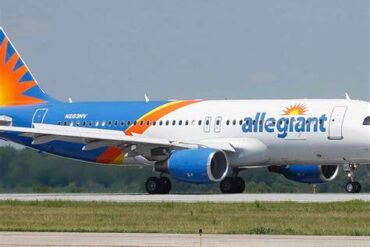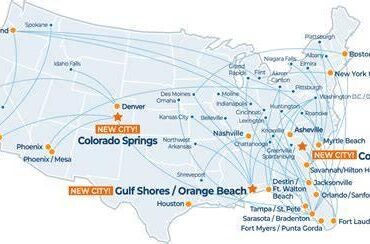
Allegiant Air’s September 2026 network will look noticeably different from the carrier’s schedule a year earlier, with service missing from 11 U.S. airports compared with September 2025. However, the headline number needs some context. Seven of those airports are scheduled to see Allegiant flights return in October, meaning the September changes are largely seasonal rather than permanent route cancellations.
The four more significant reductions involve Columbia Metropolitan Airport (CAE), Los Angeles International Airport (LAX), Oakland San Francisco Bay Airport (OAK), and San Diego International Airport (SAN). These airports do not appear in Allegiant’s September 2026 schedule and are not currently scheduled to return from October. The distinction matters for travelers because a missing September flight does not necessarily mean Allegiant has permanently abandoned that market.
11 Airports Missing From Allegiant’s September 2026 Schedule
The 11 airports affected by the schedule change span several regions of the United States, illustrating how Allegiant continues to adjust its leisure-focused network according to seasonal demand and route performance.
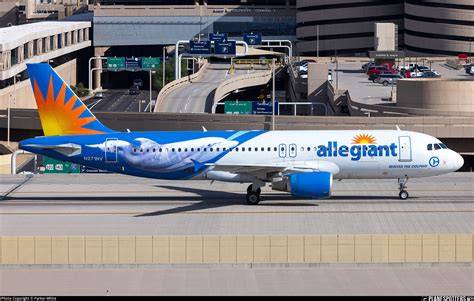
The airports are Columbia Metropolitan Airport (CAE), Piedmont Triad International Airport (GSO), Great Falls International Airport (GTF), Washington Dulles International Airport (IAD), Los Angeles International Airport (LAX), Chicago Midway International Airport (MDW), Monterey Regional Airport (MRY), Oakland San Francisco Bay Airport (OAK), Richmond International Airport (RIC), San Diego International Airport (SAN), and Cherry Capital Airport (TVC).
Several of these airports remain part of Allegiant’s broader network even though they disappear from the September schedule. Allegiant’s airport listings identify locations including GSO, GTF, MRY, TVC, IAD and RIC as current or recent points in its network, reinforcing that a one-month absence should not automatically be interpreted as a permanent withdrawal.
The schedule divides the 11 airports into two very different groups. Seven airports are scheduled to return in October, while four represent more substantial reductions because their service ended earlier and does not resume with the autumn schedule.
Seven Airports Scheduled to Return in October
The September reductions affecting GSO, GTF, IAD, MDW, MRY, RIC and TVC appear primarily seasonal. Allegiant’s planned October service shows that these airports have not been permanently removed from the airline’s network.
This pattern fits Allegiant’s operating model. The ultra-low-cost carrier has historically built much of its network around leisure travel, connecting smaller communities with popular vacation destinations. Demand can change considerably between summer, early fall and the holiday period, making temporary schedule adjustments an important part of network planning.
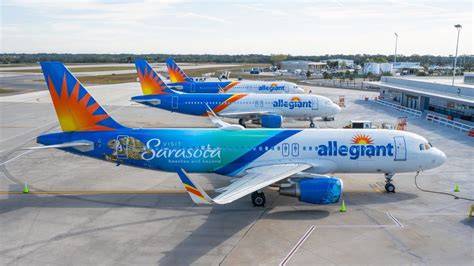
At Piedmont Triad International Airport, for example, Allegiant is scheduled to resume service to St. Pete-Clearwater International Airport (PIE). Great Falls International Airport is also scheduled to return with flights to Las Vegas Harry Reid International Airport (LAS) and Phoenix-Mesa Gateway Airport (AZA).
The schedule at Washington Dulles International Airport (IAD) is particularly notable. From October, Allegiant is scheduled to reconnect Dulles with leisure-oriented destinations including Destin-Fort Walton Beach (VPS), Knoxville (TYS), Sarasota (SRQ), Punta Gorda (PGD), Jacksonville (JAX), and Asheville (AVL). The route pattern demonstrates the carrier’s focus on vacation and visiting-friends-and-relatives traffic rather than maintaining a conventional business-heavy network.
Allegiant began building its presence at Dulles with several routes launched in 2022 and expanded its operation again in 2025. As a result, the September pause should be viewed in the context of a broader seasonal schedule rather than as evidence that the airline has abandoned the Washington-area airport.
Four Airports Face Larger Network Reductions
The more important changes involve CAE, LAX, OAK and SAN, where Allegiant does not have scheduled service returning in October.
Columbia Metropolitan Airport service ended in May 2026, making its absence from September part of a longer-term reduction. Los Angeles International Airport saw Allegiant service end in January 2026, while Oakland San Francisco Bay Airport lost Allegiant flights in May 2026.
San Diego International Airport represents an even earlier network change. Allegiant began serving San Diego in 2008, but the airline ended that service in September 2025. Consequently, SAN’s absence from the September 2026 schedule reflects a market that had already been removed rather than a new cancellation announced for September.

The California changes are particularly striking. Los Angeles, Oakland and San Diego have all disappeared from the comparison, reducing Allegiant’s presence at several major California airports. Oakland is especially notable because Allegiant served the Bay Area airport from 2009 until May 2026, giving the relationship a history of roughly 17 years.
What the Changes Mean for Passengers
Travelers should be careful about interpreting Allegiant’s September 2026 schedule as a complete picture of the airline’s autumn network. A passenger searching for a route from one of the seven temporarily suspended airports may find no September availability, yet the same market can reappear in October.
The most important distinction is therefore between temporary suspension and permanent-looking network reduction. GSO, GTF, IAD, MDW, MRY, RIC and TVC are scheduled to return, while CAE, LAX, OAK and SAN have no corresponding October restart in the supplied schedule.
Overall, the changes reflect Allegiant’s continuing effort to match capacity with demand. Even after these reductions, the airline maintains a network serving more than 100 U.S. airports, with an emphasis on linking smaller communities to major leisure destinations. September 2026 may therefore look smaller in several markets, but the broader Allegiant network remains substantial and highly focused on seasonal travel demand.