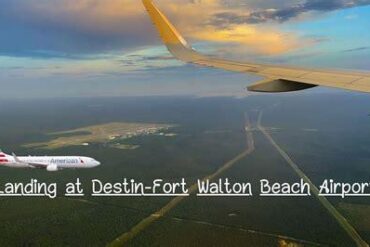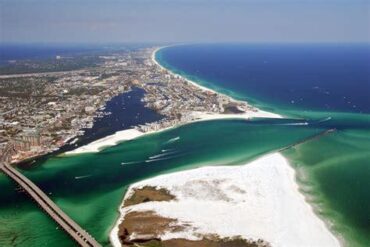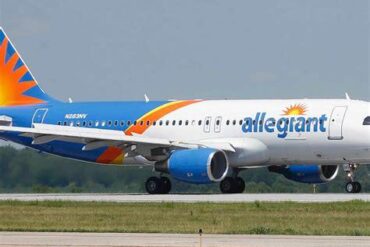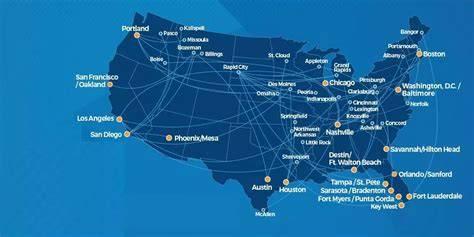
Allegiant Air has pulled eight nonstop routes out of Destin-Fort Walton Beach Airport (VPS), the sole commercial gateway to Florida’s Emerald Coast, in the most aggressive restructuring of its Panhandle network in recent years. The cuts wipe out every one of the carrier’s links to the country’s South, West, and Northeast from the Okaloosa County airport, and they strand four city pairs with no airline substitute at all. The airline confirmed that it will run roughly 32 weekly departures from VPS this coming November, a drastic reduction for an airport that once leaned on Allegiant as its dominant carrier by route count.
The numbers tell a stark story. Allegiant still ranks as the largest operator at Destin-Fort Walton by number of destinations served, but that tally has collapsed from 34 destinations last year to just 26 today, according to data from Cirium, the aviation analytics firm. In raw terms, the airline has surrendered eight destinations in a single cycle while remaining the third-largest carrier at VPS by passenger volume. That paradox, offering the widest route map yet carrying a diminished footprint, reveals exactly what kind of airline Allegiant has become on the Emerald Coast.
Allegiant reviewed its VPS operations and chose to restructure the airport’s schedule entirely, redeploying narrowbody aircraft onto routes it considers more lucrative from larger Florida airports such as Fort Lauderdale-Hollywood, Orlando Sanford, and Punta Gorda. The aircraft did not leave Florida; they simply left the Panhandle. This is a deliberate reallocation of scarce capacity toward denser leisure markets.
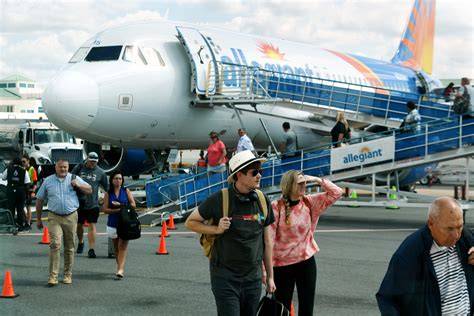
Five Southern Routes Cut By Allegiant From Destin-Fort Walton Beach
In August, Allegiant terminated four nonstop routes from VPS to Lexington, Shreveport, Asheville, and Memphis, and each termination left the route completely unserved by any competitor. No replacement carrier has stepped in, which means travelers from the Emerald Coast and those four inland cities have lost their only direct link to one another. For Lexington and Asheville, the loss is especially pointed, since both cities draw on the same vacation demand for Gulf beaches that Allegiant once monetized through nonstop flying.
The airline also cut its VPS to Las Vegas Harry Reid International Airport (LAS) service, the only Allegiant route connecting the Panhandle to the American West. Las Vegas is Allegiant’s home base and its most heavily trafficked leisure market, so eliminating that direct link leaves the Florida Panhandle airport without a nonstop flight to the city of sin. Two more cuts followed to the Midwest, with Evansville, Indiana, and Bridgeport, West Virginia, both dropped, though the data table also lists a second Memphis termination. The pattern points consistently southward, westward, and into the Midwest.
What survives is a leaner year-round core of eight destinations: Belleville/St. Louis, Cincinnati, Columbia, Denver, Fayetteville, Flint, Newark, and Washington, supplemented by seasonal operations to other cities. These eight routes constitute Allegiant’s remaining commitment to the Emerald Coast, and they skew toward Midwest and Northeast feeder markets rather than southern regional connections.
Allegiant Air Cuts Its Only Northeastern Link From Destin-Fort Walton Beach
Allegiant axed its sole route to the country’s Northeast in August, removing VPS to Tri-State Airport (HTS) in Huntington, West Virginia, from its route map as seasonal demand shifted. Huntington is a case study in Allegiant’s peculiar geography: the airline remains the largest operator there, with four remaining domestic Florida routes and a seasonal link to Myrtle Beach, while the only other carrier at the airport is American Eagle, which flies year-round to Charlotte Douglas International Airport (CLT) and acts as the region’s hub lifeline.
The strategic refocus from West Virginia is unmistakable. Allegiant is redirecting its Huntington-based Florida flying toward Fort Lauderdale-Hollywood International Airport (FLL), Orlando Sanford International Airport (SFB), Punta Gorda (PGD), and St. Petersburg/Clearwater (PIE). Those four airports sit in the heart of Florida’s leisure belt and offer stronger yields than a secondary Panhandle destination, which explains why the aircraft left VPS even while Allegiant kept its commitment to Huntington’s Florida corridors.
Why Allegiant’s Business Model Magnified the Destin-Fort Walton Beach Cuts
Allegiant’s identity rests on a nonstop, point-to-point network that connects small, underserved regional airports directly to leisure destinations, letting travelers bypass hubs and layovers entirely. That model attracts price-conscious leisure travelers above all, and it works only when every route can carry enough of them. Destin-Fort Walton Beach sits approximately 16 miles (25 km) from downtown Destin and shares its runway complex with Eglin Air Force Base, restricting the airport to commercial air traffic and Air Force operations; all general and business aviation must divert to nearby Destin Executive Airport (DSI).
That constraint is decisive. An airport governed by military coexistence cannot freely expand its commercial ramp, and its route portfolio must justify itself route by route. When Allegiant reviewed VPS, it faced a finite fleet and a choice between secondary Panhandle routes and higher-demand Florida airports, and it chose the latter. The result is an airline that remains the largest at VPS by destination count while visibly deprioritizing the airport operationally.
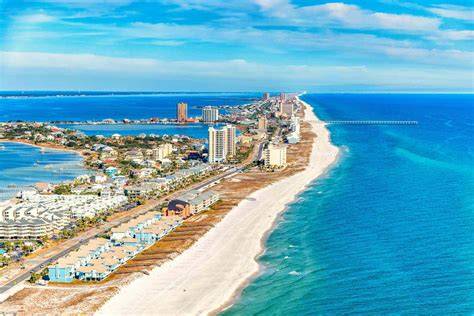
What the Destin-Fort Walton Beach Route Cuts Mean for Emerald Coast Travelers
For travelers, the consequences are immediate and concrete. Anyone flying between Destin-Fort Walton Beach and Lexington, Shreveport, Asheville, Memphis, Las Vegas, Evansville, Bridgeport, or Huntington now faces connections, longer travel days, and typically higher fares, because no competitor absorbed those city pairs. The loss of the Las Vegas link is especially painful, since that was the airport’s single western gateway and the one route connecting the Panhandle to Allegiant’s own hub city.
The eight surviving year-round routes, anchored by Belleville/St. Louis, Cincinnati, Columbia, Denver, Fayetteville, Flint, Newark, and Washington, define the new baseline for the Emerald Coast’s air access. Travelers in those markets retain their nonstop convenience, while seasonal service cushions summer and peak-winter demand. For a destination economy built on beach tourism, the arithmetic of 32 weekly departures in November is sobering, since capacity drives visitation and visitation drives the rental, restaurant, and resort employment that sustains Okaloosa County.
Allegiant Air’s Shrinking Florida Footprint and the Road Ahead
The VPS cuts fit a broader pattern of Allegiant pulling nonstop capacity from Florida airports, including the recent removal of 20 Florida routes, even where passenger data showed some were performing better than expected. The airline is clearly optimizing for yield rather than breadth, concentrating aircraft where fares and load factors are strongest. Whether Destin-Fort Walton Beach can attract replacement carriers, or rebuild service once demand and airport constraints shift, will determine how quickly the Emerald Coast recovers its lost connectivity.